
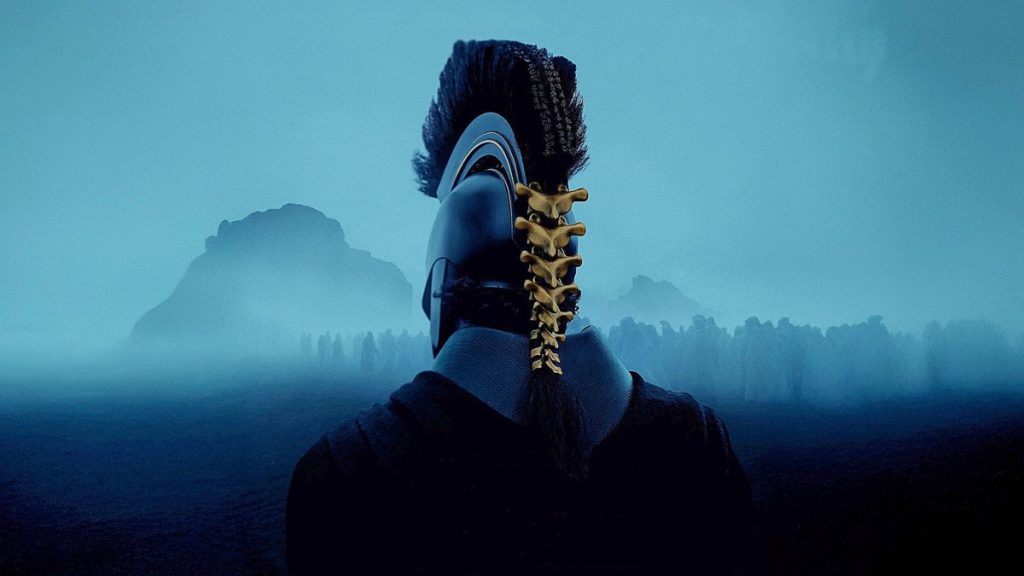
REVIEW: by Martin Puchner (Author, Harvard Professor)
Logline: After the Trojan War, Odysseus faces a dangerous voyage back to Ithaca, meeting creatures like the Cyclops Polyphemus, Sirens, and Calypso along the way.
As we came streaming out of the IMAX theater, where I had managed to secure the last remaining seat, a 10-year-old boy asked: “What movie were you guys watching?” The answer didn’t ring a bell, but I recommended it to him very highly, as I do to you. In 2023, Christopher Nolan’s Oppenheimer, along with Greta Gerwig’s Barbie, brought us out of our COVID seclusion, and now, three years later, Nolan is single-handedly breathing life into the cinema, with a movie shot for Imax.
As of yesterday, roughly 60 million people have seen the movie, with no sign of its abating. Based on my own anecdotal impression, audiences come from an extremely wide spectrum. Filmmakers will be singing to their muses for the next three thousand years hoping for similar popular success.
I’ve been wracking my mind for comparisons. The 2010 Alice in Wonderland, which promised to revive 3D technology? The great Shakespeare adaptations of the 1990s, such as Kenneth Branagh’s 4-hour Hamlet or Baz Luhrmann’s Romeo + Juliet? It’s possible that we have to go back all the way to Ben Hur (1959) or The Ten Commandments (1956).
The Official Trailer for The Odyssey by Christopher Nolan
And who would have thought that this could be accomplished with a classic that is very long and very difficult to read, even in such excellent modern translations as that by Emily Wilson? (Full disclosure: that translation was originally commissioned for the Norton Anthology of World Literature, of which I am the general editor.) Indeed, translations of the Odyssey have been selling like hot cakes. Given the recent hand-wringing about the decline of reading, it’s possible that Nolan is saving not only cinema but also literature.
To be sure, not everyone has loved the adaptation, and I particularly recommend Wilson’s delicious takedown in the London Review of Books, which went viral and allegedly crashed the LRB website. But, I came away feeling that Nolan does many things very well. His cinematography does a great job capturing what it feels like to be in a small boat in the open sea. Ithaca is shown as appropriately poor, a small windswept island, presided over by Penelope and her overwhelmed son, who are barely keeping the suitors at bay.
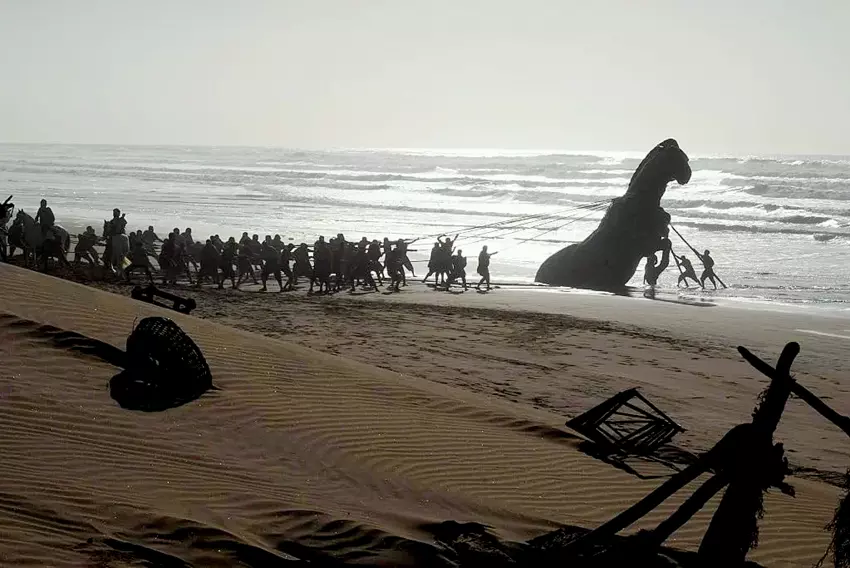
Then there is the sheer pleasure of seeing a text I love dramatized. Ever since I first read the Odyssey (in a YA version), I’ve wondered what it must have felt like to be crammed inside the Trojan Horse as it is being probed by a spear and dragged up into the city (true, this is not in the original but it has been part of the story for over two thousand years). In Nolan’s adaptation, the horse is half-submerged in water, adding additional drama to the claustrophobia.
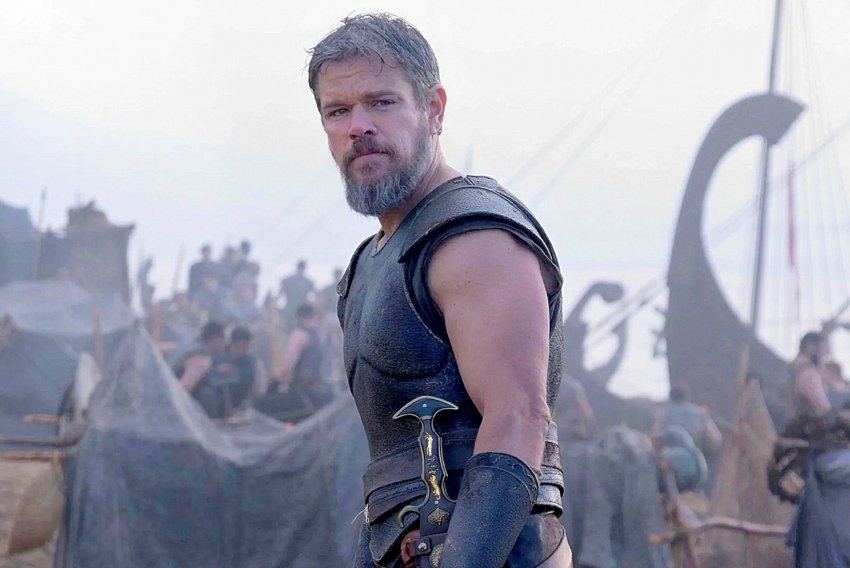
In general, I was surprised not how much was missing, but how much was retained, given that Nolan had to reduce a 13-hour epic to less than three hours. In any case, faithfulness is beside the point. The thing to ask of an adaptation is not how closely it hews to the original but how effectively it manages to speak to the present, which Nolan’s does eloquently. The Trojan War is explained not by the retrieval of Helen, always a weak peg on which to hang a major conflict, but as a battle over trade routes. Troy was located near the Dardanelles Strait, which was important to the expanding trade empire of the Greeks.
The strait was still important eight-hundred years later when Alexander the Great launched his attack on Asia Minor, a copy of the Iliad in hand. His first stop in Asia was Troy. (Since then the ocean has retreated and is barely visible from the citadel. When I went there a decade ago, I was struck by how small Troy was. Homer’s epic had somehow made it seem much bigger in my mind. Nolan shrinks it back down to size.) Today, audiences can watch the movie while being bombarded with daily updates on the conflict over another strait, the Strait of Hormuz. Yes, we very much live in a world dominated by sea-born empires.
Nolan frames the entire story as a case of PTSD. He retains from the original the fact that many of the most famous episodes (the Sirens, Scylla and Charybdis, Circe, the giant cannibals, the oxen of the sun god Apollo, the Cyclops, and the trip to the underworld) are narrated by Odysseus as a story-within-the-story. But Nolan cunningly transfers the scene of narration to Calypso’s island. What matters more than the location of the narrative is how it proceeds. In Homer’s original, Odysseus is a deft storyteller who is entertaining the audience with tales of his heroic deeds.
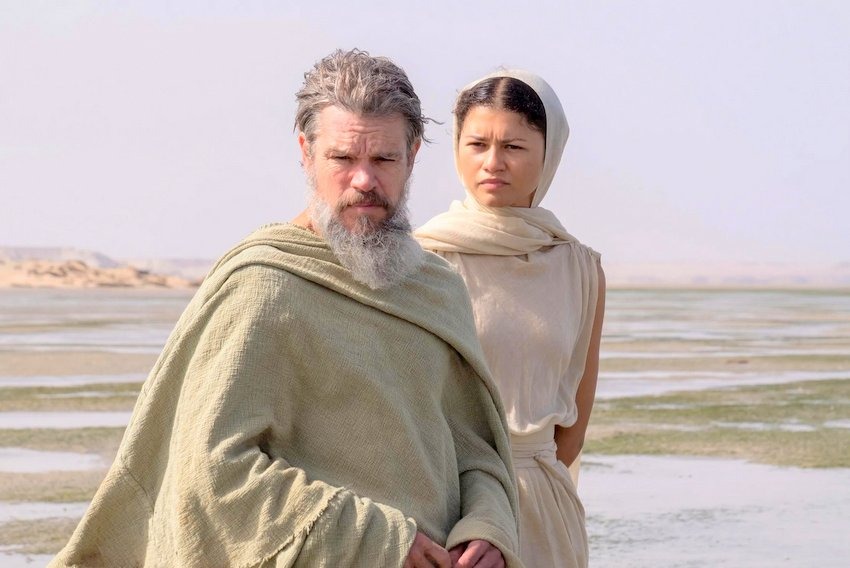
In Nolan’s film we have a shell-shocked Odysseus who has been living on the island for seven years, remembering nothing. Slowly, through the encouragements of the nymph and by micro-dosing on lotus leaves, he remembers the painful episodes from his past. Commentators have pointed out that in turning the victor of Troy into someone troubled by his past deeds, Nolan is repeating the plot of Oppenheimer, but the closer model is the Jason Bourne trilogy, where Matt Damon plays a former CIA operative who suffers from amnesia and is slowly piecing together the atrocities he committed in the past.
As is fitting for a returning soldier with PTSD, Odysseus remains damaged, traumatized by the violent sacking of Troy and the loss of his companions, even after he makes it home. In fact, he is so troubled that he cannot stay in Ithaca. The idea that Odysseus might remain in Ithaca after twenty years of war and travel was developed by the 19th century British poet Alfred Tennyson, but while Tennyson’s Odysseus leaves his home once more to explore new worlds, like a British empire builder, Nolan’s Odysseus packs his wife on a boat and sails into exile to atone for his sins.
Nolan is adapting Homer to the present, but in doing so he also throws overlooked aspects of Homer into relief. While Homer did not have a concept of PTSD and his soldiers unapologetically battle for glory, it’s not impossible to think of Odysseus’ troubled journey home as a sign that something went wrong in the war. It wasn’t just Odysseus who had a troubled homecoming; all Greek heroes did, so much so that it became a genre, the nostoi (returns), captured in epics and dramas such as the Oresteia, which tells us how Agamemnon was killed by his wife and she, in turn, by her son. Nolan skillfully uses these stories and adds to them: while we see Helen reunited with Menelaus, Nolan has her face scarred to suggest that no one returned from Troy intact.
Nolan’s is not the first adaptation to diagnose Odysseus with PTSD. Kate Hamill’s The Odyssey, which premiered at the American Repertory Theater in Cambridge in 2025, does the same. Both adaptations show how deeply conflicted we are about wars. Despite Pete Hegseth’s recent attempt to promote a warrior spirit, returning soldiers tend to experience a troubled homecoming in America.
Nolan is speaking to our current moment in a second way as well, by showing what happens when a rules-based order is abrogated and destroyed. That order is xenia (guest-friendship), which requires that travelers be sheltered and fed. In Homer, xenia plays a central role, especially when it is being violated. This happens when Odysseus enters the cave of the Cyclops, while the owner is absent, and starts to behave as if he owned the place, for example by tasting the cheese–“not bad,” he declares. Another violation happens in Ithaca, committed by the suitors, who are trying to force Penelope to marry one of them. While they have a legitimate interest in seeing the throne filled, they are overstepping the bounds of xenia by eating and drinking their way through the palace’s meagre provisions.
Nolan retains these instances of xenia but expands the concept significantly. In fact, he almost flips the situation in Ithaca on its head by suggesting that when Odysseus finally kills the suitors to reclaim Penelope and the throne, it is he who is violating xenia by killing his guests. This somewhat far-fetched interpretation gives Nolan an additional reason—besides lingering PTSD—for Odysseus to leave Ithaca after his return. Staying would bring the wrath of Zeus, guarantor of xenia, on Ithaca, which is also why Odysseus keeps Telemachus from participating in the carnage. Telemachus must come out of the story unscathed so that he can take the throne. With this unorthodox interpretation of xenia, Nolan adds a tragic dimension to the final scene, in the proper Greek manner: Odysseus must kill the suitors to regain his home, but the very act of doing so forces him to abandon the home he has just regained.
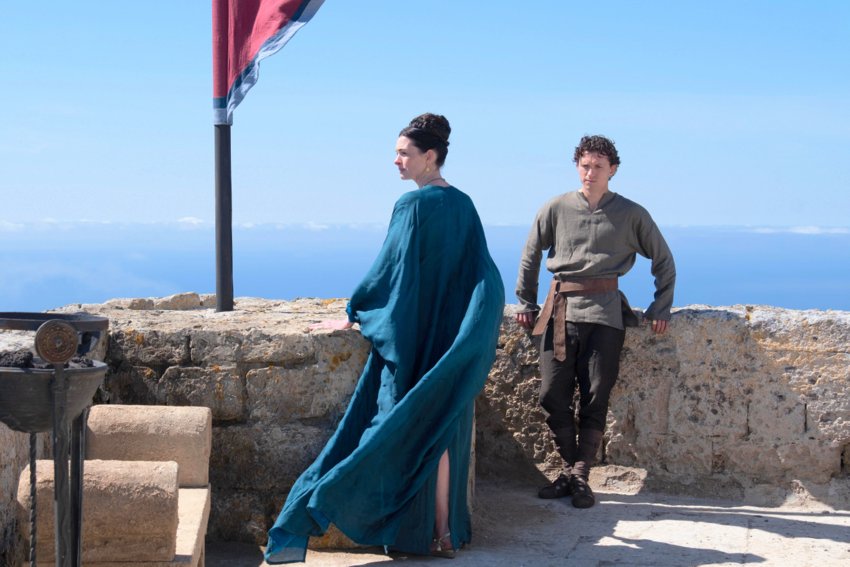
Nolan’s boldest expansion of xenia is to declare that even the Trojan Horse, Odysseus’s most celebrated invention, constitutes a breach, on the theory that the Greeks pretend the horse is a gift that is to be taken into the city. In terms of the Greek conception of xenia, this is nonsense. The Trojan Horse is a ruse within a war and therefore does not fall under a law that is meant to protect travelers. But while this interpretation is not historically accurate, it allows Nolan to do something important: xenia becomes something like the Geneva Convention or the Genocide Convention, a universal world order based on laws. And this means that the destruction of Troy by means to the Trojan Horse is in violation of this rules-based order. Nolan brilliantly seeds this throughout the movie with rumors of sea-based raiders who are threatening the status quo. By the end, Odysseus reveals that these pirates are the Greeks.
Nolan’s is an American Odyssey in another way as well, without quite realizing it. Even before the movie came out, it was decried as “woke” due to a number of black and brown actors playing Greek characters, including Helen. On the whole, I found the casting (and acting) well done, perhaps because it seemed representative of the wider Mediterranean world within which Homer’s epic is set. At the same time, this wider world is strangely absent. With the exception of the Cyclops, whose face looks like it was sewn together from spare body parts by Dr. Frankenstein, we barely see a non-Greek face. In the flashbacks from the Trojan war, the Trojans are heavily masked, as are the cannibalistic Laestrygonians. The faces of the Sirens are too far to see. Only Circe has a face. Nolan has cut all the other non-Greek peoples, above all Phaeacians, who rescue Odysseus and send him on his way (in an exemplary act of xenia). This means that the movie confines racial diversity to the Greeks while remaining uninterested in the wider world.
What Nolan delivers, then, tells us as much about our current moment as about Homer. His story sings of an America that wants to secure trade routes but is simultaneously undermining the rules-based order on which trade is based; an America that sends soldiers abroad but does not know what to do with them when they come home; an America that celebrates racial diversity within but shows little interest in the diversity of the wider world.
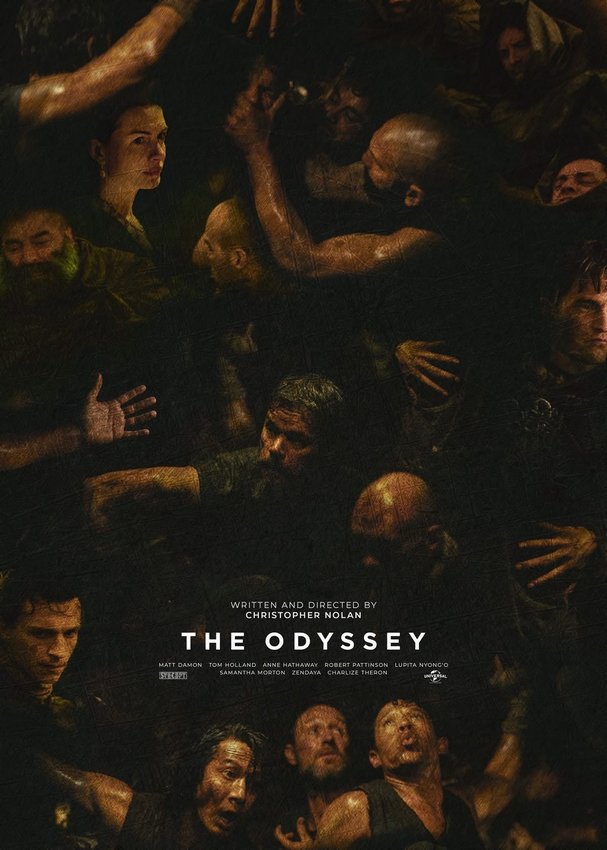
It is fitting that Nolan’s Odysseus chooses, at the end of the movie, not only to go into exile, but to do so by sailing west. Putatively, he does so to make amends for his sins. But I like to think that he’s sailing to America. Thanks to Nolan, he’ll feel right at home.
Let’s have your comments below
FILM REVIEWS
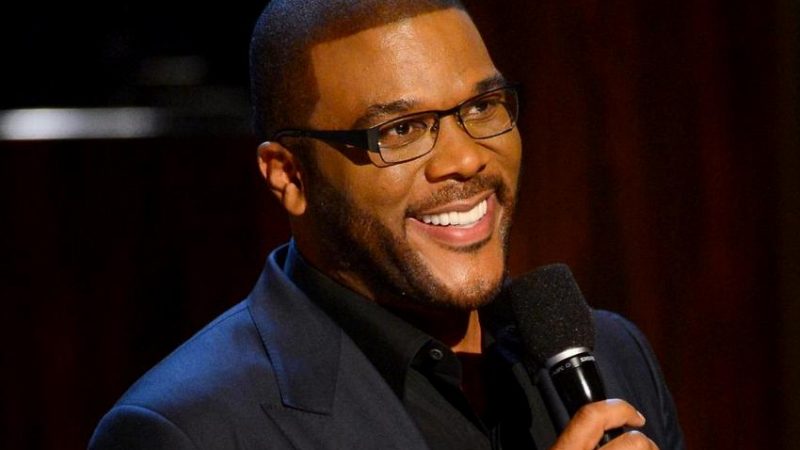
Thelma Adams: Why Tyler Perry Earns the Title of Hollywood’s Last Auteur
Tyler Perry is the critical elephant in the room as Hollywood elites discuss diversity.

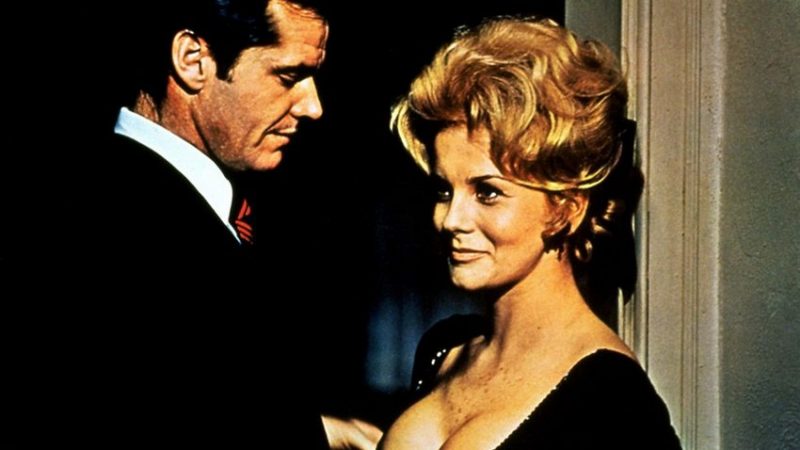
Thelma Adams: Mike Nichols Had ‘Carnal Knowledge’
When Carnal Knowledge (Mike Nichols) came out in 1971, I was twelve. The name sent shivers up my spine.

Movie Review: I, Tonya. Victoria Alexander
REVIEW: Film Critic Victoria Alexander
Movie Review: Star Wars: The Last Jedi. Victoria Alexander
REVIEW: Film Critic Victoria Alexander

