A Case Study.
Narrative | Dramatic Features.
Film Name: Lessons with Martha / (short film).
Genre: Drama.
Date: Completed in March of 2020.
Director: Matthew C Johnson.
Producer: Matthew C Johnson, Kimmy Gatewood, Devin Doyle.
Writer: Matthew C Johnson.
Cinematographer: Devin Doyle.
Score Composer: Jerome Kurtenbach.
Production: 2-Day shoot in Burbank, CA with a crew of 6 and a cast of 4. All prior to the COVID-19 pandemic.
Production Company: Nerd Ranch Productions.
Budget: Less than $5000.
Financing: crowd-sourced and self-funded.
Shooting Format: Blackmagic 4K.
Screening Format: 4K | 1.85:1.
Awards: Best Short Film, 2020 Yucca Valley Film Festival.
Website: www.mcjohnsonfilms.com
indieactivity: What is your film about?
Matthew C Johnson (MCJ): “Lessons with Martha” is a short film. It is based on my own experience with my grandmother who gave me piano lessons as a child. The last time I saw her she was unable to sustain more than a 10 minute conversation before forgetting everything. She seemed incredulous that I was an adult. That was years ago. It was late last year that the idea of cross-cutting between those events occurred to me. The script for the short took very little time after that.
The film is about two days in the lives of a young man and his grandmother. The first is a piano lesson she gave him as a child. Trying to encourage and engage with his creativity and curiosity. The latter twenty years later when he stops to visit her during a business trip. He discovers that she is suffering from dementia. She no longer remembers the recent events of his life – including his marriage. In both events, one of them is reaching out to make a connection. The other one is only able to briefly connect.
The Official Trailer for Lessons with Martha by Matthew C Johnson
Tell us about the festival run, marketing and sales?
Matthew C Johnson (MCJ): We have been selected to 10 festivals. So far it just won Best Short Film at the Yucca Valley Film Festival. I am really fortunate to have such a strong cast. Gwen Hillier who plays Martha. Blake Cooper Griffin who plays Mark. These two have both garnered praise on panels for the performances.
Give the full Official Synopsis for your film?
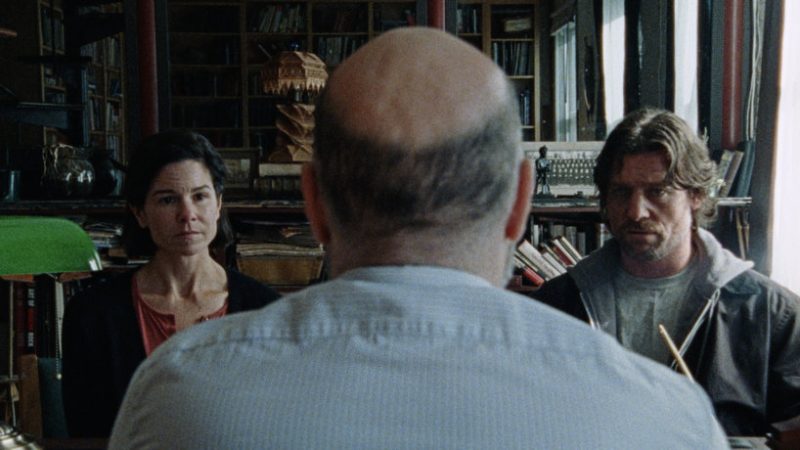
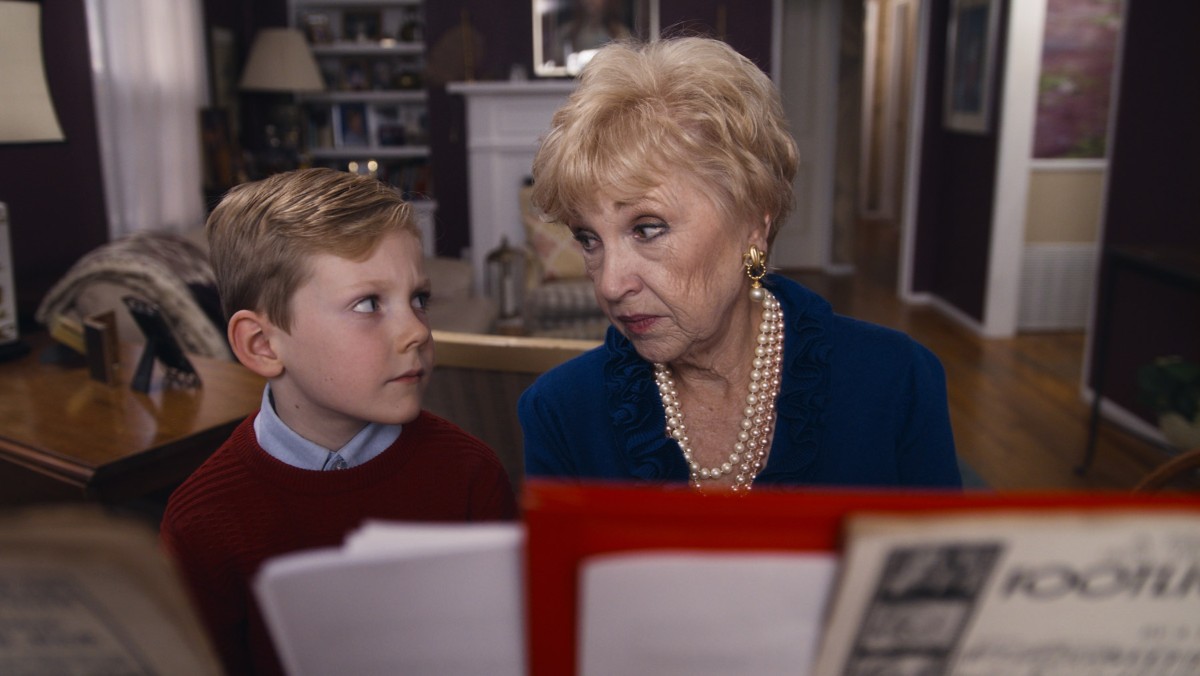
Matthew C Johnson (MCJ): The film opens with Mark as a young boy (Keeler Donnelly). He is walking up to his grandmother’s house after school for a piano lesson. He can hear her playing Beethoven’s Für Elise on the piano. So, he pauses to listen before ringing the doorbell. It’s that song that inspires him to want to play the piano. Grandma answers the door and comments on his handsome appearance. Because, he’s dressed for school picture day. He sits at the piano. It quickly becomes clear that he hasn’t been practicing the piece. Grandma Martha realizes she has her work cut out for her.
At that moment we cut to twenty years later. Mark as an adult (Blake Cooper Griffin) rings the same doorbell. But, instead of his Grandmother at the door he is met by his Aunt Jill (Sarah Lowe). He learns that his grandmother’s mental state has deteriorated since the last time he saw her. When he sits down to talk to her, she seems fine. But, he quickly discovers that she can’t recall recent events. After a few minutes she doesn’t remember what they had just discussed. The film then cuts between these two meetings. As a child, Mark is too self-consumed to fully understand what his grandmother is trying to teach him. As an adult, he finds his grandmother too stricken by dementia to fully communicate.
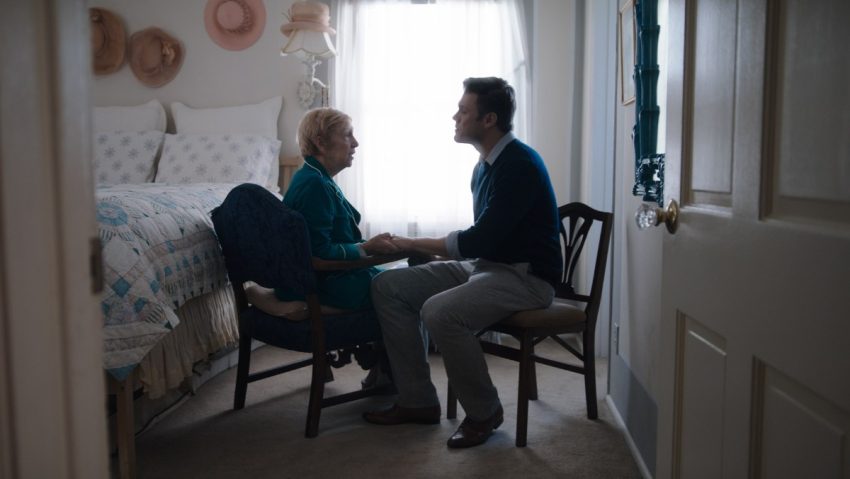
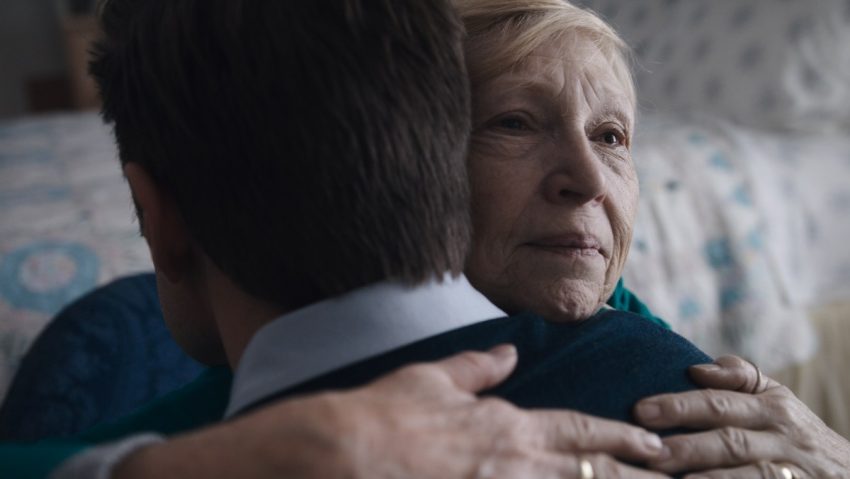
When they do have a moment of clarity, It is fleeting. It leaves them cognizant of the ephemeral nature of not just life but also maturity. It also speaks to the enduring connection we feel for those we care about. The final image of the film is Martha in her confusion. She is bidding Mark to return to see her again soon. Seeing not the adult Mark, but the child who came for his piano lesson many years before.
Development & Financing?
Matthew C Johnson (MCJ): I have worked for almost two decades in comedy. I wanted to try making a dramatic short. So, I was looking for a topic that I could present fully and honestly. I heard a podcast about Mumford & Sons writing their song “Beloved.” Which is about the lead singer seeing his grandmother before she died. It reminded me of seeing my grandmother before she passed away, and I realized it would make a compelling short.
I did some more thinking, and the idea of cross-cutting between scenes of her in her prime came to me. The fact that she had taught me to play the piano gave me a hook. It was a clear opportunity for the characters to switch status. The script came together quickly. With input from some friends and fellow filmmakers. Then was re-written shortly before shooting to fit the realities of production.
Because, there’s limited opportunity to distribute short films in the United States. I took the approach of making this for as little as possible. It is more of a calling card to try out the festival world. I’ve produced a couple of shorts. In every case, we keep costs low by keeping our shoots short, focused and simple. COVID-19 struck as I sent the film off to be sound mixed and color corrected. So, I put my fundraising on hold, until life returned to semi-normality in the summer. We leveraged the production gear we owned, but borrowed the camera body. We rented some great lenses, and some powerful light fixtures. We achieved a beautiful look for $2500, which we self-financed.
I launched a Seed & Spark campaign to cover the costs of a color correct and sound mix, about $1200, and to fund a festival campaign. We raised $4300, more than twice our goal, so we’ve been able to apply to every festival we’ve wanted to. Alas because of COVID-19 the festival circuit has been virtual this year, so we haven’t been able to experience the film in a theatre together as a cast and crew. We are now looking at distribution opportunities after the festival run ends.
Production?
Matthew C Johnson (MCJ): For “Lessons with Martha,” I got my cast on board first – the most important character to cast was Martha, and I was so lucky to know Gwen Hillier and to have worked with her before. She was an actress and dancer on Broadway in the 1970s, then went into casting starting in the 1980s when she started a family. Now she’s retired and acting again, and when I reached out she was not only enthusiastic about the part, but also about letting us shoot in her house in Burbank – she has a piano and the décor there is terrific for shooting – colorful walls, a very lived-in space, and well-situated windows. Gwen did amazing work – I really loved her performance, and also her transformation.
Another benefit of working with Gwen was that I needed a child to play young Mark, and her oldest grandchild, Keeler Donnelly, was interested in trying acting and had done some commercials. Once I had cast those two parts – which could have been very challenging to cast – I figured I would keep the family connection going and hire Sarah Lowe (Gwen’s daughter and Keeler’s mom) to play the caretaker role of Aunt Jill. At this point I was rewriting my original script to be all in one location – rather than at a house and a nursing home – so I changed what had been a nurse to be a family member. Finally, I cast Blake Cooper Griffin as an adult Mark – Blake is a fantastic actor who played the lead in my feature “Beerfest: Thirst for Victory,” and I was confident he would deliver a wonderful and touching performance.
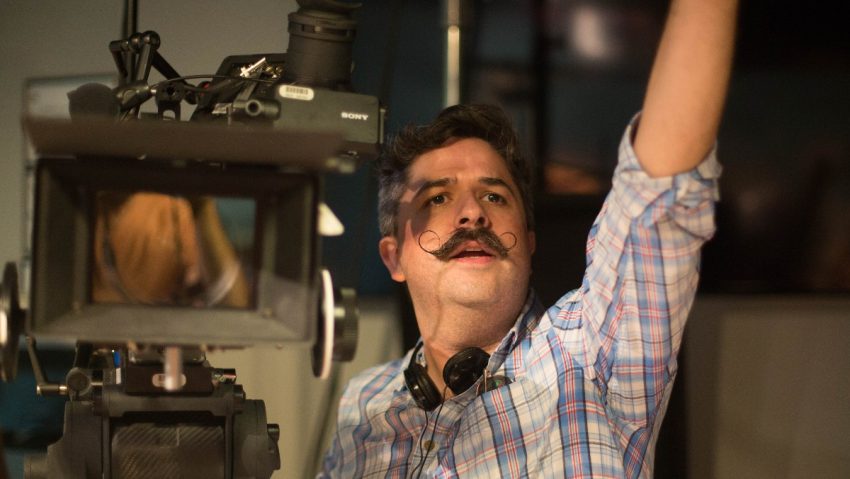
With the cast and location all set, I reached out to Devin Doyle, who has shot a lot of my work, and he was awesome as a cinematographer and producer. We borrowed and rented and brought our camera and lighting packages, and with a tiny crew of 4, we shot for 2 days over a weekend in December 2019 – including my wife and producing partner, Kimmy Gatewood, running sound. Our costs for the shoot, all in, was about $2500. I edited the short together over the holidays. Then Jerome Kurtenbach, a dear friend and amazing composer, wrote the score and helped me record the piano pieces we see played on camera – Gwen used to play so we were able to use her hands over Jerome’s playing, and I played the parts for Keeler since he was a true novice and had memorized just to two phrases we see him play.
I edited those elements in and then sent the short off for Billy Hobson to color correct – he really made Devin’s camera work shine. I also sent the audio to Gypsy Sound to do a final sound mix – they have done amazing work on our other shorts and create stereo and surround mixes which are great when you’re anticipating needing to make a DCP. Good sound is vital to filmmaking, and it brings the short together. The final step was joining Film Freeway and submitting it to festivals.
Festival Preparation & Strategy?
Matthew C Johnson (MCJ): Festivals provide an excellent prod or nudge to make a short film if you’re starting out, or you want to make a passion piece or a calling card piece. There are big, well-known festivals like Sundance and TriBeCa and Toronto, that are high visibility for features and also prestige moments for shorts, but they only program a handful of shorts. Meanwhile, there are festivals that focus on shorts, like HollyShorts and Shortsfest in Palm Springs, that show so many shorts that they present statistically better chances of getting in. Our initial strategy was based on a small campaign budget, so we targeted these bigger shorts-focused festivals, especially the ones that are Oscar-feeders (where winning shorts become eligible for an Academy Award.) We were thrilled to get into HollyShorts as it was one of those early festivals we targeted.
After crowd-funding, and especially with COVID precluding any travel or gatherings at festivals, our budget for festival applications soared, so we started applying to a much broader swath of regional festivals. We also put off applying to some festivals until the following year to save on fees – better to pay the $20 early bird fee for a regional festival in 2021 than an $80 late entry fee to make the 2020 date. We didn’t do PR for “Lessons with Martha” other than through social media – again, in a year without COVID, we might have made a different decision there. But as I mentioned, I’ve produced other shorts that have played festivals, so where appropriate we reached out as alumni – a factor that can help in some festivals. So, far getting into HollyShorts and Miami Short Film Festival have been high points, and our recent win at Yucca Valley Film Festival has felt tremendous.
The Release?
Matthew C Johnson (MCJ): Our debut festival was the Miami Short Film Festival, and we are debuting in Ireland at the Waterford Film Festival this month. We will continue the festival circuit through 2021, and we are still sort out what a public release will look like. We hope to make “Lessons with Martha” available to watch in 2021.
Advice from the Filmmaker?
Matthew C Johnson (MCJ): Don’t write a short that is going to cost you more than a used car would. If you have a million-dollar idea, develop it into a feature script and get funding for that, because there’s no way to recoup your investment in the US at that scale on a short film. Write a short film that you can shoot for very little money – keep your cast small, your locations to a minimum, and your schedule short. Or, shoot something you can do alone or with just one other person, and then give yourself the time to go capture what you need over the course of weeks.
Remember, you can give your own time and energy for free, so learn to do as much yourself as you can – see your short as an opportunity to learn and grow. And finally, learning how to ask for money and secure financing is as vital to filmmaking as learning to edit, so definitely take this opportunity to learn that skill, but again, write something that doesn’t need lots of money to make, and give your investors the confidence to back you in bigger more ambitious feature projects where there is a path (albeit still small) to financial reward.
Let’s have your comments below and/or on Facebook, Instagram and Twitter.
Socials
Website
IMDb
Twitter
Instagram
Vimeo
YouTube
MORE STORIES FOR YOU