Every footstep you hear in a film was almost certainly recorded in a studio. It is done by someone walking on a carefully chosen surface. Who is wearing carefully chosen shoes, timed to a frame-by-frame playback of the picture. That’s Foley. And, while it sounds like a niche craft practiced only on major studio productions. The core techniques behind it are accessible to any video producer willing to understand how it actually works.
The gap between production audio and what an audience hears on screen is wider than most people realize. Dialogue gets cleaned up in post. Ambient sound gets replaced or layered. And, every physical action — a door closing, a glass being set down, fabric rustling as someone shifts in a chair — gets recreated by a Foley artist matching performance to picture. Getting that process right is what separates a finished film from one that still sounds like a rough cut.
What Foley Artists Are Actually Solving
The reason Foley exists is that production sound captures everything indiscriminately. A boom mic picking up an actor’s dialogue is also picking up the ambient hum of the location, equipment noise, and whatever the actor’s shoes are doing on a floor that wasn’t chosen for its sonic properties. In post, once the production audio gets cleaned up and the location ambience gets replaced with a controlled sound bed, all of those incidental physical sounds disappear — and silence where physical action should be sounds wrong to any audience, whether or not they can explain why.
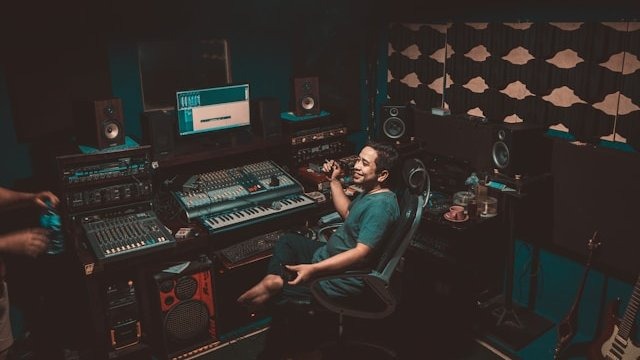
Foley fills that gap. A Foley stage is essentially a controlled recording environment stocked with surfaces (concrete, gravel, wood, carpet, tile) and a wide variety of objects specifically chosen because they produce useful sounds. The artist watches the locked picture and performs sounds in sync, building up layers of footsteps, clothing movement, and prop handling that will eventually sit just under the dialogue in the final mix.
For producers who want a stronger working foundation before getting into studio work, a resource like foley sound explained for video producers is worth bookmarking — it connects the conceptual side of Foley to the practical audio assets that support it.
The Three Categories Every Foley Session Covers
Professional Foley work is generally broken into three distinct layers, each recorded in its own pass:
- Footsteps: Performed by the Foley artist wearing shoes that match the character and walking on a surface that matches the location. A leather sole on hardwood for an office scene; rubber soles on gravel for an exterior sequence. The match has to work visually and tonally.
- Moves: Clothing and body movement — the rustle of a jacket, the creak of a leather chair, the sound of someone sitting down or standing up. This layer is often underestimated by producers new to the process, but it contributes enormously to the sense that characters exist physically in a space.
- Specifics: Everything else. Props being handled, doors opening and closing, objects being set on surfaces, keys jangling, a phone being picked up. These are recorded separately and placed individually in the edit.
Each category requires a different approach to microphone placement, room acoustics, and performance style. Footsteps often benefit from a bit of room — a close, dead mic can make walking sound like someone tapping directly into the speaker. Specifics usually want a tighter, more controlled recording that can sit cleanly in the mix without added reverb.
Microphone Choice and Placement Change Everything
Most Foley recordists work with two or three microphones and switch between them depending on what’s being recorded. A large-diaphragm condenser works well for clothing moves and quieter prop work, where capturing subtle texture matters more than handling noise rejection. A short shotgun mic — the same type used on a boom in production — works well for footsteps and louder specifics, where directional control and off-axis rejection help keep the recording clean
Placement is where a lot of independent producers get tripped up. The instinct is to close-mic everything, but Foley that’s recorded too close loses the natural air that makes it blend with picture. A footstep that sounds like it was recorded inside the shoe will never sit convincingly in a scene regardless of how much reverb gets added in post.
How Library Audio Fits Into a Foley Workflow
Not every project has the budget or the time for a full Foley session. For shorter-form content, corporate video, documentary work, and lower-budget narrative projects, a well-curated sound effects library can cover a significant portion of what a Foley session would otherwise provide. The key is knowing how to select and layer library audio so it behaves like real Foley rather than like stock sound.
That means choosing sounds recorded in similar acoustic environments to your picture, cutting them to action rather than to a rough approximation of the action, and layering multiple elements where a single sound effect isn’t complex enough. A door closing, for instance, might need a latch click, a low body thud, and a very short room reflection — all timed separately — to sound the way a real door sounds on a Foley stage. The goal is always the same: sound that supports the picture without drawing attention to itself.
You can comment below
INDIE ACTIVITIES
Iconic Actress “Irina Maleeva” Brings “Sunny’s Closet” to Indiewood
International Actress at Film Festival with “Sunny’s Closet” — Before Taking It To Rome