From Summer Camp Skits to Selling Screenplays

Jon Savitt is an award-winning screenwriter, comedy writer, and author featured in places like Funny or Die, New York Times, College Humor, TIME, Washington Post, USA Today, NBC News, ESPN, Vulture, and more.His writing regularly appears in the nation’s top comedy publications.
indieactivity: Let’s start at the beginning. You’ve mentioned that summer camp played a pretty big role in getting you into comedy and writing. How did that all start?
Jon Savitt (JS): It really did. I grew up going to a camp in a small town in Wisconsin, eventually became a counselor, and spent a pretty significant chunk of my life there. Probably like 15 summers. Anyone who knows me knows how much camp means to me.
We had this weekly late-night comedy show that was basically our own version of Saturday Night Live. I was part of the writing team, coming up with sketches and jokes to perform in front of everyone. Looking back, that was probably my first writers’ room. Just with more bug spray.
I think camp was really where I developed my sense of humor and got comfortable being creative. It’s a place where you’re encouraged to be yourself, try weird things, and fail without worrying too much about it. That’s a pretty great environment for someone who wants to write comedy.
You started writing professionally while you were still in college. How did you go from writing camp sketches to getting published by places like MTV and CollegeHumor?
Jon Savitt (JS): A lot of persistence, honestly. I went to Indiana University and studied sociology and psychology. I loved comedy, but I didn’t go to film school or have any connections in the entertainment industry. I really had no idea how people got those jobs.
I started pitching jokes and articles to different websites from my dorm room and eventually got some work published by CollegeHumor. Around my senior year, I also started reaching out to editors at MTV. I basically kept emailing them until somebody gave me a shot. I’m sure they loved that. But MTV actually ended up being my first real consistent writing job.
Anyways, one thing led to another, and over the years I’ve had opportunities to write for places like the show Good Mythical Morning, Funny or Die, TIME, McSweeney’s, and The Washington Post. I’ve also contributed to projects that won Webby and Streamy awards. It’s been a pretty winding path, but I think a lot of it started with just being willing to put myself out there.
At one point, you moved to Washington, D.C., thinking you might pursue political comedy. What was the plan there, and how did things actually unfold?
Jon Savitt (JS): Yeah, I moved to D.C. thinking I’d find my way into political satire. I loved politics and comedy, and it seemed like a good place to combine the two. I didn’t have much of a plan beyond that, which probably tells you a little about where I was in life.
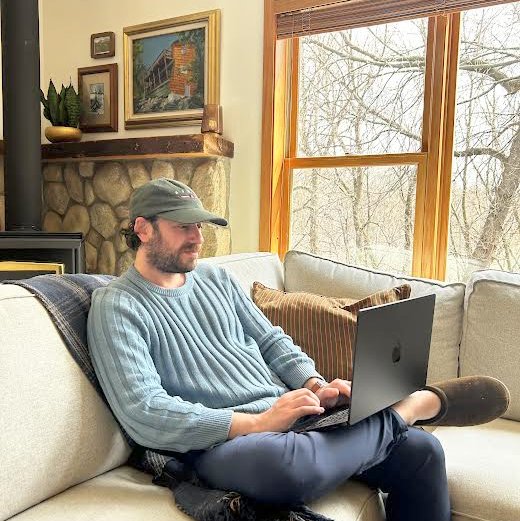
I ended up spending about seven years there, and it was a really important time for me. I was writing sketches, doing stand-up, working on all sorts of comedy projects, and meeting a lot of talented people. I even got to learn from presidential speechwriters, which was a pretty cool experience. Actually, I also ended up connecting with Senator Al Franken who grew up near me in Minnesota and of course also was on Saturday Night Live, so that was kind of what I was trying to do.
My career definitely didn’t go in the direction I’d originally imagined, but I’m glad it didn’t. I learned a ton during those years and got to experiment with a lot of different kinds of writing.
You also built a following online, with your comedy getting featured in Vulture and going viral on Twitter. How much of a role did the internet play in your early career?
Jon Savitt (JS): A huge role. I spent years writing jokes on Twitter, pitching humor to places like Funny or Die, and trying to build an audience however I could. I remember being a senior in college when Vulture featured my Twitter account. That was a pretty big deal to me at the time. It was one of those early moments where I started thinking maybe I could actually make a career out of this.
The internet is funny, though. You can spend hours working on something you’re really proud of and have nobody see it. Then you’ll make some dumb joke in 30 seconds and suddenly it’s everywhere.
A good example was during the Timberwolves’ playoff run in 2024. Anthony Edwards told Charles Barkley to “bring ya ass” to Minnesota, and I thought it would be funny to buy BringYaAss.com and redirect it to the state’s tourism website to use that kind of like a state slogan. So I did. It cost me about eight bucks, and suddenly I was getting calls from national news outlets like ESPN and the New York Post about it. The website crashed from so many visitors. Probably the most attention I’ve ever gotten for the least amount of work.

You also spent several years doing stand-up and touring your own comedy shows. What did you enjoy about performing, and how did it influence your writing?
Jon Savitt (JS): I loved it. I got to perform at comedy festivals around the country, open for some really talented comedians, and tour a few longer solo shows of my own. I also got into hosting, including a late-night comedy game show called Never Too Late.
Stand-up is such a great way to become a better writer because you find out immediately whether something works. You can sit at home and convince yourself a joke is hilarious, but an audience will let you know pretty quickly if you’re wrong.
I also just love the experience of making people laugh together. There’s something really powerful about being in a room full of strangers who are all laughing at the same thing. It’s one of the things that drew me to comedy in the first place, and I think it’s something I’ve carried into screenwriting.
You also published a humor book, Unreal Athletes. How did that come about, and what was it like seeing your own book in bookstores?
Jon Savitt (JS): Unreal Athletes is a book about fictional athletes with completely ridiculous backstories. I’ve always been a huge sports fan, so it was a fun excuse to combine two things I love.
Honestly, one of my favorite parts was seeing it in actual bookstores. I’d spent so much of my career writing things for the internet, where something can get a million views and basically disappear the next day. Having a physical book that people could pick up and take home was pretty special.
And the fact that bookstores around the country were willing to stock a book about athletes who don’t exist made the whole thing even funnier to me.
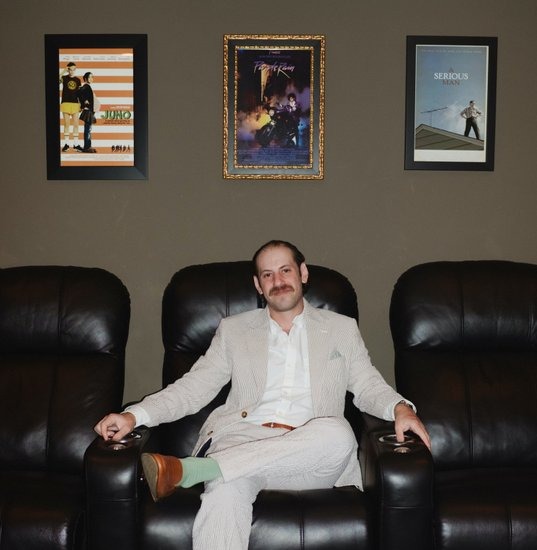
After spending so much time writing shorter-form comedy, what eventually made you want to try your hand at feature films?
Jon Savitt (JS): I think part of it was that I wanted to slow down a little bit, both creatively and just in life. I’d spent so many years writing jokes, pitching ideas in writers’ rooms, doing stand-up, and posting things online. I was really used to getting immediate feedback. You write something, put it out there, and find out pretty quickly whether people like it.
At some point, I started wanting something different. I wanted to spend more time with an idea, develop characters, and work on something that didn’t have to be finished or shared right away. Which is funny, because deciding to write a feature screenplay as a way to slow down probably sounds insane to most people.
I started focusing more seriously on screenwriting about six years ago, and I’ve really fallen in love with it. There’s something incredibly satisfying about spending months with an idea and eventually turning it into a finished script. It’s a much longer process, obviously, but I think that’s part of what I enjoy about it.
A lot of your scripts blend humor with darker genres like horror and thrillers. Where does that sensibility come from? Were there particular movies or filmmakers who influenced you growing up?
Jon Savitt (JS): I’ve always loved movies that can make you laugh one minute and feel completely uncomfortable the next. I think there’s so much comedy in tension, especially when you put interesting characters in situations that just keep getting worse.
The Coen brothers are a huge influence. I actually grew up a few doors down from their childhood home in St. Louis Park, Minnesota, which I’ve always thought was pretty cool. Unfortunately, they didn’t leave behind any screenwriting tips for me.
I was also a huge fan of movies like Superbad growing up. I just remember laughing so hard watching that movie. I love that feeling when you’re watching something with a group of people and everyone is losing it together. Comedy can be such a communal experience, and I’ve always been drawn to that. I think the best movies can make you feel a bunch of different things, sometimes within the same scene.
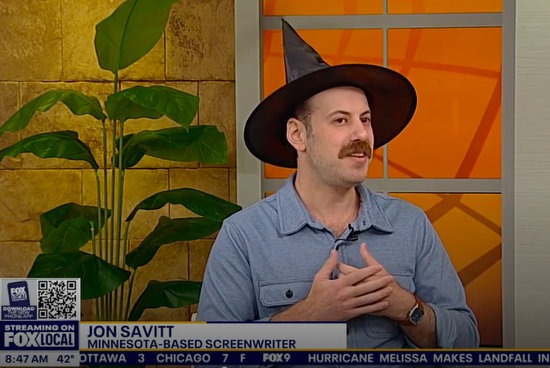
What’s your writing process like these days? How do you go from having an idea for a movie to finishing a screenplay?
Jon Savitt (JS): Usually it starts with some little idea that I can’t stop thinking about. Sometimes it’s a character, sometimes it’s a setting, and sometimes it’s just a ridiculous situation that I think could make for a fun movie.
I remember Seth Rogen talking about how the best ideas are the ones that stick around for months. I’m probably butchering the quote, but the general idea was that if you’re still thinking about something six months later, that’s probably the one worth pursuing. I really like that. I have plenty of ideas that seem exciting for about 20 minutes, so I’ve learned to pay attention to the ones that keep coming back.
Once I have something I think is worth exploring, I start figuring out the story, working through the characters, and eventually getting pages down. Then it’s a lot of rewriting, getting feedback, and rewriting some more. I don’t have some elaborate system or crazy framework. I just try to keep showing up and doing the work. And when all else fails I write what I would want to watch.
You’ve now sold around seven feature screenplays over the past five years. What was it like selling that first script, and what have you learned about the business along the way?
Jon Savitt (JS): Selling my first screenplay was a huge milestone. I’d spent years writing and pitching things, so having someone actually want to buy a feature I’d written was pretty exciting. I remember feeling like, okay, maybe this is something I can actually do.
And yeah, I’ve been fortunate to sell I think around six or seven scripts or so over the past five years, mostly small budget stuff. One thing I’ve learned is how important the business side is, especially in independent film. I spent a good part of my career working at agencies in advertising and creative strategy, and I think that background has helped me quite a bit. I’ve always tried to think about how I could turn something I love doing into an actual, sustainable career.
When you’re an independent writer, you’re often the one finding opportunities, making connections, pitching projects, and figuring out how to get things moving. You have to be willing to wear a lot of different hats. I’ve also learned that selling a screenplay and actually getting a movie made are two very different things. There’s a lot that happens between those two points, and a lot of it is outside your control.
One of your films, Creep it Reel, is now in post-production, with Adrienne King from Friday the 13th in the cast and Uncork’d Entertainment attached for distribution. What can you tell us about that project?
Jon Savitt (JS): Creep it Reel is a contained horror-thriller about two podcast hosts who interview a mysterious horror author on Halloween night, only to find themselves in a pretty terrifying situation.
The film was directed by Brad Douglas and yes features Adrienne King from the original Friday the 13th which is incredible as a lifelong horror fan, along with a really talented cast. It’s currently in post-production with Uncork’d Entertainment attached for distribution. I think it will come out next year.
It’s been really exciting seeing everything come together. You spend so much time alone writing these stories, and then suddenly there’s a director, a cast, a crew, and all these people working to bring something you imagined to life. It’s a pretty cool feeling. I’m excited for people to see it.
You’ve lived and worked in places like New York, Los Angeles, DC, and Denver, but eventually made your way back home to Minnesota. What’s it been like building a screenwriting career outside of Hollywood?
Jon Savitt (JS): I love Minnesota. I grew up here, my family’s here, and it’s always felt like home. My wife and I moved back recently after spending several years away, and it’s been really nice being close to family again.
There are obviously advantages to living in Los Angeles, but I’ve also found that there’s a ton of creative talent here. A lot of it is just finding your people and making sure you’re excited about the same kinds of things.
That’s also part of why I started the Flyover Writers’ Room, a free mentorship initiative for emerging writers. When I was younger, I didn’t know any professional screenwriters, and the industry felt pretty inaccessible. I want people to know that there are different ways to build a career doing this, regardless of where you live.
You’ve taken a pretty unconventional path into filmmaking. What advice would you give other writers who are trying to break into the industry?
Jon Savitt (JS): I think the biggest thing is to create your own opportunities and put yourself out there as much as possible. I didn’t go to film school, didn’t know anybody in Hollywood, and spent a lot of years just trying different things to see what worked. You don’t have to follow some perfect path. I’m not even sure one exists.
I’d also encourage writers to learn a little about the business side of things. Get comfortable pitching yourself, building relationships, and understanding how projects actually get made. Especially in independent film, there’s a lot more to it than just writing a good screenplay.
And try to find people you genuinely enjoy working with. So much of this business is about relationships, and I think you’ll have a better time if you’re surrounding yourself with people you like and respect. There’s already enough rejection and uncertainty in this industry. You might as well enjoy the people you’re going through it with.
Finally, what’s next for you? Any upcoming films or projects you’re particularly excited about?
Jon Savitt (JS): I’ve got a few other feature films moving through different stages of development and production, which I’m really excited about. I’m also currently working through rewrites on another screenplay I sold to a studio, and I’ve been developing a TV pilot as well.
I’ve been spending a lot of time writing lately. But the biggest thing going on is that my wife and I are expecting a baby next month, so I’m really just trying to focus on getting ready for that. I can’t wait.
At the end of the day, I really think I’m still chasing that feeling I had at summer camp. Making things with people I like, trying weird ideas, not being afraid to fail, and hopefully making some people laugh. If I can keep doing some version of that and get a few more movies made along the way, I’ll be pretty happy.
Let’s have your comments below
Socials
Website
IMDb
X
Instagram
FILMMAKER INTERVIEWS