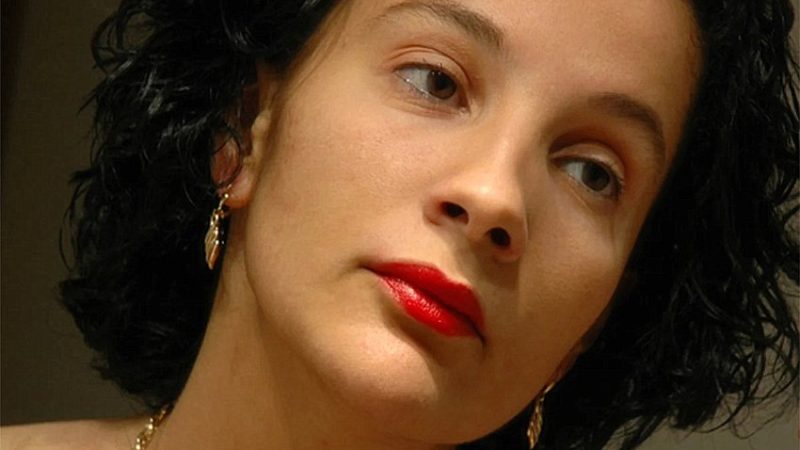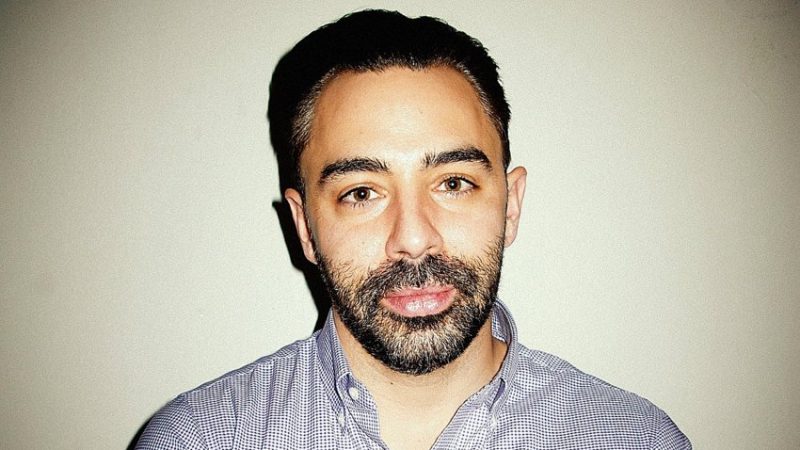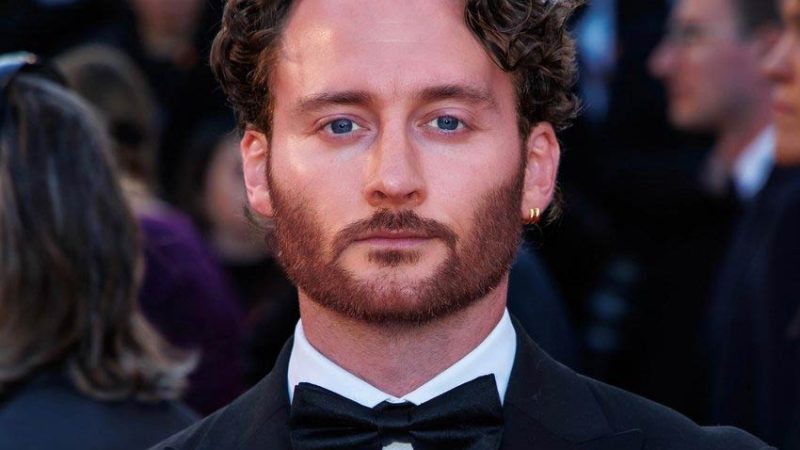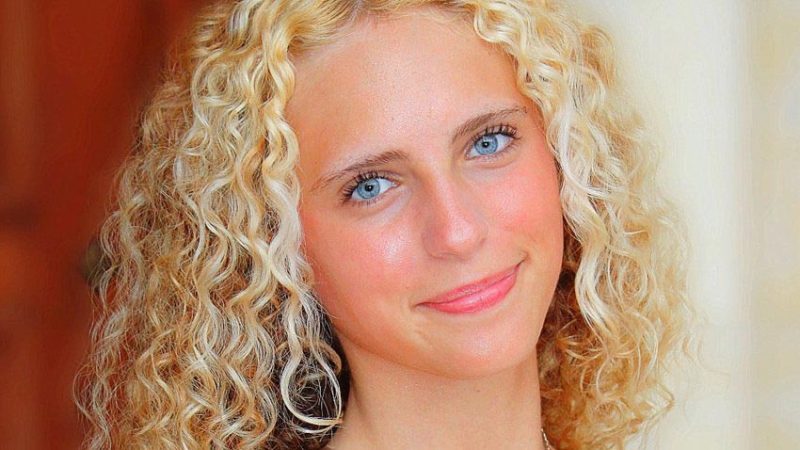
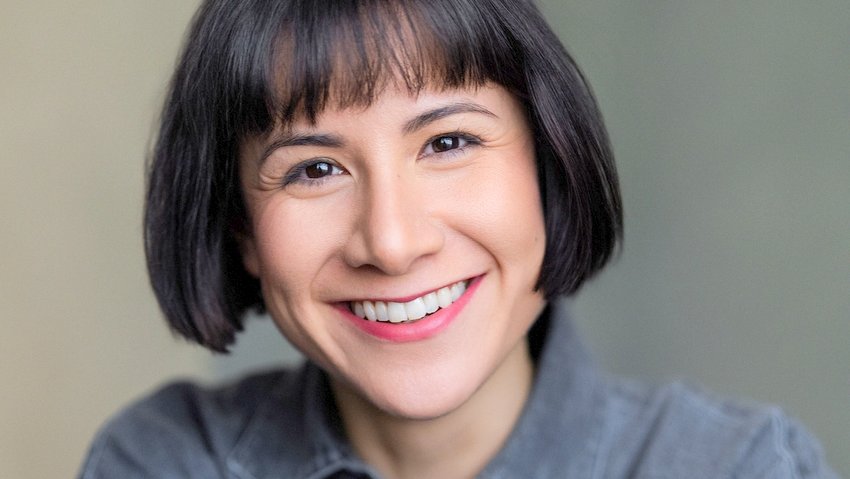
Isabel Lamers is a Filipina-German actress, action actor and filmmaker. She was raised bilingually in both the Philippines and Germany. She has an extensive international background, having worked across Europe, Southeast Asia, the Middle East, and the US. Isabel’s notable acting credits include Tar, Club Zero (a 2023 Cannes Palme d’Or nominee) and most recently Black Nights Tallinn main selection Philippine feature SISA.
She also featured in “TÁR” (2022) and “Kleo” (2024). KAYA (2026), Isabel’s directorial debut, had it’s world premiere at the acclaimed Tribeca Festival. The martial arts short proof of concept, which Isabel wrote, directed and starred in, using Filipino martial arts as a means to explore the character’s mixed-race identity.
Isabel studied acting at the Identity School of Acting in London and at AMAW in London and LA. She is fluent in English, German, French and Spanish, with a good understanding of Tagalog and Dutch.
indieactivity: How did you get into directing? How would you describe your style?
Isabel Lamers (IL): I have to be honest. I did not intend to direct the short however as we came closer to the Shooting date both the team and I realized that there would be no better person to implement my own vision directing has been incredibly inspiring and fulfilling. The amount of creative freedom you have as a director is incredible.
I believe that my style was very collaborative and I like taking inspiration from crew member’s ideas suggestions or criticism. I also think that I like to take a layered approach and try to give everything a meaning from Set design to costume and I also enjoy leaving meaning in unspoken things. Instead of a character saying something I’d rather they just say it with their eyes.
Do you hire a casting director, or do you like to choose the cast yourself? If so, what criteria go into your casting?
Isabel Lamers (IL): in the case of Kaya, we did not have a Casting Director simply because we did not have the budget. I would love to work with a Casting Director and hopefully get a chance to do so in my next project. In casting, I particularly pay attention to the authenticity of the actors.
I am open to exploring a new type if they’re acting can convince me even though it might not correspond to how I was seeing the character. I was also pleasantly surprised by some of our cast members. Since we had very little time for Casting and rehearsals, I was very grateful that actors came prepared and well trained. I believe this might be universal but I very much enjoy actors who bring their own suggestions and ideas for a character that might inspire new things in a scene.
What went into the casting process for “Kaya”?
Isabel Lamers (IL): For Kaya we launched a social media Casting call and relied on a lot of our networks to spread the news. It is interesting how a lot of people are interested to Audition, but often don’t go the extra step meaning they don’t follow up. We had a few actors who were invited to submit a self-tape but never did, and some others who submitted unfit tapes.
Which as an actor myself I had the most understanding for because I know it can be hard to have a setup that is conducive for creativity. After that initial Casting call, we also selected actors locally in the Philippines and since there are no casting sites in the Philippines as such, we relied on recommendations from our production team.
Without giving anything away, tell us a little bit about the script, how did you come up with the idea?
Isabel Lamers (IL): in 2024, I had a scholarship to do acting training in Los Angeles. In this time, I came in touch a lot with the Filipino American Community which really opened my eyes. In the Philippines I am often considered a foreigner, but here I was more Filipino than most, because most Filipinos here have not even grown up in the Philippines and have less ties with their home country.
This was very interesting to me because sometimes they look more Filipino than me and it has also often been a discussion at home that I am told I don’t look Filipino enough and that’s why I am treated like I don’t belong. It was also a time where I truly discovered Filipino martial arts and where it clicked to me that both the lack of connection to our home culture as well as the still persistent desire to look more white in many Asian countries, like the Philippines, are connected – they are both are remnant of colonial times. And that is how I came up with the idea for Kaya. I wanted to create a showcase for Filipino Martial Arts and for the diversity of Filipino culture.
Who is “Kaya” for? Who do you think would enjoy it the most?
Isabel Lamers (IL): I think anyone who has ever experienced not fully belonging to a space or culture will find something to connect to in Kaya. The film is for all the mixed babies, their parents and friends. It’s for those with identities that others struggle to understand or accept. It’s also for people who have a challenging relationship with their parents who understand the difficulty of having to disappoint your parents’ expectations. And of course, it’s for my martial arts fans; those who enjoyed watching Karate Kid or Cobra Kai, or basically action films!
How long did it take to shoot the entire film?
Isabel Lamers (IL): We shot the entire film in two 16 hours shoot days. I did wish we had more time as I think the film could’ve used a little bit more footage to play with.
How long was the post-production process?
Isabel Lamers (IL): Unfortunately, post production took way longer than expected. During initial production we had been ill advised and hence were out of budget at the time that we reached post. It took a full year to complete post production and I almost gave up in between. But hey, here we are!
The film had a lot of talent working behind the scenes as DPs, sound designers, composers, etc. Why is diversity important both in front of and behind the camera?
Isabel Lamers (IL): That’s such a nice question. I think that our cultural experiences the societies that we are socialized in and everything we see taste, hear, feel growing up; influences what we do, what decisions we take and influences our preferences even. So I think diversity cannot be attained, if you don’t have the people who represent that diversity, present in the creative process. From, you know, scripting up until post. Otherwise, mainstream decisions choices and processes will be the ones that dominate the outcome of the creative product.
What are your goals with “Kaya”?
Isabel Lamers (IL): Kaya was written and created as a proof of concept for a feature film. With this short we can now move forward to look for investors, producers and other interested collaborators to work on the feature version of the film. I also hope it inspires other martial arts films more diverse content in the short film and film space for more of female filmmakers to start spreading their ideas and thoughts and sharing it with the world.
What’s next for you? What are you working on right now?
Isabel Lamers (IL): I am currently working on a vertical just to give myself a break from the intense work we did on Kaya, but I am also working on a feature Film hoping that to be my next project.
What would you recommend to a new director at the beginning of his/ her journey? Any special courses, workshops, helpful books they can read?
Isabel Lamers (IL): Oh I’m afraid I can’t really help with that but if anyone else has a recommendation, I’d love to hear it.
Who is your favorite director? Why?
Isabel Lamers (IL): Gosh I don’t think I want to pick a favorite! I enjoy the work of the Daniels, Hiro Murai, Greta Gerwig for sure, Christopher Nolan I’m not gonna lie, but honestly I don’t have a favorite there’s a lot of directors whose work I admire.
What advice would you give directors around the world?
Isabel Lamers (IL): Listen to your own gut. It’s the only thing that makes you uniquely you and it’s also the hardest thing to listen to.
Let’s have your comments below
Socials
Website
IMDb
Facebook
X
Instagram
Vimeo
FILMMAKER INTERVIEWS