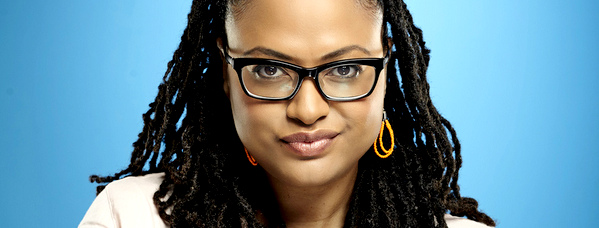
Back in 2015, Director Ava DuVernay (Selma) rebranded AFFRM. A 2011-founded company, African American Film Festival Releasing Movement (AFFRM) moved to become ARRAY. A focus on Black films moved to a broader amplified independent work from people of color and women globally. This evolution expands distribution, support filmmakers, and foster greater inclusion.
Golden Globe-nominated director Ava DuVernay (“Selma”) spent years as a Hollywood publicist before making her way into the director’s chair. It wasn’t until she sat on the publicity team for Collateral that she took the first step. Off the clock, Ava DuVernay wrote Middle of Nowhere. It went on to win her a Directing Award at the 2012 Sundance Film Festival.
Just before that, in 2011, DuVernay started the African American Film Festival Releasing Movement (AFFRM). The goal is to empower black independent filmmakers. With theatrical and multi-platform distribution through Array Releasing. It marked the beginning of annual membership drive for AFFRM. Which broadened its reach to include filmmakers of color and women.
Rebel with @AFFRM + Array Releasing!
DuVernay started AFFRM with the goal of connecting filmmakers. People who are underrepresented in mainstream film distribution with audiences that want to see their work. I’m a product of that, DuVernay said to Indiewire. If I did not have my films distributed through AFFRM and Array. I would have never had a chance to make ‘Selma,’ or do any of the things that I’m doing now. It’s so important to give these filmmakers a leg up, to give them an opportunity to find an audience.“
AFFRM’s member program was started that year because, since its inception, AFFRM was financed out of DuVernay’s own pocket. With no sponsors and grants, AFFRM was run by a 30-person volunteer staff with help from organizations and museums from around the country. Latter that year, the organization turned to the community to began its Rebel member program, where fellow filmmakers, actors or simply fans can donate, becoming either a Digital Rebel for $40 or a Full Rebel for $100. That year they hoped for 500 members but got 750. They hit their goal of 1000 soon.
DuVernay said that, since her history-making Golden Globe nomination and throughout a hectic awards season, people had been asking her how they could move the industry in the right direction. There were a lot of people trying to talk to me at Oscar time about diversity and inclusion and this is a way you can actually help further that. “AFFRM gives those people an opportunity to put their money where their mouth is. If they really care about it now they can do something about it,” she said.
The second official AFFRM drive is just another notch in DuVernay’s fantastic year. “It’s just a question of, how do you let this be useful?” she said. “I’m hoping that some of this spotlight can shine on other people doing really great things, because it would seem to be wasted if it didn’t.”
One of the ways she made her rising star useful is to team up with Paramount to get a copy of Selma into every high school in the country. “I’ve started to hear from high school principals and teachers and stuff around the country on Twitter, which is so cool,” she said. “It’s so important to have context, for kids to see context for what they’re seeing online and on TV. Just to understand that it’s not new, this is an ongoing issue and if they change it they’ve got to understand where it came from.“
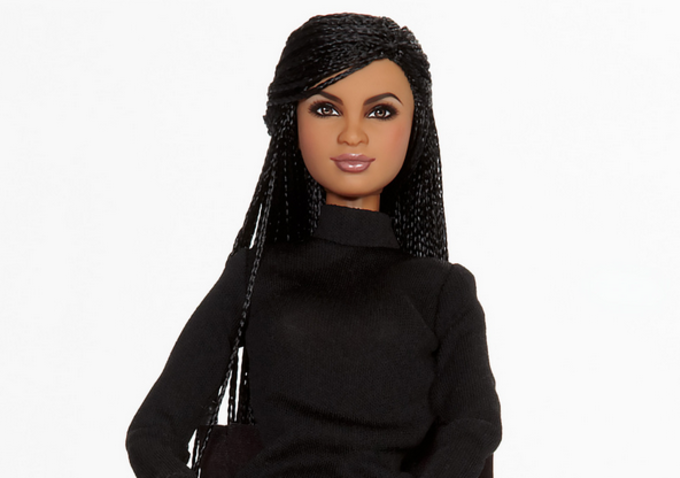
But the wildest place her fame led her was into the arms of Mattel, which designed and created an Ava DuVernay-inspired Barbie doll. “Are you familiar with the word ‘cray?’ That’s what it was,” she said. “So baffling you have to drop a z is basically what it was.” Mattel made one version of the doll for her to keep and auctioned the other off for charity. “Look, I’m just glad they got the eyebrows right,” DuVernay said. “They made good attempts at the locks, I mean they gave her some natural hair, she’s got the director’s chair.”
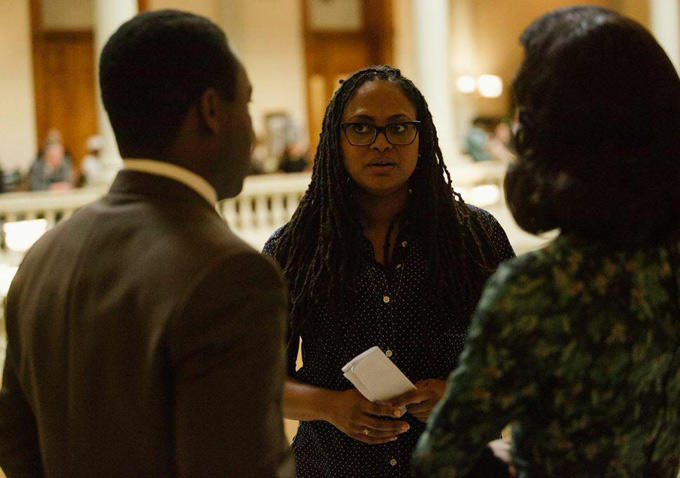
Barbie’s, DuVernay said, were a key part of her early childhood storytelling. She’d used them as her characters, telling stories with them for hours and hours, even transforming her dolls into “Cholas.” “We grew up in a black and Latino area so I would make my Barbies look like Cholas because I thought they were the most beautiful women on my street. Basically you give them awesome black eyeliner and paint their hair black.
But I never had a Barbie that looked like me, with locks and braids, so it’s really cool to have one now. My mom was saying, ‘If they only knew how obsessed you were with Barbies back then.'” But how the doll looked was the least important element to DuVernay. “It’s less about what she looks like and more like, ‘Wow, this is something I can do.’ More than like we’re in a swimsuit and rolling with Ken. Like, ‘Oh, I can direct a movie,’ which you can!”
But DuVernay’s “cray” year just reinforced what some people, including Oprah, have said about her for years: that through adversity DuVernay maintains an incredibly calm demeanor and doesn’t let the frustrations of the industry get to her. “My filmmaking was not birthed out of frustration, my filmmaking was birthed out of independence. So I really have a different view about it,” she said. “I was a publicist in the industry so I’ve seen all the frustrations and then decided I wasn’t going to go that way. I think the assumption is that it’s all frustration and woe is me, and that’s really really not the case. You have a lot of people of all kinds making films outside the system and finding ways to survive.”
Calmness helps foster determination. “I just really don’t feel like anyone can stop me from doing what I want to do,” she said. “Not to say that it’s not a challenge, but there are just too many examples historically in my family, in my community, in my history, of people doing what needs to be done when they want it done. So I don’t accept that it can’t be.”
For more infor. on the AFFRM campaign check out the AFFRM website
Let’s have your comments below or on Facebook, Instagram, or Twitter
Socials
Website
LinkedIn
Facebook
X
Instagram
YouTube
FILMMAKER INTERVIEWS