indieactivity: How did you get into directing? How would you describe your style?
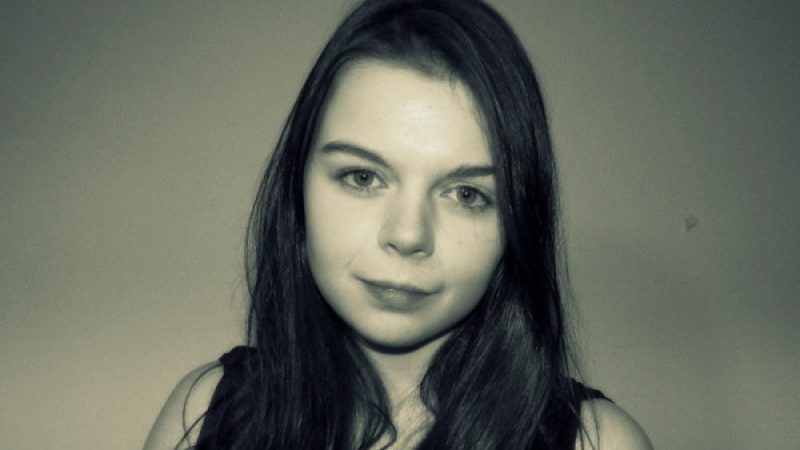
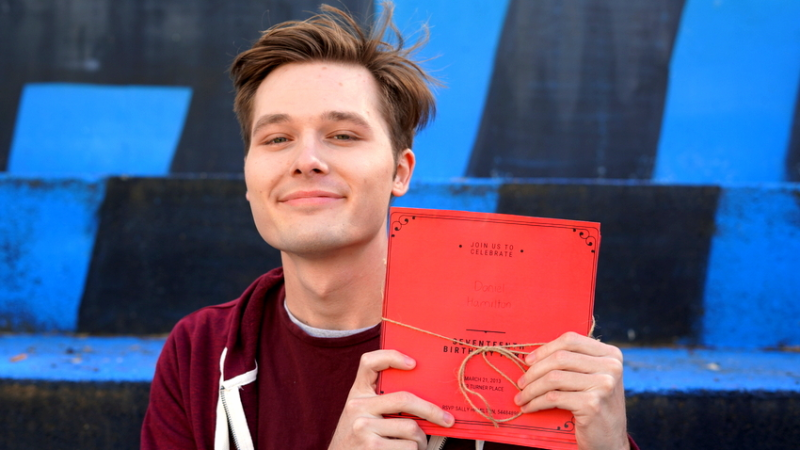
Lorena Ares (LA): On my 14th birthday I was celebrating with friends. We had rented a couple of VHS tapes, one of which happened to be The Little Mermaid. I was completely captivated by one fact. The protagonist spends much of the film without saying a single word. Yet her emotions are conveyed with absolute clarity through gesture and performance. The drawing truly came alive. In that moment I knew that’s what I wanted to do: give life to drawings. As a director, I chase tenderness, clarity, and rhythm. These are small gestures, big feelings and art direction that softens the harshness of the subject matter.
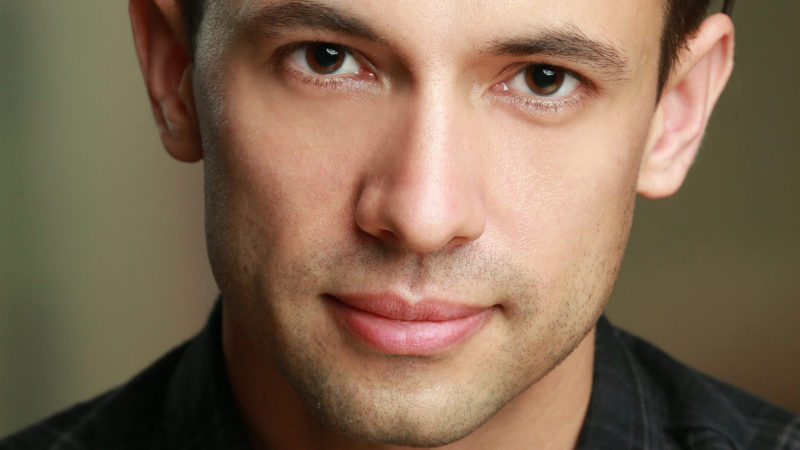
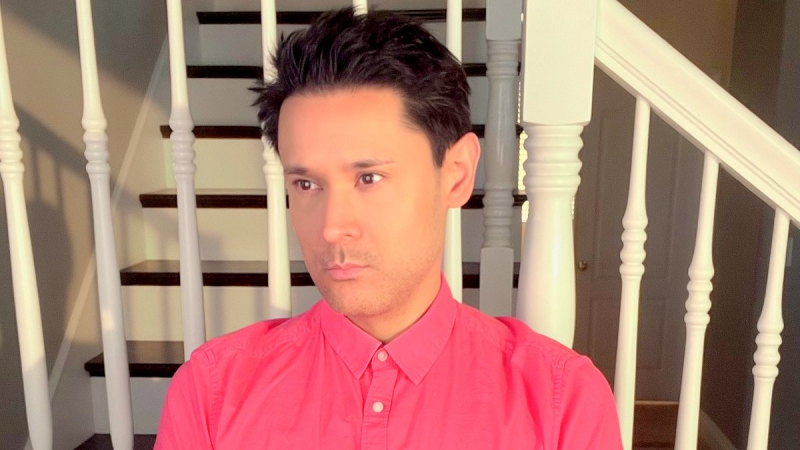
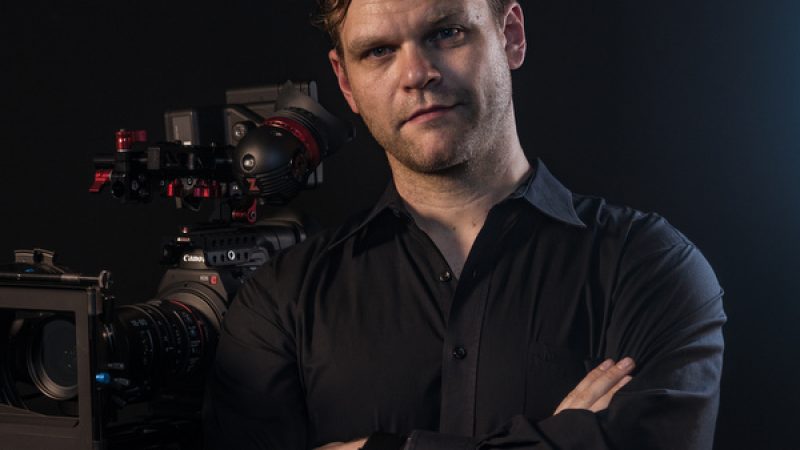
Carlos F. de Vigo (CFV): I’ve needed to make films for as long as I can remember. As projects evolved I jumped between formats, always writing the script. Along the way I directed video games too, distributed world wide with SONY or NINTENDO. The technological side led me to create new forms like animated comics and interactive experiences. The key is to tell the story in the format that fits it best. I’m obsessed with how space and light tell the story: production design, lighting that guides emotion. Second layers the audience discovers almost without realizing.
The Officia Trailer for Cafunè by Carlos F. de Vigo & Lorena Ares
Do you hire a casting director, or cast yourself? If so, what criteria go into your casting?
Carlos F. de Vigo (CFV): We like to select the actors ourselves. We look for truth in the performance, stage/film actors who can then bring voice. We care about texture (a sustained whisper, breathing). And, that they can work right up on the mic without sounding forced.
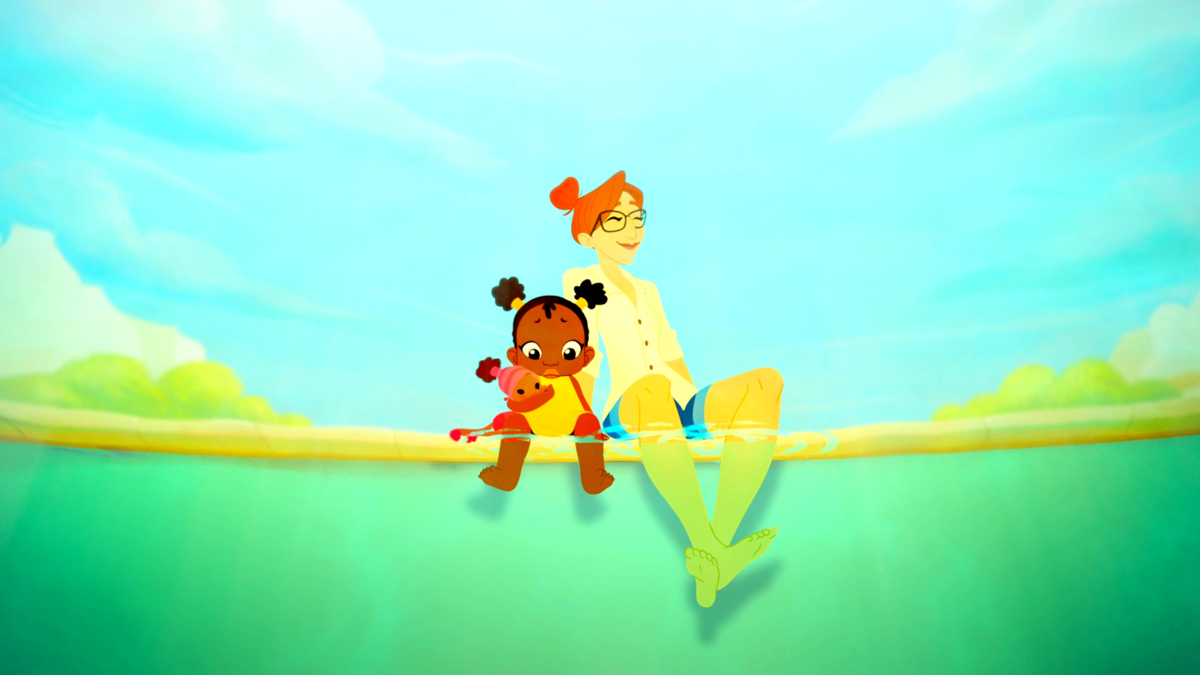
Lorena Ares (LA): In animation, “casting” is also character design. In Cafunè we worked with Grangel Studio, an international reference. Thanks to projects like The Prince of Egypt (DreamWorks), Corpse Bride (Tim Burton) or Pinocchio (Guillermo del Toro). With them we looked for the look of Alma and Luna. So, that their silhouette and gestures would express character and emotion.
What went into the casting process for “Cafunè ”?
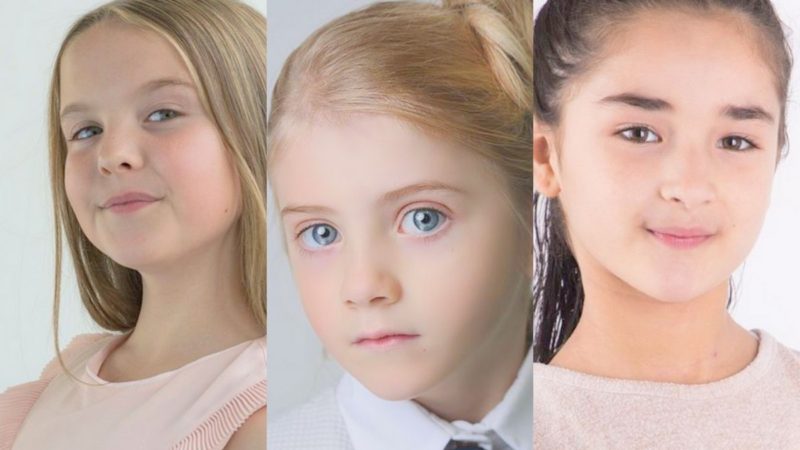
Lorena Ares (LA): For the lead voices, María Castro was in our heads from the start. Carlos had already worked with her on the feature film Memoirs of a Man in Pajamas he directed. Her voice gave us the tenderness we needed for our protagonist’s adoptive mother. Bruna Valls complemented her perfectly with the real freshness that a girl her age could bring to our Alma.
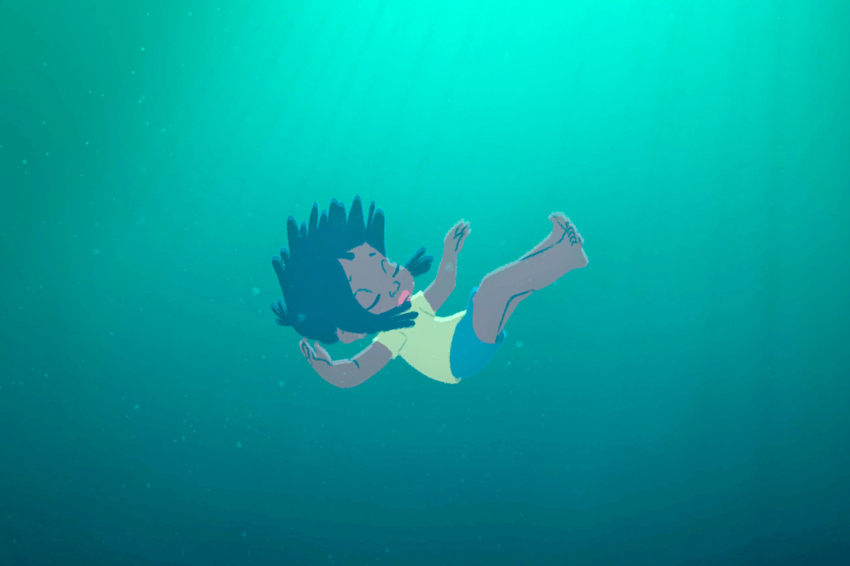
Carlos F. de Vigo (CFV): In the drawing, we worked with Grangel Studios to achieve a gaze of total innocence in Alma that could also reflect the drama of the shipwreck moment, while Luna needed to feel like an independent, strong, but committed woman. We had to achieve complementary yet clearly differentiated silhouettes, representing two different worlds that end up understanding and healing each other.
Without giving anything away, tell us a little bit about the script, how did you come up with the idea?
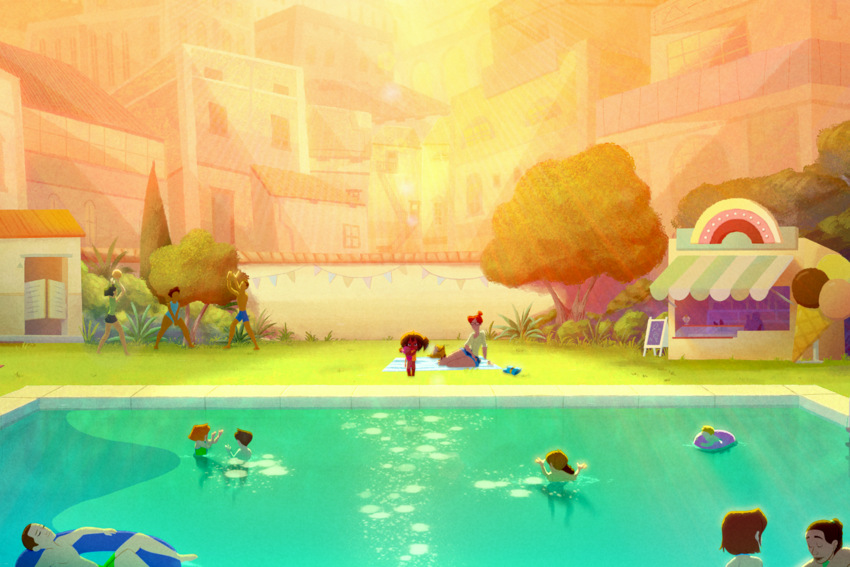
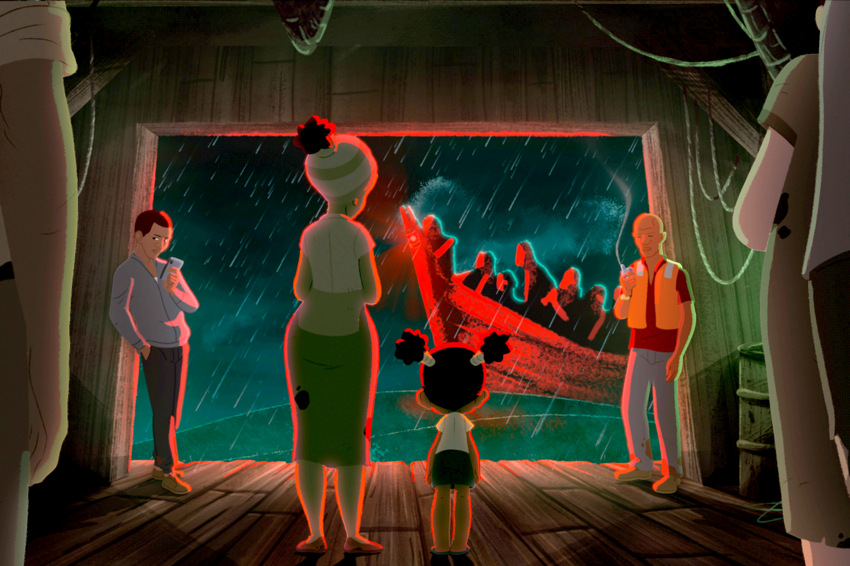
Carlos F. de Vigo (CFV): The seed comes from a two‑page comic by Chechu Ramírez, Spanish comic book artist and our storyboard artist. We adapted the structure and added a hopeful ending: we wanted to talk about healing, not just pain. In the short we see how a girl, after falling into water, relives the trauma of having been the only survivor of a shipwreck. For those who suffer forced migration, the nightmare doesn’t end upon arrival; the trauma remains.
Lorena Ares (LA): The title, Cafunè, captures the gesture at the heart of the film: stroking someone’s hair with affection, soothing them until they fall asleep. A way of saying: “you’re safe.” Notice the protagonist’s hair: it changes according to her mood, getting out of control in anguish and softening when she receives care. We chose hand‑drawn 2D because the human line preserves tenderness; with live action, some images would be too harsh for the audience we wanted to reach.
Who is “Cafunè” for? Who do you think would enjoy it the most?
Carlos F. de Vigo (CFV) & Lorena Ares (LA): Cafunè is a film for anyone who does not want to forget what empathy toward other human beings truly means. It offers a humanist, non-politicized perspective on forced migration, reminding us that behind statistics there are people with names and stories. We wanted to tell Alma’s journey in a way that makes audiences connect with her emotions, so that empathy becomes the bridge between her experience and our own lives. That universality is what has allowed the film to travel so widely: it has been selected in more than 200 festivals and received dozens of awards, the majority of them in festivals dedicated not only to animation but to cinema as a whole. We are happy to see how Cafunè’s message has resonated across continents, countries, and cultures.
How long did it take to shoot the entire film?
Carlos F. de Vigo (CFV) & Lorena Ares (LA): From the very beginning, we knew that the way we made Cafunè had to reflect its message. This is a story about fragility, resilience, and human connection, and the film itself needed to carry that same soul in every frame.
That’s why we chose traditional animation, because it gave us the expressiveness, almost dreamlike, that we were searching for. At a time when generative AI is at everyone’s fingertips, Cafunè needed craftsmanship and human sensitivity in every tiny detail. That’s why Carlos Grangel designed the characters with pen and paper, and Carles Burges (“Gladiator”, “Corpse Bride”) created the production title using Chinese ink, applying analog lettering techniques and even crafting a custom brush to achieve the nuance he wanted. I like to say that if you zoom into the frames, you can almost see the fingerprints of the animators and illustrators. The result? A film full of layers, intention, and meaning, made by humans, for humans, about a story that reflects a reality we cannot look away from.
And how long does something like this take? More than three years. And judging by the response from audiences across continents, let me tell you: it has been worth every minute.
How long was the post-production process?
Carlos F. de Vigo (CFV) & Lorena Ares (LA): Composer Mikel Salas and sound designer Ernesto Santana are long-time collaborators in our productions, and they have developed a very unique dynamic: they design the entire sound spectrum together, building a puzzle between score and sound design. By consciously distributing frequencies, they ensure a complete and immersive auditory experience.
On the visual side: guided by Almu Redondo’s production design work (Emmy Award winner for Star Wars: Visions and with credits at Cartoon Saloon productions), we applied ink and color as extensions of her production concepts: expressive brushstrokes, nuanced textures, and carefully modulated lighting.
Altogether, post-production extended for no less than eight months, until sound, image, and emotion fused into one unified piece.
The film had a lot of talent working behind the scenes as DPs, sound designers, composers, etc. Why is diversity important both in front of and behind the camera?
Lorena Ares (LA): For us, diversity isn’t a slogan, it’s a working method. Cafunè is written and directed by two perspectives, a woman and a man, and you can feel it in how empathy, acting and rhythm balance with space, light and subtext. Even sound is co‑led by a man and a woman, and you can perceive it in the film’s emotional texture: not just what you hear, but how you listen. (And yes: the best shots happen when there are more ears and less ego.)
Carlos F. de Vigo (CFV): or us, diversity means richness. In Cafunè we brought together people of different ages, cultures, and backgrounds. From industry legends to young talents making their debut. That mix of perspectives leads to stronger choices and a team that grows in both directions. It’s also why the film’s message has been recognized by Amnesty International: a reminder that true diversity is not just a process, but a commitment to empathy and human dignity.
Let’s have your comments below or on Facebook, Instagram, or Twitter
Socials
Website
IMDb
Facebook
Twitter
Instagram
Vimeo
FILMMAKER INTERVIEWS