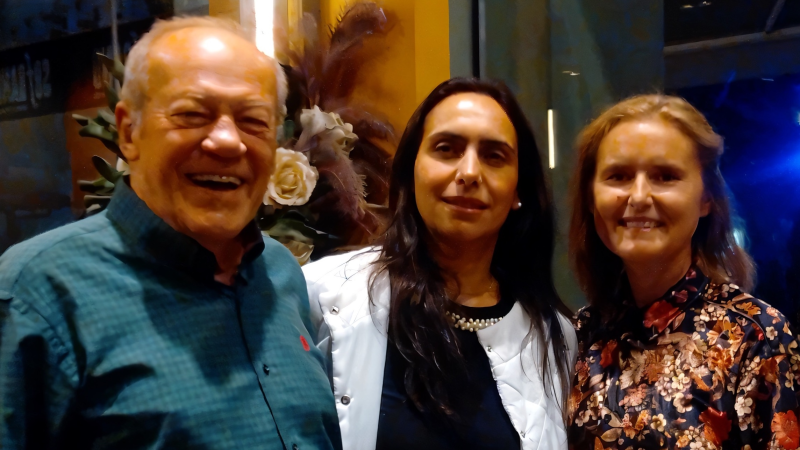

Hi, I’m Heather Spence, I’m a marine biologist, musician and composer. I learn about the ocean by listening to it. And jamming with it!
indieactivity: How did it all kick-off? If we focus on your work up until this moment in your career.
Heather Spence (HS): Music was the start of it all. I was fascinated with how music can affect us emotionally. I would experiment with different chord progressions, figuring out how to evoke different emotions. I wanted to understand how sound works. That led me to explore science – biology and physics especially. I went to college on a music scholarship, but was not required to major in music. I ended up majoring in biology and minoring in physics, with a lot of music classes that didn’t add up to anything.
In my senior project, I wanted to combine all of my interests, and my advisor introduced me to the amazing creature the snapping shrimp. This little animal the size of your pinky finger makes some of the loudest most persistent sounds in the ocean. I was hooked! I realized how important sound is in the ocean, and how marine biology could be a perfect fit for me and my interests in both sound and helping the environment.
I have read most autobiographies, and it’s conventional to display a logical path of trial, hope, and faith in achieving your dreams. Take us through the experiences that shaped your career?
Heather Spence (HS): I did not take the easy path. I made my own path. And I got a lot of criticism along the way, even people telling me I was totally wrong about what I was doing. One of the most common complaints about what I was doing was that I was doing too much. People said I needed to focus-in, and do fewer things. Actually, I disagree with them. All of the things I do fit together, they connect – they just don’t connect along traditional lines of academic disciplines.
My passion for music and composing informs how I do scientific research, and vice versa. My experiences in stage combat directly informed how I studied animal behavior. The connections I made with people in different areas of my life helped me to have a broader perspective and ask unusual questions. Now, as a mentor, I help students and people starting on their careers to see that there are multiple ways they can approach their career path, and there are, for example, many different ways to become a marine biologist. In fact, almost all of the people I know who are marine biologists don’t have the job title marine biologist. So, don’t be talked out of it if it’s what you want to do! We need all the help we can get, and there are many ways to get into it.

As a composer, it is all about the application of music. Educate us about what you do and how you do it?
Heather Spence (HS): A major method I use in composing I call Nature Music. It’s a process where the natural sounds drive the whole composition process. I think the way people think of composing, especially these days when people work in DAWs (Digital Audio Workstations), is – the first choice you make is, what’s the tempo? In a DAW, you literally have to choose that when you open a new project. Well, with Nature Music, I don’t do that. I don’t say, okay, I’m going to make this style of piece with this instrumentation, and then I’m going to add some birdsong. I start with the experience in nature, with the recordings themselves, and jam with them, and then the composition flows. I describe and teach this process in my online course Nature Music.
When you formed your company – what was the original motivation for its formation? How are you different from other companies? What brand are you building?
Heather Spence (HS): I do, I have my own LLC. Plus I also have non-profit initiatives (such as Ocean World of Sound), and I consult across sectors. My uniqueness is the intersection of disciplines, mainly marine science, neuroscience, and music.
What’s the first project out of the gate? Explain the nitty-gritty of it. How does this compare this latest project?
Heather Spence (HS): I’ve always had a lot of projects, but I’ll say my first really big project that got me noticed was setting up the first listening stations in the MesoAmerican Reef, that’s the second largest coral reef in the world you probably never heard of, much of it is in the Mexican Caribbean, including in the region around Cancun Mexico. The Mexican government invited me to come work with them, at the National Parks office, and I realized they needed more data to inform management of the coral reefs, but it needed to be a low cost method. My background in music made me think of listening to collect data, and that’s now it started. It wasn’t easy, I had to convince a lot of people that it was a good idea. Some I think maybe were just humoring me at the beginning like haha sure yeah try that. This was back before underwater sound was cool! But now it’s a big thing.
What worked better in this latest album that mightn’t have worked so well in the early days?
Heather Spence (HS): It’s amazing the music production tools that are available now! There are so many ways to work now with field recordings as samples in digital music compositions. I like the ability to be able to work with the recordings directly myself in a DAW (digital audio workstation).
How do you work on independent projects? Film? Music?
Heather Spence (HS): I love collaborations, and have several going. I also sometimes get inspired and work on something myself.

Where did your strengths lie as a composer or industry icon?
Heather Spence (HS): With my extensive training and experience in ocean science, when I compose music with ocean sounds, or about the ocean, I am incorporating the meaning of those sounds, and this is something special that I bring.
Let’s talk about finance. How do you finance projects? How did you break even? What future plan do you have regarding investments for your personal projects?
Heather Spence (HS): Great point. I remember the time when I had many projects but it wasn’t amounting to really enough and thinking, how am I going to make this work? And I talked to many independent contractors to figure out how they make it work. And everyone who was doing well had one main longer term contract they worked on, which then enabled them to relax so they could take on smaller, more risky but interesting projects. And I managed to do this myself, in large part thanks to a fellowship I received, the AAAS Science and Technology Policy Fellowship program, which helps place scientists in government.
The music business presents opportunities: sound for games, internet, mobile devices, major record labels, ghost-writing, musical collaborations with various chart-topping music etc.? These revenue points are crucial for a career, how do you draw revenue value from these channels?
Heather Spence (HS): Music streaming revenue is terrible. For music I do much better with live performances, and also teaching, and sometimes grants.
Talk to us about your musical talents?
Heather Spence (HS): I play multiple instruments, mainly cello, and piano, but also viola da gamba, accordion, concertina, organ, guitar, … I’m learning oud. I do vocals as well. I think being a musician in these ways does influence my compositions. I’m classically trained but I also have learned a lot by ear and I enjoy that. I enjoy improvising a part to fit what’s going on with the ensemble and I think that’s one of the things I’m especially good at, as well as connecting emotionally with the music and sharing that emotion through sound.
Say more about that emotional connection?
Heather Spence (HS): Music and sound are very powerful. They help us to connect to our emotions, to shape our emotions. They help us to connect to each other, and to a time and place. This is actually the basis for the initiative Ocean World of Sound. We are finding that people connect very deeply with the ocean when they have the opportunity to listen to and interact with underwater sounds. There’s actually a book chapter coming out soon, that we wrote about how we are using sound and music to enhance ocean literacy. Stay tuned!
What else have you got in the works?
Heather Spence (HS): I recently did a TEDx talk, Listen Like a Fish! It should be posted soon. I think you’ll enjoy it, it’s got tips for tuning in to your surroundings, drawing on neuroscience and marine biology. I’m always writing a lot of compositions. I’m less good about finalizing and publishing them – I need to work on that! I try to keep my website up to date, the blog and also the events calendar. My website is HeatherSpence.net and it links to all my major projects and initiatives.
Do you have any suggestions? Let’s have your comments below or on Facebook, Instagram or Twitter.
Socials
Website
LinkedIn
Twitter
Instagram
YouTube
MORE STORIES FOR YOU



Broken Bird, Biracial Girl Conflict with Culture and Identity
A Short Film by Rachel Harrison Gordon is a coming of age drama SocialsWebsiteIMDbLinkedInInstagramVimeo
Year One with Elizabeth Yu A Coming-of-Age Drama Releases November
Freestyle Acquires Elizabeth Yu Coming-of-Age Drama YEAR ONE for November Release