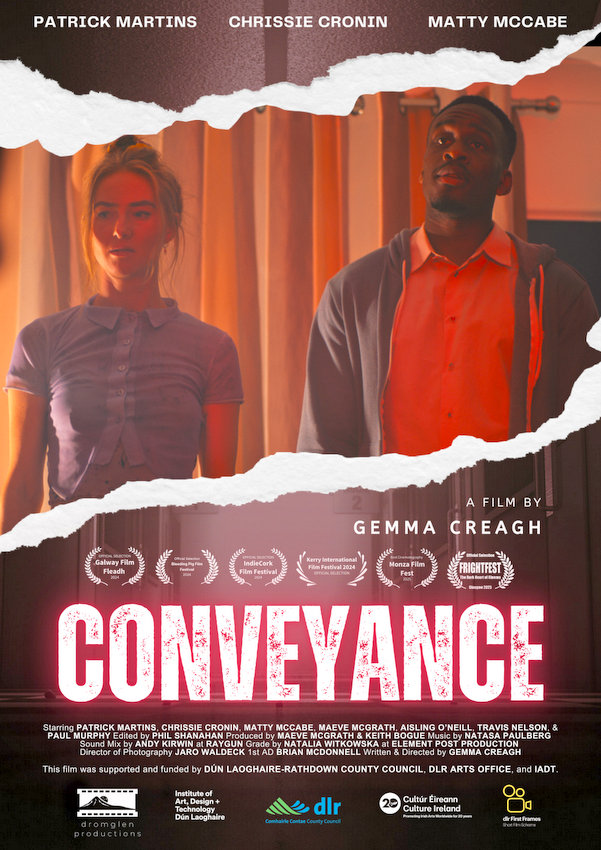
indieactivity: How did you get into directing? How would you describe your style?
Gemma Creagh (GC): Directing is new for me. I have always been a writer… and a more visually leaning one at that. Before I got into film, and even as a child, I’d drawn graphic novels and loved to tell stories with images, even if the intended audience was just me. Writing is about building worlds, while directing is a different skill altogether in realising them.
It’s reacting to what’s happening, picking a team, working with them, making creative decisions on the fly, being practical, and trying to make sure our actors are as far away from the chaos and as well looked after as possible. I did direct a few things straight out of college, but over the past few years, I’ve been working on developing longer-form projects as a writer and have been firmly behind a keyboard. It has been a very enjoyable experience to direct, and I’m hoping to do it again quite soon. My personal style would probably be dry humour covering up anger or pain.
Who is Conveyance for? Who do you think would enjoy it the most?
Gemma Creagh (GC): It’s for me, I guess, and people like me, who love horror, genre, and comedy. It’s for people who might have had a crap time with roommates, who’ve had a tough relationship with a parent, or who are in a relationship and finding it’s more complicated merging their lives than rom coms can lead you to believe. And fans of Fair City – if you’re in Ireland. We have a brilliant cameo from one of our nation’s soap stars.
The Official Trailer for Conveyance Directed by Gemma Creagh
How long did it take to shoot the entire film?
Gemma Creagh (GC): Our main shoot was four days, on location in that gorgeous apartment in Dún Laoghaire. However, myself and my longtime friend and talented DOP Jaro Waldeck, spent another day shooting that grimy house in the opening sequence. It was vile. There was a tree growing inside it, and our whole skin itches after for hours. We also went and shot some externals ourselves and then did a half day of ad-libbing for our Love Island sequences with talented comedy actors Pius Ojo and Rachel Walsh in my mum’s back garden. So, it was really five days. And we could easily have had another.
How long was the post-production process?
Gemma Creagh (GC): It was a few weeks. Phil Shanahan, our editor, is a man I would recommend to anyone, especially people cutting horror. He’s a master of tension—he found beats and workarounds quickly and has an encyclopedic knowledge of the genre. He even did VFX for our haunting with our TV sequences, swinging lights, and spooky pot-boiling scenes.Then the sound mix saw Raygun’s Andy Kirwin bringing composer Natasa Paulberg‘s excellent fresh, metallic score in to build and finalise the tension. That was brilliant fun. I even got to try my hand at acting, being the other side of Janet’s (Aisling O’Neill) phone conversation in Raygun’s studio. At First Element, Natalia Witkowska worked with Jaro to elevate the visuals and provided us with that excellent grade. They not only brought that bright and bold aesthetic to the screen but also helped build the mood, and even hide our dodgy strings for the ouija board scene..
The film had a lot of talent working behind the scenes as DPs, sound designers, composers, etc. Why is diversity important both in front of and behind the camera?
Gemma Creagh (GC): First off the bat… diversity has proven benefits for everyone. According to a study by McKinsey, D&I Global Market Report, and People Management, diverse companies earn 2.5x higher cash flow per employee. Inclusive teams are over 35% more productive. Diverse teams make better decisions 87% of the time. What is a film set other than a collection of people making decisions on the fly? The more perspectives and breadth of experience in a room, the more likely a mistake will be picked up or a clever solution will be found.