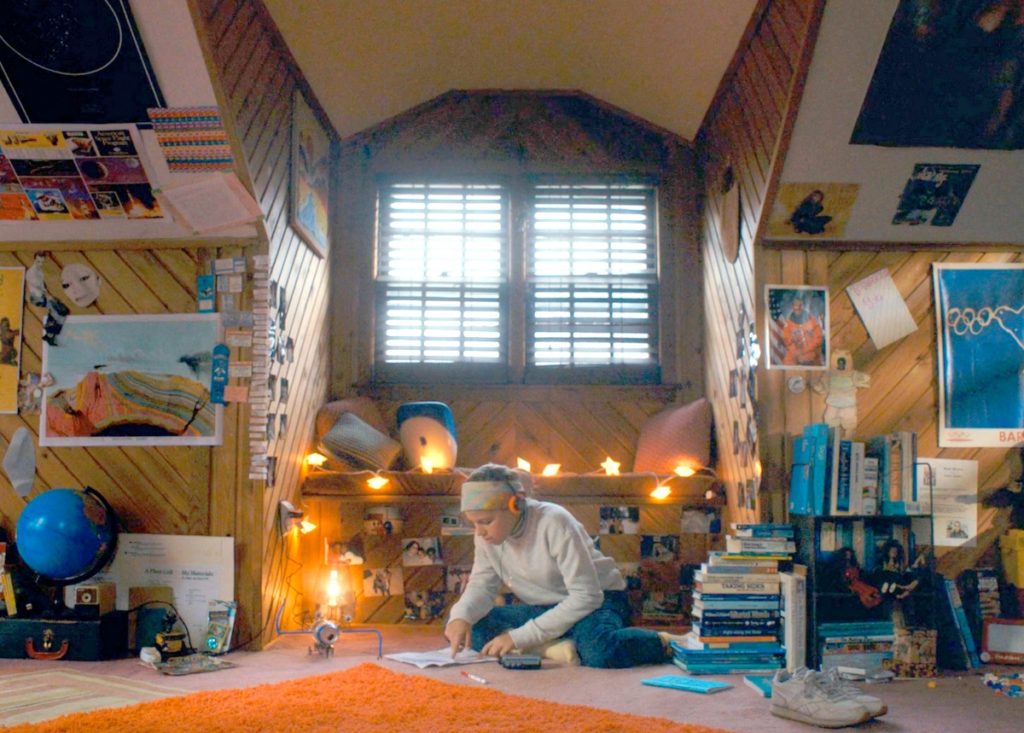
Broken Bird is a film. It is the semi-autobiographical film of Rachel Harrison Gordon. It focuses on a bi-racial girl struggling with her culture and identity, whilst being days away from her Bar Mitzvah. This important film will have its North American Premiere at SXSW Film Festival 2020.
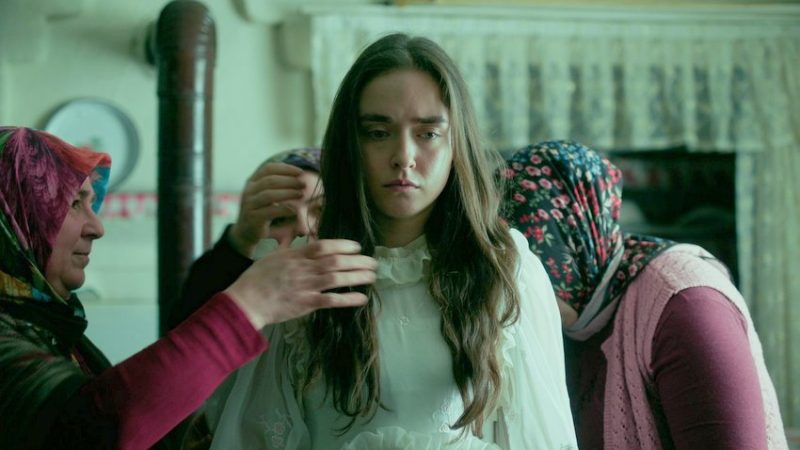
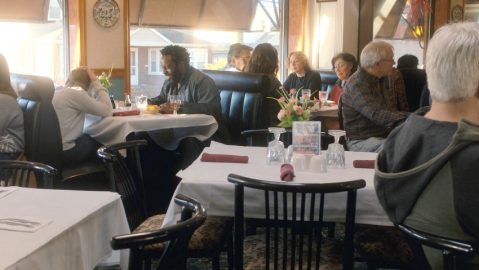
Birdie is a biracial girl. She is raised by her Jewish mom. Birdie spends a rare visitation day with her father as she is preparing for her Bat Mitzvah. They share a meal; she overcomes her doubts, and decides to risk inviting him back into her life. Birdie confronts what independence means as she steps into adulthood on her own terms.
Related Story: ‘Broken Bird’ Depicts a Biracial Girl’s Conflict with Culture & Identity
The story is semi-autobiographical and I’ve been writing it my entire life. The choice to tell story, I captured moments in my life that I thought were cinematic. I am not a diary person, but post-it’s and e-notes. Scene-music pairings, dialogue ideas, unique exchanges, etc.
I am confident to direct, because I am familiar with the story. I knew answers to questions about why the characters were saying or doing a specific action at that moment. The actors had significant backstory to draw upon. I was open and eager to discuss their interpretations of each moment. That is how to find ways for them to draw on their life.
I’m currently an MFA/MBA dual degree candidate at NYU Tisch for Filmmaking and Stern Business School. I enrolled with the intention of creating a production company for my own work. An outfit to advocate the stories of others. I’m have an extreme interest in details. I find myself engaging in production tasks as I work on the creative aspects of the project. My partner Alon was a huge source of support. He read every draft of the script, scouting locations, and engaging with cast and crew. I’m extremely proud of the amazing job we did for our first time.
indieactivity: Did you start writing with a cast (You or any) in mind?
Rachel Harrison Gordon (RHG): I didn’t write with specific actors in mind, but ended up with the ideal situation. The character of Birdie is wise beyond her years. My first meeting with Indigo Hubbard-Salk confirmed she had the poise, wisdom, curiosity and spunk that fit the character. Indigo is a recommendation from by Spike Lee. I met with him to discuss an early draft of the script. We watched some scenes from his Netflix show She’s Gotta Have It. His advice is that she’ll fit for the role. Indigo is also Jewish, and connected with the script in her own way.
Chad L. Coleman is a referral, the actor playing Andre/Dad via another Tisch professor, Abigail Bess, who had worked with him on various stage projects. The first time with Chad, I am all nerves. But, we had a long heart-to-heart, and every conversation since has felt like one I would have with family.
How long did you take to complete the script? (Do you have a writing process?)
Rachel Harrison Gordon (RHG): The project is part of my NYU curriculum. The script is written over a course of two weeks before my 2nd year of graduate school. I was workshopped for about two months throughout the semester. Composing the scenes came together quickly, as well as a feature-length version. Workshopping the short script in class was about refining the moments. It was to make sure they were expressing what I wanted them to say. I realize there was a home for all of these ideas, even if it wasn’t in this short film.
What was the first project out of the gate?
Rachel Harrison Gordon (RHG): Broken Bird is my first film.
During production, what scene (that made the cut) was the hardest to shoot?
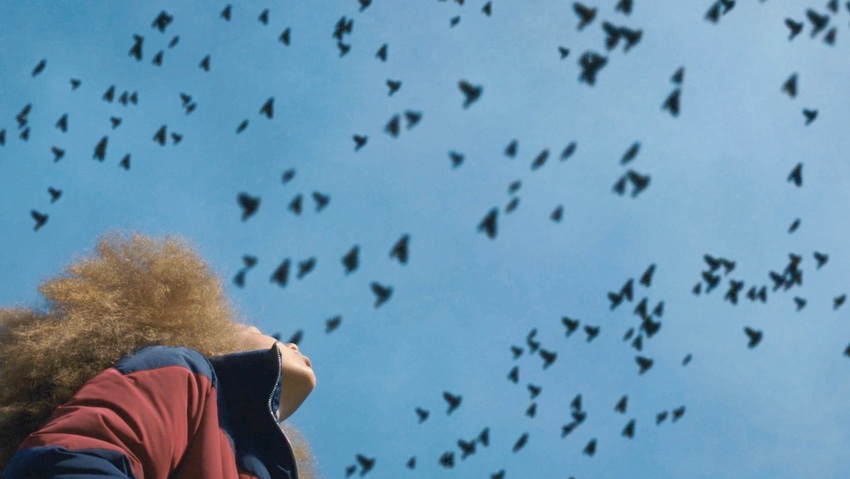
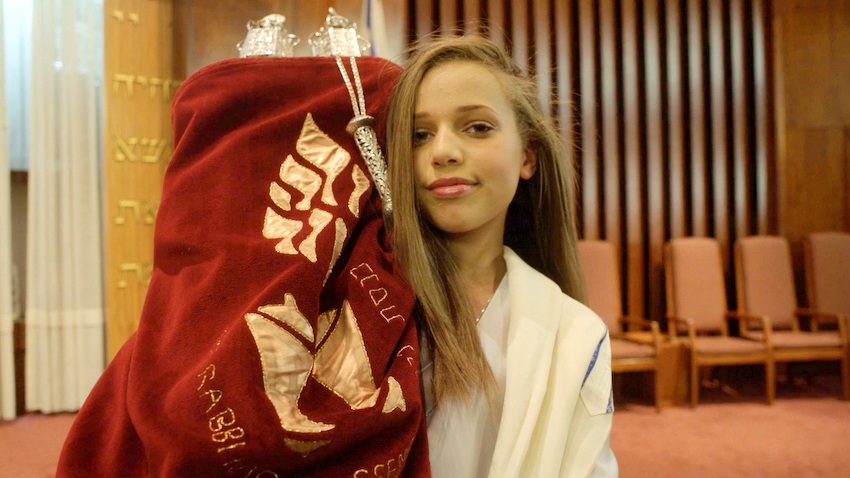
Rachel Harrison Gordon (RHG): The final scene. When Birdie is standing outside on the day of her Bat Mitzvah. She is waiting for her father to show up. We had a couple variations of the ending before beginning production. I had to figure out a way to make the character triumphant. A related challenge was the semi-autobiographical nature of the story, which made me protective of both of my parents. Initially there was this sense that I had to make their screen time or their emotional arcs equal. I was hesitant to portray another Black man on screen who fails to keep his commitment. In the end, Birdie’s story is optimistic. I am confident that the audience recognizes she is stronger and more confident. As a result of being able to incorporate all of her family.
You produced and directed the film, what measure of input did it take to don these hats?
Rachel Harrison Gordon (RHG): I am at home being on set. I’ve had many careers before filmmaking, including Mechanical Engineering. I applied to my current dual degree program because I still couldn’t see myself as an artist. Being on set was the most empowering and grounded I’ve ever felt, directing is my happy place. After all my previous jobs, I’m so glad I am in what I want to do forever.
I wasn’t afraid to ask for help and to rely on experts within each of our departments. I was grateful for each of the people that believed in the story and in me. Both as an individual to be a part of this project. Especially without seeing any other previous work.
Is there anything about the independent filmmaking business you still struggle with?
Rachel Harrison Gordon (RHG): The stories we tell are priceless, yet there is the expectation to trade your craft and time for free. There is a greater gap between skillset and salary in this industry than any I know.
Where do you think your strengths line as a filmmaker?
Rachel Harrison Gordon (RHG): I am perceptive. I sense the actress playing Birdie uncomfortable having her hair washed on the day we scheduled it to happen, but she didn’t want to say anything to disappoint me. I couldn’t start my filmmaking career as a director who puts their actors in situations without their full consent. We rescheduled the scene to a day where we could create an environment the actor was comfortable with. Even though this was a critical scene, it was worth it to go home without it.
I’ve been on sets where the health and well-being of the group was not prioritized. It was important to me to work to create an environment that everyone would be happy with. As a result, we became a family.
Let’s talk finance, How did you finance the film?
Rachel Harrison Gordon (RHG): Honestly, we financed this film in a way that we cannot reproduce. We used a significant portion of our wedding gifts.
How much did you go over budget? How did you manage it?
Rachel Harrison Gordon (RHG): We came within our budget. We had a thoughtfully created budget. The generosity of people who devoted their time and resources is a heavy discount. However, there were also some unexpected costs that resulted from me trusting people despite red flags. There were some duplicate post-production costs that occurred. This happened partly because, I wasn’t confident that I was clear about a technical issue. I disobeyed my judgement to defer to the expert. Turns out I was right, and should have pushed back on some of the answers I received. I learned many lessons about trusting my gut and the qualities of people I could rely on.
Do you think a project can make any dent without marketing today?
Rachel Harrison Gordon (RHG): I am proud that the film has been accepted to festivals that have blind submissions. I wasn’t an alum at Berlin or SXSW, I had never made a film before. I do feel like we were incredibly lucky, but I like to believe that this story speaks for itself.
Tell about your marketing activities on the project – and how it’s gone for you?
Rachel Harrison Gordon (RHG): We haven’t marketed the film. It was only after we were accepted into 10+ festivals did we begin to engage with a publicist.
What do you hope audiences get from your film?
Rachel Harrison Gordon (RHG): The title of Broken Bird critiques a harsh label. It is often applied to people in situations like Birdie. The daughter of divorced parents affected by substance use, confused about where she fits in racially and spiritually. I remember internalizing whispers of my “broken” home to mean I was different. Despite the film’s events, the characters’ stories are not ones of defeat. I hope this film shows the benefits of celebrating the complexities of people.
Most portrayals of Black Jews are tokenized and fetishized. It is as something strange or for comedy. In my personal interactions, I have learned to re-interpret this strangeness as uniqueness. This lesson to embrace one’s uniqueness was a goal of the film.
What else have you got in the works?
Rachel Harrison Gordon (RHG): There is a feature-version of Broken Bird that follows both Birdie and her father’s stories. I’m still at my grad film program, and am directing-writing a short we are filming February 2021. I’ve written a few other shorts, and would love to produce those in the next year as well. I am interested in creating music videos and commercials. I am excited to incorporate non-traditional storytelling methods in all of my projects.
Let’s have your comments below or on Facebook, Instagram or Twitter
Socials
Website
IMDb
LinkedIn
Instagram
Vimeo
FILMMAKER INTERVIEWS