
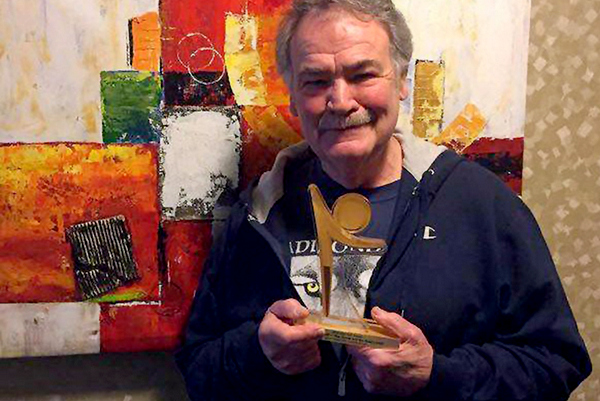
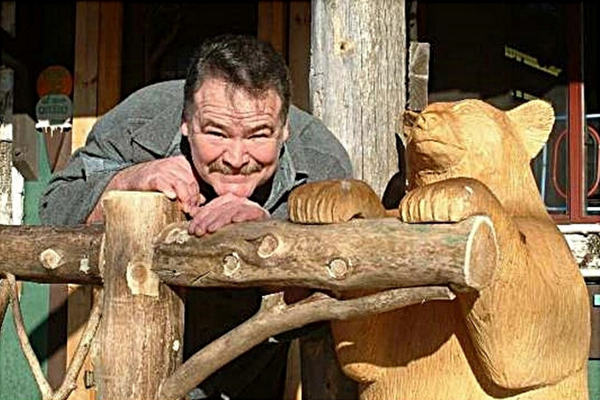
Jamie Sutliff is a screenwriter, author, narrator, artist and sculptor living in the Adirondack Mountains, New York. He specializes in life-sized wildlife sculpture for museums and private collections, including Museums of Natural History. Jamie Sutliff‘s work has appeared in over a dozen national magazines including the Smithsonian. 8 novels, audio books produced by Blackstone Audio Publishing.
Jamie Sutliff‘s titles include: “Antidote Man”, (Sci-fi, Thriller) Circus Road Festival Semi-Finalist. Yah-Ko Horror, International Independent Film Awards (Silver Medal – Best Original Story). The Elves of Owls Head Mountain No.1 in series. Illustrated Y/A (Fantasy Novels, 2 four star reviews). The Land of the Nen-Us-Yok No. 2 in series (4 star review). The Sphere of Visions No. 3 in series. The Ghost and the Gold Louis (Paranormal/Historical , 5 stars). Winner Best Feature Screenplay at the Utah Film Awards. And finally Snowflakes in a Clear Night Sky (short stories, 4 stars)
Did you study acting?
Jamie Sutliff (JS): My writing is eclectic I write in 4 genres the common thread history and true events. Even the fantasy series is extrapolated from Native American folklore.
How did you get into writing?
Jamie Sutliff (JS): I was a road musician for 15-years travelling across the country – this was the first motivation for writing to hold the memories – people became characters events became scenes in my mind that infiltrated all my stories.
Did you study writing?
Jamie Sutliff (JS): Art and music were my first studies. As the road life lost appeal I began library courses on writing – this should be something for all writers – the opportunity to study with the masters – a free education on your own time. The secret to managing your own time is simple – do not be lazy. Universities create competitive energy crowds following crowds sitting in classrooms hoping your work is good for to fail in a crowded classroom can crush the creative spirit. Writing does not require a degree it requires talent and a true love for the written word. A motivated person can visit a library and take the same literature courses offered by Oxford or any school one chooses.
What is the difference between a screenplay and a play?
Jamie Sutliff (JS): The difference between a screenplay and a novel is easy to understand – a novel will take minutes to describe a scene or object in order to paint an image in the reader’s mind – a screenplay cuts away descriptive narrative condenses it to an image in the viewer’s eyes. The novel story must compel the reader with prose, poetry, descriptive narrative for one person – the screenplay story must compel an audience with vivid imagery and music. I began writing novels and now prefer to write screenplays.
How do you turn an idea into a play?
Jamie Sutliff (JS): A good formula to turn an idea into a play – write notes in longhand before opening a file. Take a notepad on a long walk write 1. 2. 3. Separate pages. 1. Beginning 2. Middle 3. End. It is not necessary to dwell on the beginning – John meets Linda in crowded market reaching for the same fruit. Simply make notes in 1, 2, 3 – love scene in 2? – Auto accident in 3? With a few paragraphs the first story outline will make the process flow and at times for me too fast. If I am excited about an idea I can write for hours.
What do you do to get an idea into a play?
Jamie Sutliff (JS): All ideas for all people come from real life – I draw from many sources – news events, fantasy, beautiful scenery – I am fortunate to live in the mountains in the Adirondack State Park – I write screenplays while hiking – I have 3 dogs that provide amusement – wild animals wander through the yard – lovely lake across the road provide me with an endless supply of ideas. I will admit I need solitude to create – others need city life ideas.
Briefly describe a few wrong impressions writers indulge in?
Jamie Sutliff (JS): Wrong impressions writers indulge in are relationships especially ones they do not understand or approve of. Many wrong impressions are racial.
Do you often take courses in writing to increase your craft?
Jamie Sutliff (JS): Yes I still take courses to improve my writing again I use the public library.
2016 Utah Film Awards Jamie Sutliff from Long Lake, NY
What books do you read?
Jamie Sutliff (JS): I read too many books to list and authors I admire so the book I am reading now is “All the Light We Cannot See” by Anthony Doerr – wonderful work.
What do you do to keep in shape as a writer?
Jamie Sutliff (JS): I am one of those who must exercise every day – my body stays in shape and ideas flood my mind the harder I climb or hike. If that sounds like an addiction yes it is. I write standing up simply can’t work sitting down – listen to music dance around at times like a fool and write. I sit to watch a movie.
When you are offered a play to write what is your routine?
Jamie Sutliff (JS): To date I’ve had no offers however the routine would remain the same.
How do you develop a character in a script to be honest and believable?
Jamie Sutliff (JS): Believable characters are people you know personally and intimately a believable character is born from a good friend’s quirks that both annoy and amuse, a jealous lover, the schoolyard bully, family – use real people change their names and have fun.
What is the most memorable character you have created?
Jamie Sutliff (JS): My favorite character is from The Ghost and the Gold Louis which won the Utah Film Awards and I regret not thanking the character Evangeline DuBarry, sold as a slave in 1810. Evangeline was a beautiful proud woman who visited a runaway slave in the swamp a witch called Iya One Eye who cast a spell to make Evangeline a ghost. Evangeline represents harsh history and forces us to see the next scene. I fell in love with Evangeline and I know for certain the audience will.
What do you want from a director during production?
Jamie Sutliff (JS): I write “soft scripts” I would never assume to tell a director how to paint the cinematic canvas – I have no ego in writing I love working with others this comes from the old days in music everything sounds better with more players. A director should be given free reign over a script.
How do you prefer to work with a director during production?
Jamie Sutliff (JS): I would stand quietly to the side until asked a question.
Do you get offers from Hollywood?
Jamie Sutliff (JS): I have had two offers that I turned down but I was proud that someone actually asked. Writers need to understand how lengthy and difficult this process can be especially young people who have difficulty dealing with rejection only a tiny fraction makes it to the next step above amateur. Never believe your play is the best thing ever written instead take the attitude this is bad and I need to work my ass off to make it better.
What do you think a writer can do to get into the industry?
Jamie Sutliff (JS): Helpful sources for writers are contests and festivals- if you think your work is good pay the fee and the readers will tell you the truth – if your work isn’t good enough to make the semifinals it is time to rethink the story. It has taken 3 years for industry people to notice – no contacts yet other than twitter where I post contests I’ve won 6 competitions in 2 years in 4 genres. I have writer friends who have won many times more and we do not fool ourselves – this is a game – enjoy it – play to win and understand the rejection rate hovers at 90%. The cliché Hollywood needs scripts like the army needs toilet paper is true they just demand the finest toilet paper in the world.
Who is your favorite writer?
Jamie Sutliff (JS): It is hard to name just one – Elmore Leonard, James Lee Burke, Stephen King top the list.
Why?
Jamie Sutliff (JS): Elmore Leonard wrote so many screen adaptations it’s difficult to keep track – he had a punchy straight forward style, avoided long descriptions, told great action-packed stories. The “Justified” series is a fine example of Leonard’s style.
What advice would you give to amateur writers around the world?
Jamie Sutliff (JS): Amateur writers should always try to have fun and not take their work too seriously – if they love writing treat it as a game, a puzzle to be solved most important always finish and start the next story. The game is not for people who never finish a story – life is short.
Briefly write about my career?
Jamie Sutliff (JS): I am an author and screenwriter I do not act. I have written 8 novels, co-produced 7 audio books, I have 12 completed screenplays 6 prize-winners and 17 works in progress.
You can comment below or join is on Facebook, Instagram or on Twitter
Socials
Website
Facebook
Twitter
ACTOR INTERVIEWS