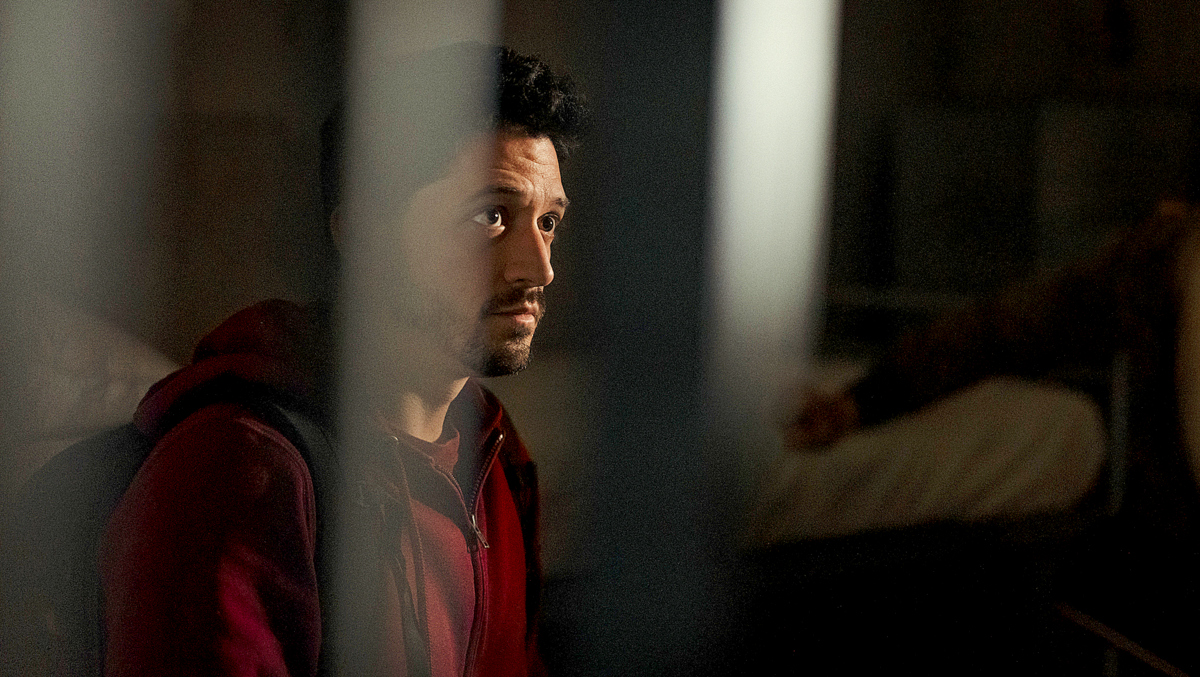
I started photographing when I was a kid — my father was a photographer, so I grew up surrounded by images. When I became a photographer myself, I realized it wasn’t enough for what I wanted to express. That’s why I studied and became a Director of Photography. But even then, something felt incomplete. I needed more control over the storytelling, not just how it looked but how it unfolded. That’s when I turned to directing. For me, it’s never been about the title “director” — it’s about making something move, making an image breathe. My style? It’s all about control and precision. I like to strip things down until you see the bones of a moment — and then keep stripping until it feels inevitable.
Logline: After a tragic accident kills his pregnant girlfriend, Marco—a violent ex-con consumed by guilt—faces a choice: drown in self-destruction, or let his estranged sister and an idealistic lawyer pull him toward an uneasy redemption. Set in Rome’s ruthless suburbs, this raw, emotionally charged drama asks: Can broken people ever truly heal, or are some wounds too deep?”
indieactivity: Do you hire a casting director, or cast yourself? What criteria go into your casting?
Jacopo Marchini (JM): I always collaborate with a casting director, but I need to be part of the process. I look for truth, not polish. I want actors who feel like they belong to the world I’m building, people who can hold a frame with raw presence, without overacting. For me, casting is about vulnerability—you have to believe that these fractures, these wounds, really exist.
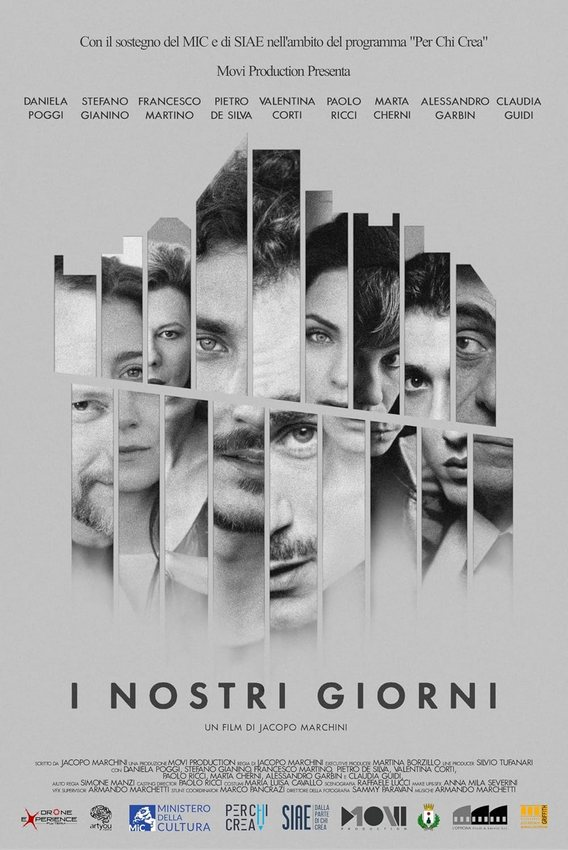
The Official Trailer for I Nostri Giorni (Our Days) by Jacopo Marchini
What went into the casting process?
Jacopo Marchini (JM): It was about finding people who could carry both the violence and the fragility of Marco’s world. We tested actors not just alone, but together, because the film lives in the tension between them—the estranged sister, the lawyer, Marco himself. It wasn’t about a “perfect fit.” It was about the electricity when two broken souls shared the screen.
Without giving anything away, tell us a little bit about the script, how did you come up with the idea?
Jacopo Marchini (JM): The story came from a question that haunted me: how does light enter a life that has only known darkness? Marco’s guilt is unbearable, but what fascinated me was not redemption in the Hollywood sense—it was the fragile, almost imperceptible whispers of hope. The script grew from wanting to inhabit that space where wounds don’t close neatly, but still open unexpected doors.
Who is “I Nostri Giorni” (Our Days) for? Who do you think would enjoy it the most?
Jacopo Marchini (JM): It’s not comfort food. It’s for people who want to lean forward, who aren’t afraid to sit inside discomfort. If you’re interested in stories that don’t give easy answers but show how fragile and beautiful human connection can be—even in ruins—then this is for you.
How long did it take to shoot the entire film?
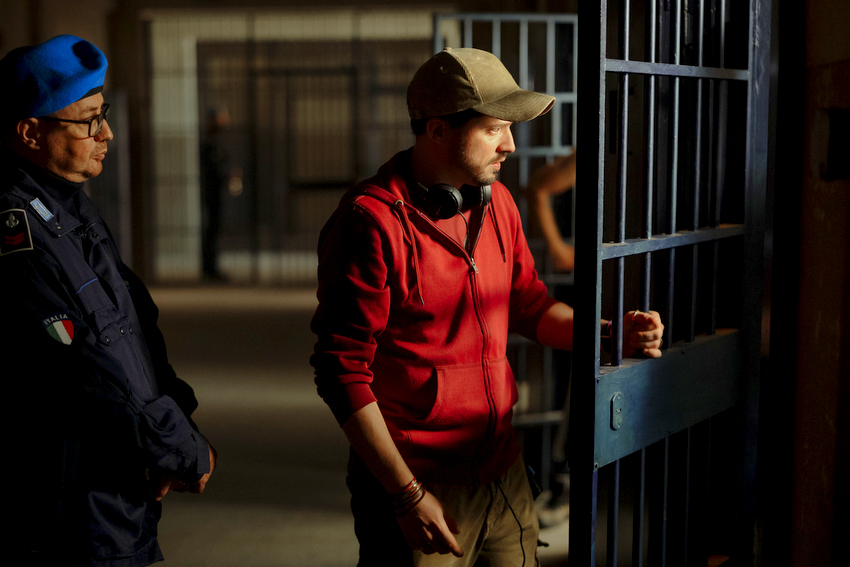
Jacopo Marchini (JM): Every day felt like a battle. We shot in Rome’s suburbs, which are as unforgiving as the characters. The production lasted 7 intense days, moving across different locations like the police station, private homes, and even the actual Rebibbia prison. I don’t believe in rushing—every shot had to feel lived in, like it belonged not just to the streets, but to the weight of those walls.
How long was the post-production process?
Jacopo Marchini (JM): Post was where the film finally revealed itself. We stripped away everything unnecessary—dialogue, movement, sound—until only the truth of each moment remained. I believe editing isn’t about adding; it’s about subtracting until what’s left is inevitable. It lasted three months from editing to final delivery of DCPs.
The film had a lot of talent working behind the scenes as DPs, sound designers, composers, etc. Why is diversity important both in front of and behind the camera?
Jacopo Marchini (JM): Because cinema is perspective. If everyone shares the same background, the film is flat. I want collaborators who see the frame differently, who bring in contradictions, who question me. Diversity isn’t decoration—it’s oxygen for the creative process.
What are your goals with “I Nostri Giorni” (Our Days)?
Jacopo Marchini (JM): To make something that lingers. I don’t care if people love or hate it—what matters is if they keep thinking about Marco, about the silence he carries, about the choices that break or heal us. What drives me is the idea that Marco isn’t some distant, untouchable character. He could be anyone. In a society as sick and corrupted as ours, it only takes one tragic turn, one mistake, for someone’s life to spiral into darkness. That’s why I wanted the audience to recognize themselves in him—not because they share his past, but because they share his humanity. His struggle for redemption, however fragile, belongs to all of us
How do you approach building tension in your films?
Jacopo Marchini (JM): Tension isn’t about loud sounds or quick cuts. It’s about waiting, observing, letting the audience live in the moment with the character. I like to let small gestures, silences, and the weight of a space do the work. If you can make the audience feel uneasy in a quiet room, the impact of action will be unbearable.
How important is the setting in your storytelling?
Jacopo Marchini (JM): The environment is never just a backdrop—it’s a character. In Our Days, the outskirts of Rome reflect Marco’s fractured life. Concrete, silence, neglected streets—they shape the story, push the characters, and mirror their inner chaos. I want the audience to feel trapped in these spaces as much as the characters themselves.
What draws you to stories about human fragility and redemption?
Jacopo Marchini (JM): Because that’s where life happens. Cinema can’t just entertain; it should expose us to ourselves. I’m fascinated by people on the edge, by the choices that hurt and heal simultaneously. Watching a character face their own darkness—and sometimes survive it—reminds us that even in our worst moments, connection and grace are possible.
How do you collaborate with actors to bring out authentic performances?
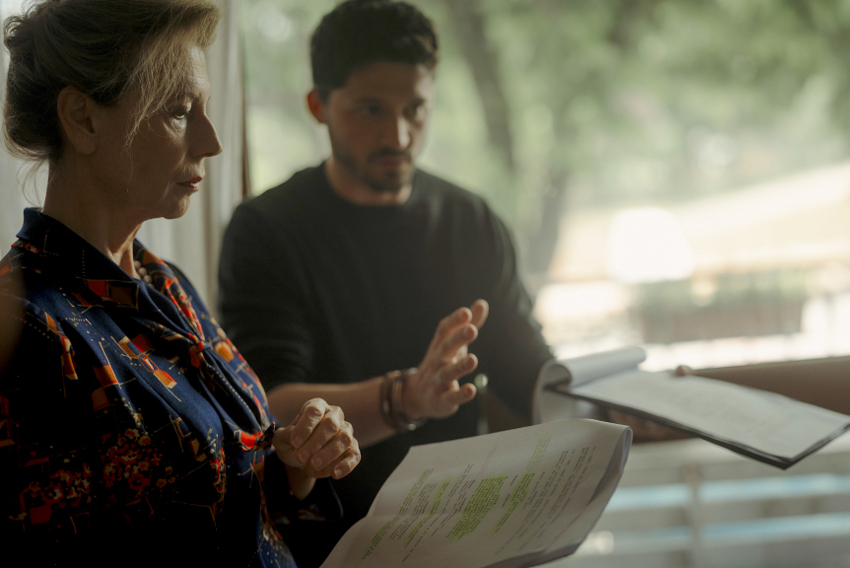
Jacopo Marchini (JM): I give them space to inhabit the character fully, to make choices that feel true, not just scripted. I push them to confront the emotions they might avoid in daily life. It’s not about “acting” — it’s about living in the skin of someone fractured, and letting that truth bleed through the frame.
How do you balance visual storytelling with emotional depth?
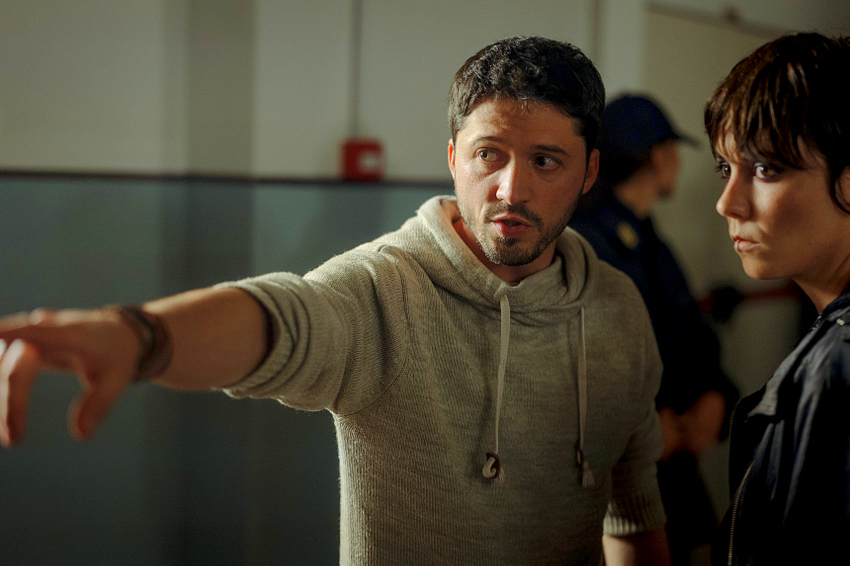
Jacopo Marchini (JM): Every frame must serve both the eye and the heart. I obsess over composition, lighting, movement—but never for style alone. Each visual choice has to amplify what the characters feel. If it doesn’t make the audience feel the tension, guilt, or fragility of a moment, it doesn’t belong.
How do you integrate VFX into your storytelling, especially in a film that’s so grounded in realism?
Jacopo Marchini (JM): For me, VFX isn’t about spectacle—it’s another tool to make the audience feel something real. In Our Days, I use visual effects to enhance the atmosphere, the tension, or subtle psychological elements that can’t be captured in-camera. They’re never meant to distract, but to immerse the viewer deeper into the character’s world, making the unseen tangible. It’s about blending reality with emotion, so that even the most impossible or abstract moments feel lived-in and immediate
What’s next for you? What are you working on right now?
Jacopo Marchini (JM): I’m currently developing three projects, each exploring fear and obsession in different ways. One is a high-tension thriller set in a mountain village, where an old murder resurfaces more than twenty years later through a new killing. Another is a modern reinterpretation of H.P. Lovecraft’s The Terrible Old Man—an intimate horror that takes the unease of his story and reframes it for today. And finally, I’m working on The Algorythm, a psychological thriller rooted in artificial intelligence, where the line between control and chaos becomes terrifyingly thin. They’re all darker, maybe even harder to face, but that’s where cinema lives for me—where it hurts to watch, but you can’t look away.
What would you recommend to a new director at the beginning of his/her journey?
Jacopo Marchini (JM): Don’t wait for permission. Don’t waste years reading about filmmaking. Pick up a camera—any camera—and fail. Fail again, and then fail with more style. That’s how you learn.
Who is your favorite director? Why?
Jacopo Marchini (JM): David Fincher. He’s a master of control—every frame, every movement, every shadow is deliberate. Watching his films, you feel the precision, the tension, the way the camera guides your emotions without you even realizing it. That’s true authorship. I also admire Steven Spielberg for his ability to immerse audiences completely in a story, to make you feel wonder, fear, and empathy all at once.
What advice would you give directors around the world?
Jacopo Marchini (JM): Be ruthless with yourself. Cut what doesn’t serve the story, no matter how much you love it. And don’t try to be universal—be honest, be specific. That’s how people everywhere will feel the truth in your work.
Our Days has received significant recognition at festivals. How does that impact you as a Director?
Jacopo Marchini (JM): It’s incredibly humbling. Winning a Gold Remi Award at the 58th Houston WorldFest, being named Best Director at Venice Shorts and Cannes Film Awards, and having the film selected for Oscars-, BAFTA-, and Canadian Screen Awards-qualifying events—it shows that the story resonates far beyond my own vision. But these accolades are not the goal. They’re proof that audiences and peers connect with the intensity, the tension, and the humanity we aimed to capture. They push me to keep challenging myself, to continue telling stories that are raw, unflinching, and unforgettable.
Jacopo Marchini Reel
About Jacopo Marchini: Jacopo Marchini is an Italian Director and Cinematographer based in Rome, known for crafting visceral, soul-searching cinema that lingers on unspoken truths, fractures, and fragile redemption. He has directed films, commercials, and music videos for artists like Ultimo, Marco Mengoni, and Il Volo (Sony, Universal, Warner), reaching over 50M YouTube views, while collaborating with global brands and broadcasters including BBC, Netflix, Amazon Prime Video, RAI Cinema, and AstraZeneca.
Recognized by the Italian Cinematographers Guild (AIC), his work has premiered at BAFTA- and Oscar-qualifying festivals worldwide, earning awards such as the Remi Award at WorldFest Houston and Best Director at Venice Shorts in Los Angeles. He has also worked alongside cinema icons including Academy Award winner Mariel Hemingway and Christopher Coppola. As co-founder of Movi Production, he led the company to Oscar-qualifying success within its first year, lensing films across Cinecittà, New York, Italy, Tunisia, and Slovakia. For Marchini, filmmaking is rebellion against indifference—a way to capture the fleeting instant when someone is truly seen.
Let’s have your comments below or on Facebook, Instagram, or Twitter
Socials
Website
IMDb
Facebook
LinkedIn
Instagram
YouTube
FILMMAKER INTERVIEWS