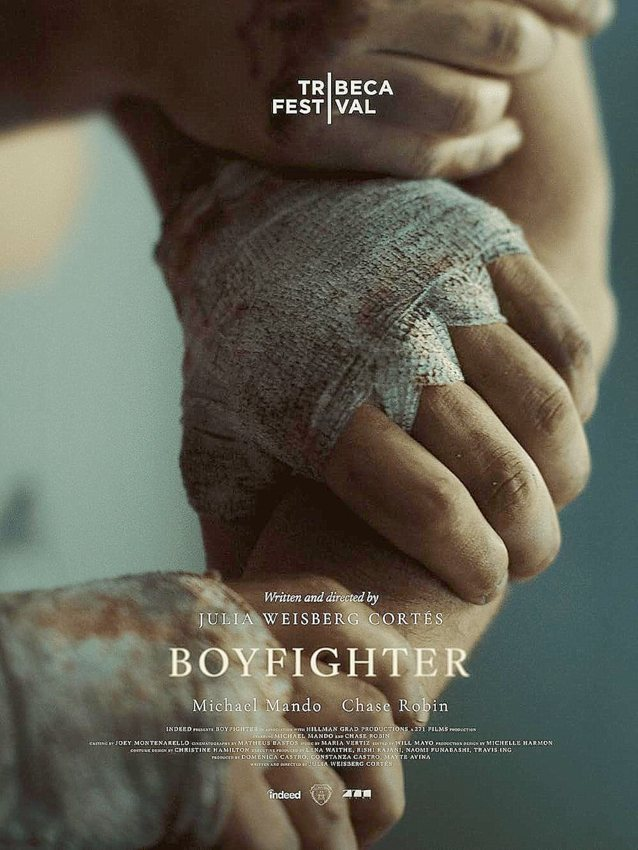
Title: Boyfighter.
Genre: Drama.
Date: May, 2025.
Director: Julia Weisberg Cortés.
Producer: Mayte Avina, Constanza Castro, Doménica Castro.
Writer: Julia Weisberg Cortés.
Cinematographer: Matheus Bastos.
Production Company: 271 Films, Hillman Grad.
Budget: N/A.
Financing: Through Indeed grant.
World Premiere: Tribeca Film Festival.
Awards: Nominated for Latin Award Hollyshorts.
indieactivity: Tell us about “who you are“?
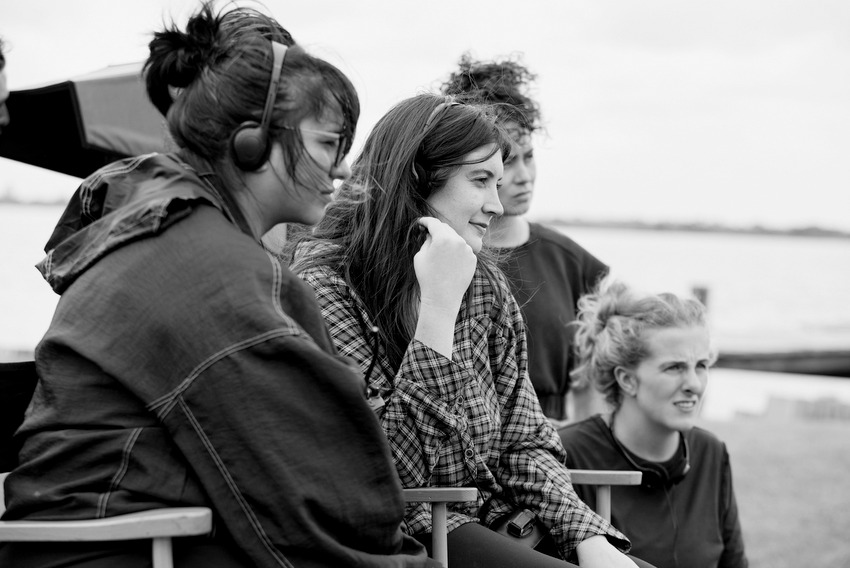
Julia Weisberg Cortés (JWC): My home is San Francisco. Though, I spent most of my childhood split between houses, between people. I believe that San Francisco, the mission, is where my story starts. And, much of who I am was created by those brilliant fog-filled streets. Though, I am the first woman in my maternal family to pursue a creative career (let alone any career). I am far from the first storyteller.
I come from a resilient line of women with tales of courage. This has made me into the persistent filmmaker I am today. It is because of my home, San Francisco, and my family. This is why I remain dedicated to telling stories. These stories capture the authentic complexity of being human mixed with that call to our homes. Our lands which define so many of us.
Introduce your film?
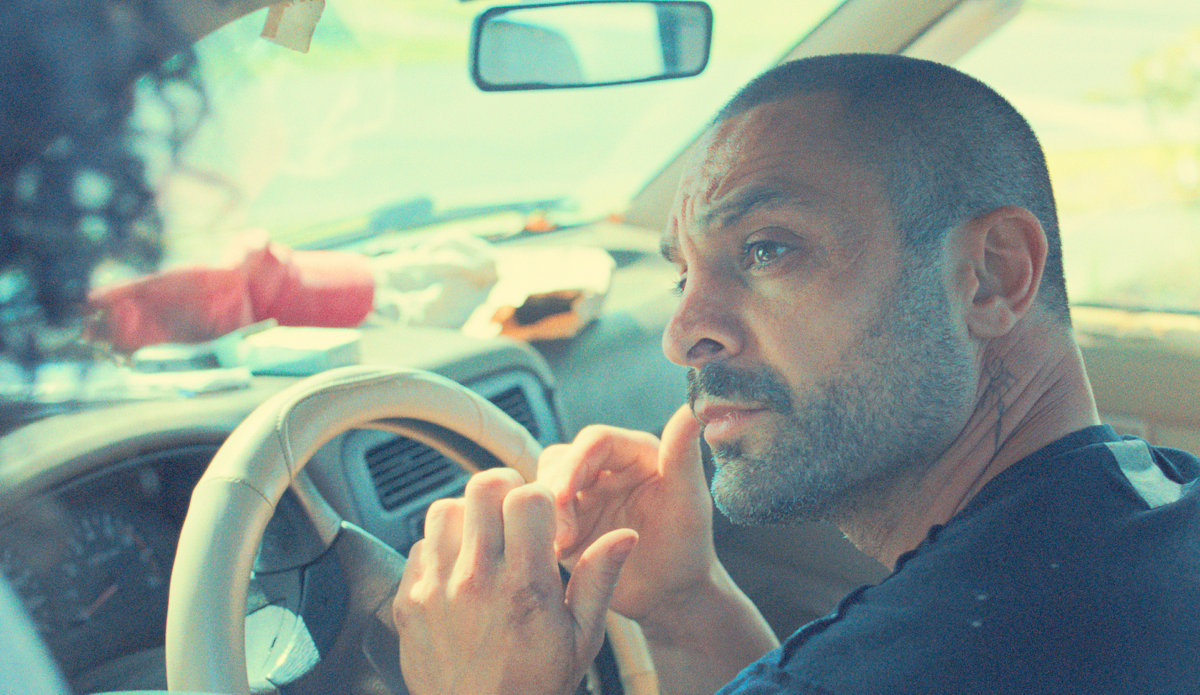
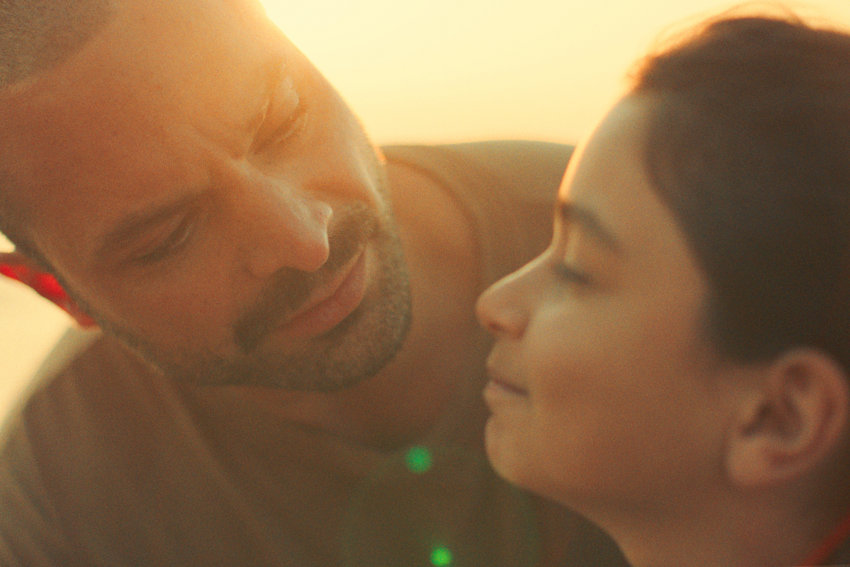
Julia Weisberg Cortés (JWC): Boyfighter tells the tale of a struggling single father in New Orleans. Who turns to bare-knuckle street fights to sustain himself and his young son. I think if you watch any of my previous films, you’d hopefully see certain stylistic through-lines. But Boyfighter was a unique endeavor because so much of the story is rooted in memory. The film is structured around the father’s memories and reflections. I wanted to explore a visual style that mimicked how we actually remember. When we think back to that one day with our fathers, or our sons, what is it that lingers? Do we remember that the sky was overcast?
A particular shirt? The way the water looked cloudy after a storm? Memory tends to come back in fragments and that’s what much of Boyfighter is built on. Those little moments that, in hindsight, often signify the most important periods of our lives. The way we return to water, or an old shirt. Or a summer storm and suddenly feel closer to the past, or to someone we’ve lost. That kind of emotional recall is comforting to me. It’s something my director of photography, Matheus Bastos, and I were really intentional about capturing.
Why do you choose to write, produce, direct, shoot, cut/edit the movie?
Julia Weisberg Cortés (JWC): I made Boyfighter to honor the life, legacy and struggle of my late brother. Richie died in August 2023. Much of the film was my way of going through the motions of grief. So, I do believe it was a need rather than a want. I wrote the script in one 2 hour sitting and hardly changed it after. That’s not normal for me, but that’s what I mean when I say that making this film was a need. Much of the heart and creative approach to the film came from a very real and raw place.
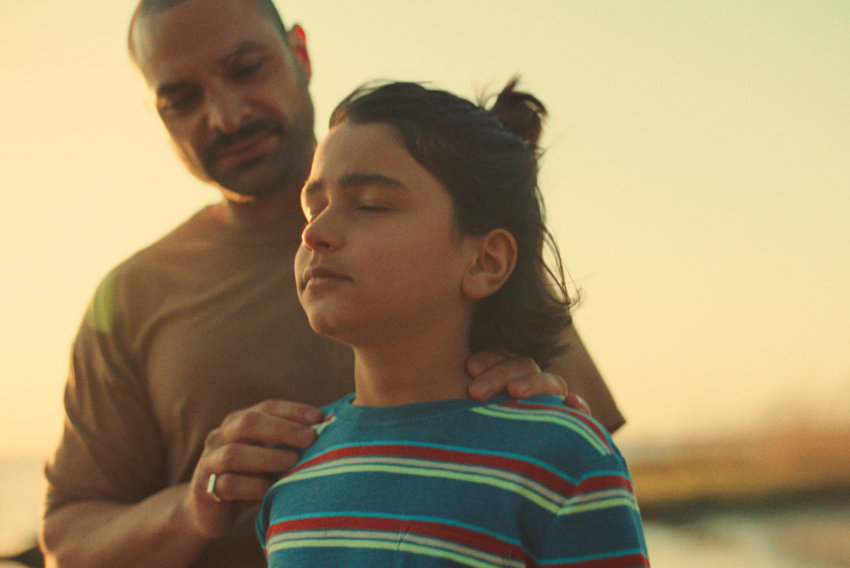
I wasn’t chasing anything specific, no theme or style. I simply wanted to share my brother’s spirit with the world, and trusted whatever gut instincts rose. I didn’t over-think shots, dialogue, or moments. Rather, I released control, picked the actors I believed captured it best. I chose my locations that carried the magic and complexity of my brother’s spirit. Of course leaned on a fiercely talented team to come together and make something we all poured ourselves into. It was a very beautiful thing.
Introduce your crew?
Julia Weisberg Cortés (JWC): As mentioned, I made Boyfighter for my brother, so it was a very emotional endeavor. Making movies is stressful as is. But, making a movie that you hope captures the spirit of your loved one… It’s scary and vulnerable. I was beyond lucky to have a team that really held me through those emotionally challenging moments. Everyone was dedicated to capturing something beyond a simple narrative film. Everyone knew there was a special connection to the material. And, each brought their own personal hearts and voices to the story. My on the ground producer Mayte Avina, was truly my anchor.
We had a major setback the day before shooting that completely derailed me. But she never stopped fighting for the heart of the story and really pushed me to be courageous. Along with her, my Production Designer, Michelle Harmon, cinematographer, Matheus Bastos, make-up artist Bailey Domke, and all the rest of our team are some of the most creative and talented people I’ve had the pleasure of working with. If it weren’t for them, I honestly don’t know if I would’ve shown up to day one after such a big set back. That’s why Boyfighter really is THEIR film as much as it is mine.
What’s your experience putting on these hats? Tell us about story, writing and production?
Julia Weisberg Cortés (JWC): Boyfighter was my 5th film, so I’ve grown accustomed to the hustle and grind of getting a project off the ground. I know some filmmakers might say it never gets easier, but I argue it does. With each new film you become more refined and confident in your voice as a filmmaker and your ability to gather resources. Getting a film made is not an easy fleet, but for me it’s the least stressful part, and where you have the most fun. For me, where the grueling work happens is writing the script. I started in screenwriting and the process of turning an idea into a finished script is much more arduous, painful even.
I think it’s because everything starts with a good script. That’s what will determine the kind of team you can rally behind you, both creatively and financially. On top of that, if you’re like me and you write from the heart, I put a lot of pressure on myself to write honestly and with purpose. It’s harder than it sounds. We as storytellers want to mold a story into what we think the story is supposed to be, but so often I find that stories have their own currents that demand we bend to. When you’re able to let go of control, and listen to your story, watch for their clues and individual voices, you’ve cracked it. But it’s not easy to do, knowing what’s the story and what’s your own ego.
What is the source of the idea? How did the story develop from the idea? And how did the story evolve into a screenplay? Why do this story? Do you have a writing process?
Julia Weisberg Cortés (JWC): I was walking through New York City in July 2024, coming up on the one-year anniversary of my brother’s passing. I remember feeling incredibly heavy; emotional in a way I couldn’t quite contain. Tears welled up, but I have this thing about crying in public. I try to avoid it. So I started observing people around me, using them as a kind of distraction.
That’s when my eyes landed on something, slightly comedic, but oddly comforting: a father and his young son. The boy was dressed exactly like his dad, no shirt, low-hanging shorts, buzzcut, and he was mimicking the way his father walked, trying to match his posture and rhythm. I was completely taken by them. At that moment, I knew I wanted to tell a father-son story as my next film. When I finally sat down to think about what that story could be, I was still deep in grief. I couldn’t stop thinking about my brother. And my uncle. And my grandfather. And my great-grandfather. All these men who I love, died the exact same way. It almost felt like some twisted rite of passage. But the thing that ultimately claimed them was born from something else: survival, rage, abuse, neglect, systemic failure. So I set out to tell a story about the men in my family that weren’t afraid to explore the tragedy of their lives while also holding space for the great love I have for them, and the care they had for each other.
I sat down and thought of my grandfather, who lost his son, my uncle, from the very thing that would claim his life 50 years later, the very thing that claimed the life of his father 15 years prior. I wondered what went through my grandfather’s mind. I really wanted to explore the psyche of a grieving father who questioned: did I cause this or was this inevitable? That became an important question for me as it relates to my own process of grieving for my brother, wondering if I could have saved him, or if this was always meant to be his fate. Through the textures of a grieving mind I found my answer: it doesn’t matter why, or how. What matters was that they lived, they existed and I loved them beyond measure. So Boyfighter was about posing this question, and then in turn allowing the viewers to slowly discover that this question needs no answer. Rather, we welcome them to grieve, be moved, and cherish love above all.
BOYFIGHTER | Official Trailer
Let’s talk pre-production: take us through a timeline of how you started and ended it.
Julia Weisberg Cortés (JWC): It was a very fast timeline. I wrote the script in October, got the grant in December, made the film in March and finished posting in May. The most vigorous part of my pre-production process is usually finding the locations. I have a very particular process when it comes to finding the settings of my films. It’s important to me that where we shoot, the landscapes carry themes and memories of whatever it is we are telling in the actual story. I am deeply inspired by my surroundings and I believe this also helps the process of character, shot-listing, and production design.
So much of the story can be told without a word, simply by letting the audience feel the environment and world of the characters. I had a deep calling to make this film in the resilient and brilliant bayous of southern Louisiana. I had flown myself out there and worked with an incredible location manager, Ashley Bungee. I rented a car and drove around leaving flyers in the mailboxes of the homes that captured the spirit and wonder of the world of Boyfighter. It was a great honor to bring the life of our story to Louisiana, and I know the film wouldn’t be the same without it.
What was your rehearsal process and period?
Julia Weisberg Cortés (JWC): My rehearsal process very much depends on my actor’s wishes and needs. I believe that my job as a director is to support through the emotional beats and moments of a script. This means that I show up for my actors however they need me to. Sometimes actors want endless rehearsal, sometimes they don’t want to rehearse at all, I’m open to both. Though I do believe more than legitimate rehearsal, good quality and lengthy conversations need to be had about both the characters and the world they live in. I enjoy improv, asking my actors to exist in a space as their characters, doing mundane things. Sometimes I’ll give them an object and ask them to assign it some kind of meaning, from the POV of their character, and tell me the story behind the object. I think more than anything it’s about building trust and a foundation to play/discover together.
Did the tight shooting schedule make it harder or easier? How did it affect performances?
Julia Weisberg Cortés (JWC): I find even if you had 16 hour days(which I don’t recommend), time is always of the essence. The most important thing you can do as a director is over-prepare and be ready to run out of time, that way you know what needs to be done first, what do I need to make the edit of this scene? I save the specialty shots for last. Try to remain calm as time flashes by, it’s really hard to not panic sometimes, but I find that if you just let go, let your teams do your job, things will get done, but if you run our of time, have a plan.
During the film production, what scene (that made the cut) was the hardest to shoot? And why?
Julia Weisberg Cortés (JWC): The scene where he teaches his son how to fight on the riverbanks was the most challenging scene to shoot. It was an emotional first day, we had lost our main location and much of the day was spent scrambling, trying to figure out where we were going to shoot the bulk of our film. With that anxiety buzzing, we had to shoot and carry on. But the wind had picked up and it was unbearably cold. I had to ask my actors, one of whom was 12 years old, to be in t-shirts and swim-shorts, and be able to deliver their lines without shivering. As a director, your top priority is safety, so the entire time we were shooting that scene I was so worried I could hardly focus on the actual scene. We were also running out of daylight. It was so cold, we had to eventually have the actors improv the scene and just lean into B-roll to try to capture the scene so we could wrap as soon as possible.
What were the advantages and disadvantages in the way you worked?
Julia Weisberg Cortés (JWC): As I’ve mentioned briefly, we lost our main location less than 24 hours before our shoot. I think if I were a more rigid/controlling director that would have been way more catastrophic. Not to say it wasn’t totally brutal, but since I favor improv in both performance and cinematography we were somewhat able to pivot fairly quickly. With that said, I do fell protective of the story, more than actual shots or bits of dialogue, I find myself wanting to control or manipulate the overall tone of the film, specifically through location, so I found myself really mourning the world I had built in my head that we had lost with that location. So it goes to show, always be ready to change everything and not be married to one type of thing. You have to be able to see the story in different ways and bend with the challenges that are thrown your way.
The film looks stunning. How did you get such a good look when shooting so fast?
Julia Weisberg Cortés (JWC): My DOP, Matheus Bastos is extraordinary, I also feel we have found a great way of working together. Rather than spending hours going over detailed shotlists we spend our time talking about comps, and the textures/colors of the world we are going to be capturing. We allow the world to tell us what is worth shooting, rather than us trying to manipulate the frame with what we think is worth seeing. Also, this is a narrative film, the focus should always be on story and how whatever we are seeing furthers the story in some way. We don’t focus so much on getting these crazy complicated shots but rather allow ourselves to pivot with the light, the actors and the world at large which inspires the image.
What about independent filmmaking and the business do you still struggle with?
Julia Weisberg Cortés (JWC):Being a filmmaker takes a certain level of courage. We make films to be watched, but I find it increasingly difficult to actually get my work in front of people. There are thousands of festivals out there, but the application and travel costs if you get in is unsustainable. I always find this to be the hardest part of the process. You’ve just made this film and now that you’re ready to share it with the world you can’t always afford to actually submit it to all the festivals or attend the festivals it gets into. It’s disheartening and frustrating but it’s part of the reality. But while there are more films being made than ever before, there’s also more festivals and outlets than ever before, so there’s hope, but it’s about being persistent and anticipating the grind of getting your films out there once they are made.
Where do you think your strengths lie as a filmmaker?
Julia Weisberg Cortés (JWC): I’ve always really challenged myself to do hard things. If someone tells me something is overly ambitious, or not possible, I strive to prove them otherwise. Obviously I’m realistic, but I have a good intuition of what’s actually possible and what’s not worth my energy. I’ve always been a self-starter, and for those first few films I had to make them all on my own, wearing all the hats, going off of sheer passion and determination. While some of those first films aren’t necessarily my best works, they were so necessary in shaping my voice as a filmmaker and more importantly, harnessing that resilience to get things done.
I actually find it’s easier for me to not look to far into the future, just focus on right now, what I have in front of me and worry about the future later. This has helped me be patient and continue to create in times of strife. I think if you stand at the precipice of your career, and you see how truly difficult it is to do what we do, many we’d give up before they even started. It’s better to not think about it all and just focus on the next step, rather than the big major life goal I have for myself.
How much did you go over budget? How did you manage it?
Julia Weisberg Cortés (JWC): I strategically don’t involve myself with budget talk as much as possible. Obviously as a director you do need to understand budget and be involved in those creative budget talks, but I prefer to not talk to my team or cast about their rates. I advocate for fair pay and that people are paid enough so that they can fully commit themselves and their time to the film, but I leave it to my producer to be that
What else have you got in the works?
Julia Weisberg Cortés (JWC): I’m hoping Boyfighter will be my last short film for a while. I’m currently in pre-production of my first feature film, The Coveted, set to shoot in Scotland 2026. I’m excited to use the tools I’ve harnessed over the last 5 short films and finally tackle long form.
Let’s have your comments below or on Facebook, Instagram, or Twitter
Socials
Website
IMDb
Instagram
FILMMAKER INTERVIEWS