
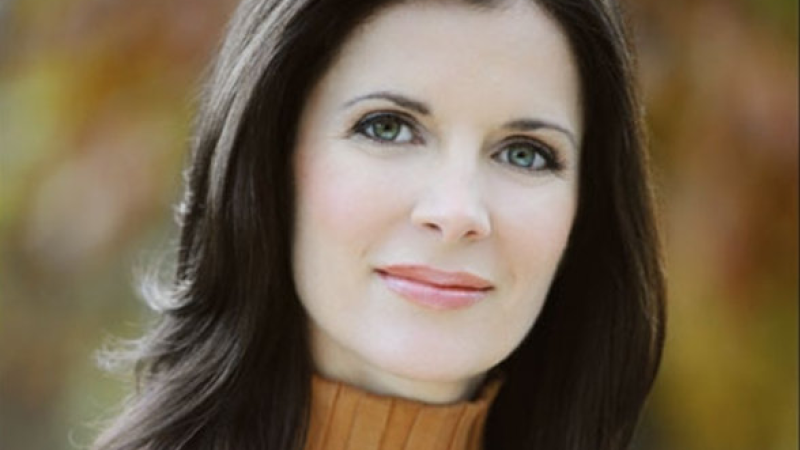
Saskia Archer has quickly established herself as a force to be reckoned with in the acting world. With a diverse range of roles and an intense dedication to her craft, she has captivated audiences worldwide. In this exclusive interview, we delve into her journey, her methods, and her insights into the acting profession.
indieactivity: What’s your first acting role? What did it teach you about art and the profession?
Saskia Archer (SA): My first theatrical play was “When the Rain Stops Falling” by Andrew Bovel. My first movie was Universal produced “The Reef: Stalked.”
Theatre Play:
- It taught me how intensely my own thoughts, as the character, could become when fully committing to a role.
- I had thoughts and visions that I would NEVER have as Saskia, but as Elizabeth.
- It taught me how powerful our minds are.
Movie:
- Acting in an action movie, especially in such a physically demanding role with so many water stunts, taught me how much story can be told through action.
- I’ve done a lot of character preparation through subtext and character development, but this was my first experience telling a story predominantly through action.
- It showed me how versatile this industry is and how there are truly unlimited mediums and angles to approach any given story.

When did you decide to become an actor? Who are the people you credit with helping you on your journey to becoming an actor and in your early years?
Saskia Archer (SA): Funny enough, acting wasn’t in my plan. I was deeply invested in my paramedic training, but then, I was swept into this acting world. Shortly after committing to this new path, a seismic life event forced me to reevaluate everything, and I seriously considered abandoning it all.
It was Donald Woodburn who pulled me back. He saw something I didn’t, saying it’d be a disservice to my potential to walk away. That stopped me cold. That encouragement was the turning point. Now I sit in New York, as a working actor. Little did I know the fate of my future rested on that decision.
I’m profoundly grateful for Donald, not just for that moment of support, but for the insights he’s shared throughout our time working together. He sees the world through a lens of unvarnished truth, making his coaching unlike anything I’ve experienced. If you’re an artist and you’re ready to brave the real truth, I highly recommend him and his work.
How would you describe your acting style? What are some of the methods you use to get into character?
Saskia Archer (SA): I’m fairly method (Method acting technique) in my approach. I like to immerse myself in the character’s world and stay there when preparing for a particular scene.
- I use music, internal monologues, visualisations, and sensory recall to explore the character’s thoughts and world.
- Then, I fully commit to their circumstances.
- However, I make sure to step away from the character after filming, so as not to blur the lines between home and work and myself/the character.
What creativity, energy, or focus do you put into preparing for your scenes?
Saskia Archer (SA): I start with script analysis, accumulating all the written information.
- Then, I engage in journal exploration, allowing my mind to generate creative experiences the character has gone through that influence them in that moment. • Then, it’s all about energy and exploration.
- I let my subconscious explore alongside me as we discover more.
“Hold on tightly, let go lightly”

You’ve worked on shows and films. How have they impacted your work or career?
Saskia Archer (SA): The Reef: Stalked was wildly popular in Russia and smaller countries like Argentina and Thailand. I wasn’t aware of how recognized I was until an Argentinian man stopped me for photos. I realized then that the film’s reach was far wider than I initially thought.
In Bali 2002 project, I worked closely with Claudia Jessie (Bridgerton), and Richard Roxburgh. I loved watching their approach. Their commitment to each moment. It also comforted me to see that I was on the right track, as Claudia and I worked in similar ways, which was definitely reassuring.
These jobs definitely kick-started international recognition, which has helped in many ways throughout my career.
How does the work you do on one show compare to another?
Saskia Archer (SA): The landscape of each production shapes the entire experience, from the language to the collaborative dynamic. Accents, for instance, are more than just pronunciation; they dictate the rhythm of communication and the nuances of character interaction.
“When the Rain Stops Falling” immersed me in the complexities of a British narrative, demanding a sustained emotional performance and a precise British accent. The play’s intricate layers and the physical endurance required for nightly performances, sometimes doubled, were a constant challenge. However, the extended rehearsal period allowed for deep exploration of the role.
Conversely, Play Dirty, an Amazon Prime drama/crime movie, presented a rapid-fire, American-accented experience. The immediacy of the filming process, coupled with Shane Black’s clear vision, shaped the overall project. Film productions, in general, involve a larger scale compared to theatre. Plus, the contrast between the theatrical intensity of the play and the spontaneous feel of the film was striking; the former demanded emotional depth and control, while the latter encouraged quick reflexes.
Let’s take a show you’ve done. How did you prepare for such a role: the cast, the physicality, the terrain, the climate, weather, and the demands of the show?
Saskia Archer (SA): The most physically demanding role with the elements so far would be “The Reef: Stalked.” It was a shark movie primarily filmed on location. Being exposed to the water and wind in winter was hard on the body and the brain. We started around 4 a.m. Not only that, but the sun exposure was also intense. Even though the crew and makeup team were great with umbrellas, hats, and sunscreen, my eyes were still burned by the end of the long shooting days.
The way I approached the scenes on set was to learn my lines inside out and link them with the action of the scene. For example, if I’m swimming, I learn my lines while moving my arms, so that the movement of swimming is in my body and the lines fall naturally.
Additionally, I compartmentalize where necessary:
- I ensure my lines are well known.
- Then, I focus on stunts.
- Then, I combine them and work through the action to bring emotion to the stunts and perform the scene with full condition whilst not compromising on safety. Stunts are one of the most fun aspects of the job. Part of me is always hilariously sad when the body doubles/stunt performers come in to do certain stunts. But that’s just part of the gig.
How do you get into character?
Saskia Archer (SA): Depends on the role. For the play “When the Rain Stops Falling,” director Peggy Shannon had me perform my lines while exploring the physicality of an aggressive feline, like a lion or a tiger. Vicious and ready to pounce. She forced me to become more animalistic, more feral, ugly, which tested my perception of myself. To break down those subconscious societal expectations freed me up to explore this character at her most visceral and animalistic moment of her life.
When developing Hanabeth, for Bali 2002, I studied everything available online about her. Because she’s a real person and was likely to watch my performance, I ensured my research was intensely thorough. This project was more about replicating and reproducing her experience rather than finding my own ideas/version. I enjoyed it deeply, as I do every character. The context of the particular job/role means I am constantly adapting my approach to bring the character to life.
That’s my job. Bridge the space from script to screen and play make believe. But the point is to play make believe well enough that you believe it too.
What are your principles on a production set?
Saskia Archer (SA): Giving myself permission to stay in character is my first principle. I’m not there to make friends; I’m not there to be liked. I’m there to exist as humanly as possible. Illuminate the dark, and bring depth to the light. I try to stay in her world. Think her thoughts. Sometimes music and visualization also help if I get stuck.
Explain one creative choice you took on the set?
Saskia Archer (SA): The Direction: Really try to change his mind.
I watched a woman’s hand tremble, ignored by Tony Blair, and found the heart of my character’s defiance, unseen by production, yet vivid in my imagination. On the stark studio set, three cameras bore down as I was directed to connect with Blair, the figure my character, Hanabeth, addressed. Later the scene would be spliced in later, but for now I was alone, a crew member feeding me lines. In my mind, I placed myself in London, the interview with a group of women and Tony Blair to urge him to not go to war.
In front of me sits a woman with her hand up, shaking. Its been 45 minutes into the interview and Blair has not called on her. As the interview neared its end, it became clear Blair wouldn’t acknowledge her. Then, in that moment of injustice, Blair called on me, as Hanabeth. I respond to him with vigor, not for myself but for the hand still trembling in front of me, for the innocents lost to war. It wasn’t until they called a cut that I fell back into myself and the studio.
Tell us about your new exciting projects?
Saskia Archer (SA): I can’t tell you much about it, but “Play Dirty” (2025) is an Amazon movie with Mark Wahlberg. Catch me in that.
Talk about the industry; How does it differ to the industry in Australia? Has it taken you much to get used to?
Saskia Archer (SA): The US and Australian film industries are definitely distinct, and it’s been an interesting adjustment. In Australia, while there’s incredible talent and passion, the industry is comparatively smaller. You often find yourself working with the same crews and actors, which fosters a close-knit, almost familial atmosphere. There’s a real sense of community.
Moving to the US, and working on projects like ‘Play Dirty,’ was a significant shift. The scale is just immense. The budgets are larger, the productions are more extensive, and the level of international collaboration is far greater. It took me a while to get used to the fast-paced nature of US productions. But I love the challenge, and it’s been a fantastic learning experience.
Ultimately, I’ve found both industries to be incredibly rewarding. The US has opened doors to projects and collaborations I could only dream of, while Australia has given me a strong foundation and a sense of community. I’m grateful for the experiences I’ve had in both worlds.”
You can comment below or join is on Facebook or Instagram! Or join me on Twitter.
Socials
IMDb
LinkedIn
Threads
Instagram
ACTOR INTERVIEWS
Actress Victoria Guthrie Demystifies Her Work
By Samantha Blackwell (Twitter)