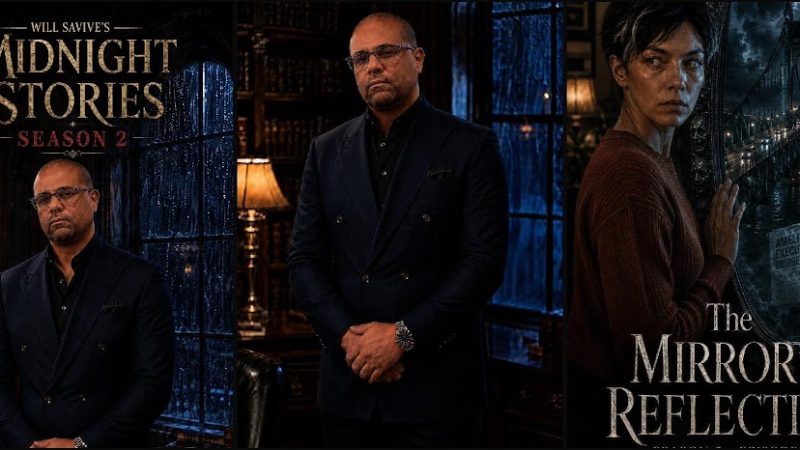
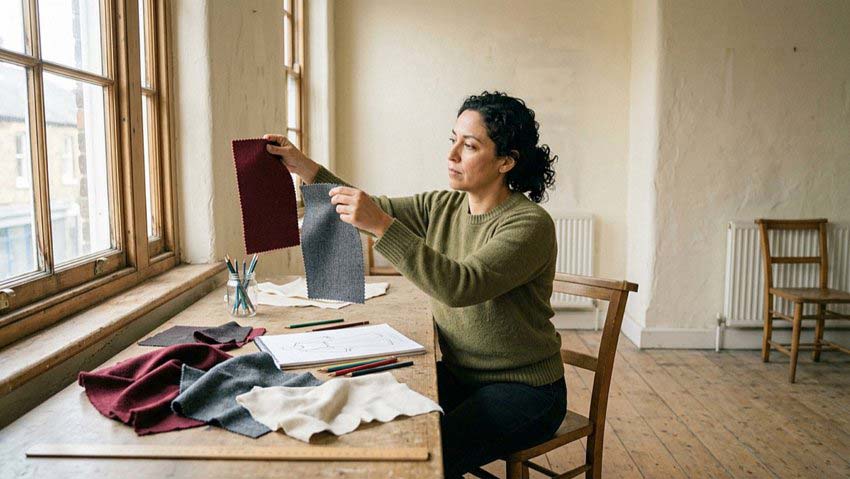
You have a twelve-page script, a candlelit house for two nights and a wardrobe department of one. The story has a widow, a stranger and a girl who shouldn’t be on the stairs. Before anyone speaks, the audience will have read all three of them from what they’re wearing.
Gothic film depends on that first reading. The genre runs on mood, and costume carries a large share of it. With a small team, you can’t dress everything perfectly, so spend your effort on the six choices that do the most work.
Choice #1 – Color
Color is the first thing an audience registers, so decide your palette before you source a single garment. Gothic doesn’t have to mean black from head to toe. A film where everyone wears black gives the eye nowhere to go.
Costume designer Maggie Morgan puts it plainly: color becomes a storytelling tool. Use it that way. Give each character a color and a reason for it. Deep red for the one with a secret, gray for the one fading from the story, a single pale dress in a house full of shadow.
Test every color on camera in your real lighting. Black fabrics vary, and some read as navy or brown under warm light. Shoot a few seconds of each costume against your walls before you commit.
Choice #2 – Silhouette
Silhouette tells the audience who a character is from across a dark room. In a genre that favors low light and long shots down corridors, the outline is often all the camera sees.
Raissa Bretaña of The Museum at FIT says costumes immediately tell your audience who the character is. Shape does much of that work. A high collar and a long, narrow line suggest control. A wide skirt takes up space and slows a character down. A cape or coat that moves gives you something to photograph when the actor turns.
Give each character a distinct outline. Stand your cast against a bright window in costume and look only at the shapes. If two of them look alike, change one.
Choice #3 – Texture
Texture is what makes a costume look expensive or cheap on screen. Light behaves differently on every fabric, and gothic lighting shows it.
Mix fabrics that respond to light in different ways:
- Velvet, which absorbs light and reads as deep black
- Satin or silk, which catches highlights
- Lace, which casts pattern and shadow on skin
- Wool, which looks heavy and worn
- Leather, which adds a hard edge
Avoid shiny synthetic fabrics unless the story calls for them. They flare under lights and look like costume-shop pieces. Age new garments before the shoot: wash them, sand the hems lightly and let them crease.
Choice #4 – Accessories
Accessories carry the specific details of a character, and they’re where a small budget goes furthest. One well-chosen object can do the work of a paragraph of backstory.
Jewelry
Choose one piece per character and make it mean something. A locket she touches when she lies. A ring he turns. Keep metal tones consistent with the period you’re suggesting.
Gloves, Hats and Veils
These change a silhouette for almost nothing. A veil lets you hide and reveal a face in the same shot. Gloves draw attention to hands, which matters in a genre full of doors, letters and candles.
Props That Belong to the Costume
A cane, a ring of keys or a prayer book should be chosen with the costume, not added on the day. Photograph each character with their objects during the fitting so continuity has a reference.
Choice #5 – Fit for the Performer
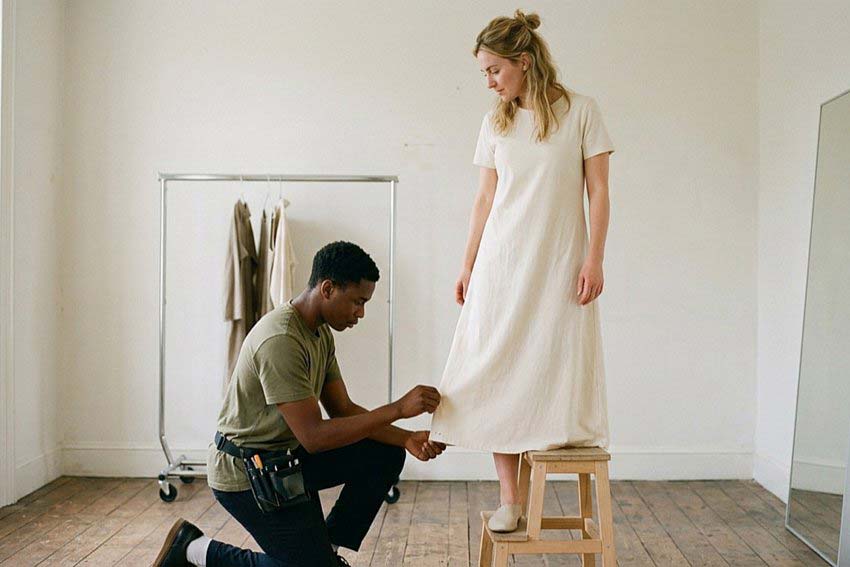
A costume has to work on the person wearing it, through every take. An actor who can’t breathe, sit or climb stairs in their costume will show it in their performance.
Hold a fitting with movement in it. Ask each performer to walk, sit, kneel and do the most physical thing their scene requires. Check that long hems clear the stairs and that sleeves don’t catch on set dressing. Candles and trailing fabric are a real hazard, so keep loose sleeves, veils and hems well away from open flame and have a safety plan on set.
| Top Tip: Build each costume so it can be put on and taken off quickly. Hidden zippers, snaps and elastic let an actor change in a hallway in two minutes, which matters when you have one location and a short night. Label every piece with the character’s name and scene numbers, and hang each complete look on its own hanger with its accessories in a bag. |
Choice #6 – Versatile Pieces on a Budget
Versatility is how a small wardrobe looks like a large one. Plan for pieces that can be worn more than one way, and spend your money where the camera lingers.
Start with what you can borrow or rent, then thrift, then buy. For the pieces you buy, look for:
- Separates you can combine in several ways
- Dark basics that work as a layer on anyone
- One standout garment per lead character
- Sizes with room to alter
Ready-made gothic lines can fill the gaps. A range such as men’s and women’s goth clothing at Medieval Collectibles is sorted by garment type, so you can look for the one coat or skirt the story still needs. Whatever the source, check the return terms before you alter or age anything.
Put the budget where the close-ups are. The widow’s collar will fill the frame, and the stranger’s boots probably won’t. Spend accordingly.
Start With One Page of Notes
Write one line for each character: who they are, what they want and what they’re hiding. Next to each, note a color, a shape and one object. That page is your costume plan, and every purchase should answer to it.
Frequently Asked Questions
Does a gothic film costume have to be black?
No, a film where everyone wears black gives the eye nowhere to go, so give each character a color and a reason for it. Test every color on camera in your real lighting, because some blacks read as navy or brown.
What fabrics look best in a gothic film?
Mix fabrics that respond to light differently, such as velvet, satin, lace, wool and leather. Avoid shiny synthetic fabrics unless the story calls for them, because they flare under lights.
Borrow or rent first, then thrift, then buy. Choose separates and dark basics that can be worn several ways, and put the money where the close-ups are.
You can comment below or join us on Facebook, X and LinkedIn.
INDIE ACTIVITIES

DELETE TV Opens Season 13 Submission for Experimental Film & Video Art
International open call welcomes films up to 10 minutes for Austrian broadcast and worldwide livestreaming