
Before Oppenheimer and The Dark Knight, Nolan made Following shooting on weekends with friends
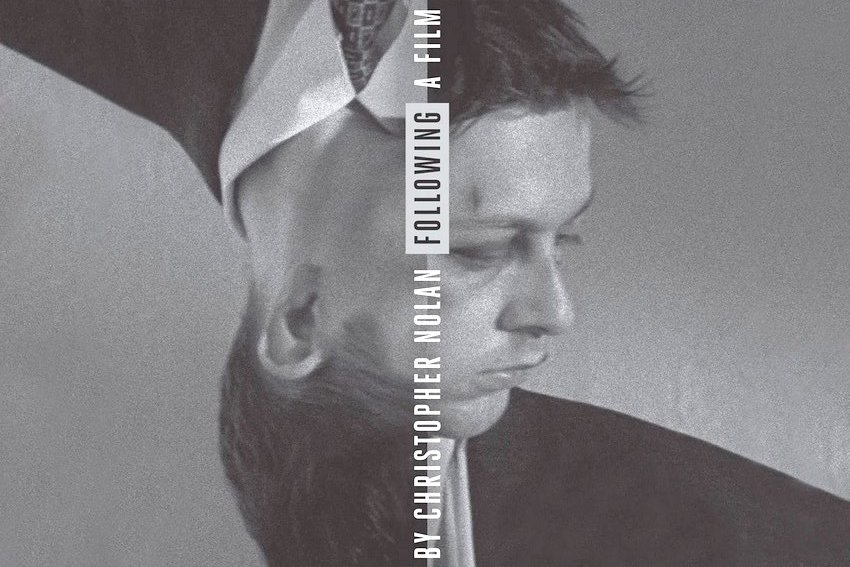
There was a film, decades before Oppenheimer grossed close to a billion dollars. The film title is Following (1998), and it carries with it Christopher Nolan’s signature cinematic identity. A filmmaking style that was forged in 16mm black-and-white on a microscopic budget of $6,000. This 1998 debut feature, Following, may not have the spectacle of an atom bomb or the mystery of Memento. Yet, it contains the same structural DNA that entertains audiences. The non-linear timelines, subjective perspectives, and morally compromised protagonists that defines his modern blockbusters.
On a promising note, Christopher Nolan’s The Dark Knight (TDK) changed the superhero cinema. Before it, this structural experimentation of this 70-minute thriller remained the major calling card that opened Hollywood’s studio doors. Nolan scaled up this same narrative framework for Memento and all his breakout hits. He established a “conceptual runway” which allowed him to treat massive commercial franchises as prestigious, multi-layered crime epics.
Following – Original Trailer | Available now on Blu-ray and DVD Criterion Collection
Ultimately, his name became etched on large-scale filmmaking such as The Dark Knight. Christopher Nolan had previously demonstrated absolute narrative control, rather than visual excess is what captivates audiences. If we trace this trajectory back to Following. It reveals that his rise to be a Hollywood auteur wasn’t a product of studio politics. It is the methodical scaling up of a singular, fully-formed vision. One that was mapped out from his very first frame in Doodlebugs to Larceny, Memento, Oppenheimer and more.
Christopher Nolan was just another unknown filmmaker trying to make something with almost nothing. His first feature film cost around $6,000. It was shot on weekends. His friends were the actors. The crew was tiny. And yet, that film would quietly lay the foundation for one of the most remarkable directing careers in modern cinema. That film was Following. And in many ways, it still explains everything about Nolan approach today’s even on Oppenheimer.
the first film: Following
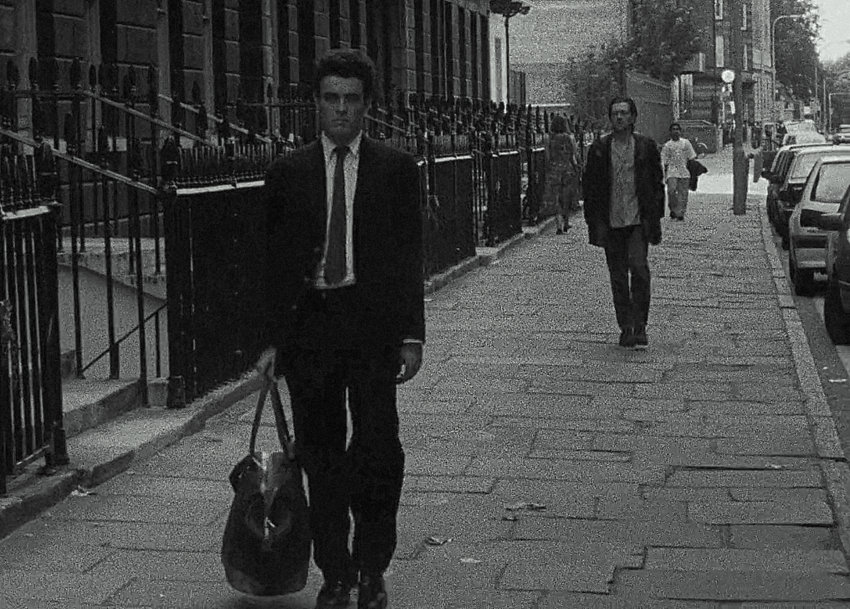
Following was made back in1998. It is a black-and-white neo-noir thriller about a struggling writer. Who begins following strangers through the streets of London—only to be drawn into something darker. On paper, it sounds small, unlike Oppenheimer. And it was. The budget was reportedly just $6,000. To make it possible, Nolan and his collaborators used every independent filmmaker tactic imaginable:
- Shot ONLY on weekends,
- Use friends and acquaintances as actors,
- Borrow locations,
- Rely on available light,
- Minimize takes to conserve 16mm film stock.
Operating under severe financial constraints, Nolan engineered a brilliant framework of hyper-efficiency during the development of Following (1998). To accommodate the professional schedules of his team, he structured the production by shooting only on weekends. A grueling routine that stretched the shoot across a full year. He populated his neo-noir universe by using friends and acquaintances as actors. This sidesteps costly casting processes while maintaining creative shorthand on set.
ARRI ARRIFLEX 16 BL | The is ARRI’s first silent 16mm production motion picture camera released 1965
Nolan further slashed overhead costs by borrowing locations, primarily the apartments of those same friends. He choose to rely on available light from windows or lamps rather than renting expensive illumination packages. Most crucially, he paid for the production out of his own meager salary. He meticulously rehearsed his cast for months to minimize takes and conserve physical film stock. He captured the film on a vintage Arriflex 16BL camera. Using black-and-white Eastman Double-X 7222 16mm film. Ruthlessly planning every angle because each 400-foot roll offered a mere eleven minutes of runtime. There was no studio, no investor, no safety net—only discipline.
What Following Taught Christopher Nolan
While most first films are experiments designed to test a director’s baseline technical abilities, Following (1998) served a far greater purpose as the ultimate training ground for Christopher Nolan’s cinematic philosophy. Stripped of Hollywood excess, the micro-budget project forced the young filmmaker to rely purely on ingenuity, acting as a crucible that forged his artistic worldview.
Ultimately, the film taught Nolan three fundamental lessons that would go on to define his entire multi-billion-dollar career. First, he learned to put story first, recognizing that a brilliant, water-tight narrative will always captivate an audience more than expensive visual spectacles. Second, he discovered that severe constraints can actually sharpen creativity, as a lack of resources forces a filmmaker to find innovative structural solutions rather than relying on money to solve problems.
Finally, it instilled the mandate to make something undeniable—to construct a film so mathematically precise and conceptually gripping that the industry could neither ignore it nor deny the genius of its creator.
1. Story First
For Nolan, placing the story first meant recognizing that a gripping narrative is the most valuable asset a filmmaker can possess, costing absolutely nothing to conceive. Even at a microscopic $6,000 budget, Nolan was obsessed with structure, refusing to let his lack of capital result in a simplistic or conventional movie. Instead, the film aggressively uses nonlinear storytelling—the exact structural signature he would later master on a grand scale in Memento (2000), The Dark Knight (2008), Inception (2010), Dunkirk (2017) and Oppenheimer (2023).
By chopping up the timeline of Following into a complex puzzle of three distinct chronological periods, he proved that a director can generate immense cinematic tension using nothing but clever editing. This debut makes it undeniable that his penchant for temporal manipulation was not a gimmick born from big-budget studio indulgence; that instinct was there from day one, embedded in his creative DNA long before he had the resources to match his ambitions.
2. Constraints can sharpen creativity
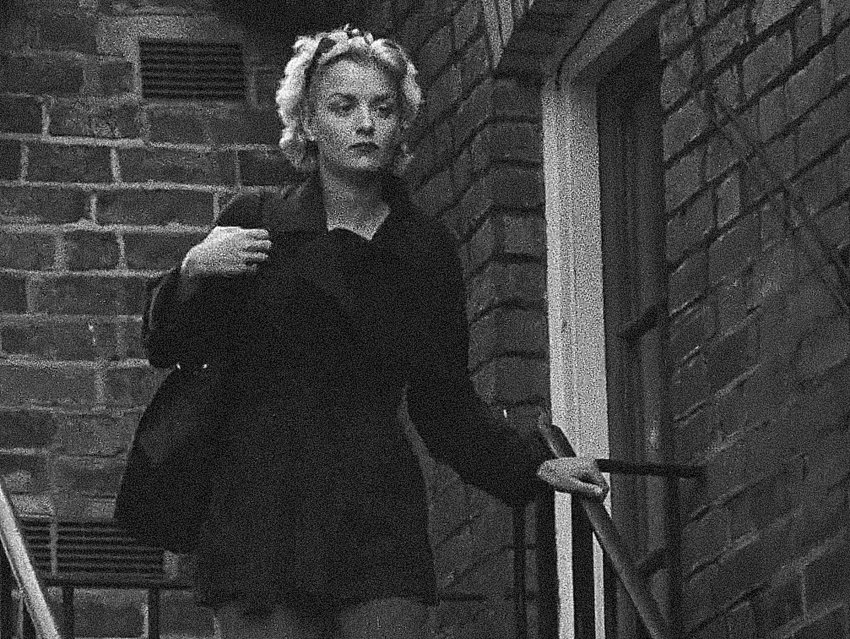
The severe lack of resources on Following proved that a tight budget does not restrict a visionary filmmaker; it liberates them. Because he had no money, every shot had to matter, stripping away the luxury of wasteful coverage and forcing him to pre-visualize the entire movie with mathematical precision. Every location had to work instantly within the story, requiring Nolan to adapt his script to the organic geometry of borrowed rooms rather than building expensive sets. The first apartment Cobb and Bill burgled was actually Christopher Nolan’s parent apartment. As God will have it you must have noticed The Dark Knight sticker on the first location Bill scouted, when he invited Cobb to come check it out. That was Jeremy Theobald’s (Bill or The Young Man) apartment.
Without the cushion of a studio budget, every scene had to justify its existence, meaning any moment that did not actively propel the narrative or deepen the suspense was ruthlessly cut before a single frame was exposed. That kind of discipline never left him, creating a permanent psychological framework for how he manages production scale. Indeed, even today, Nolan is known for practical filmmaking over excess CGI, famously choosing to crash a real Boeing 747 or detonate massive physical explosions rather than relying on digital post-production.
That’s indie DNA at work—a stubborn, foundational belief forged in 1998 that authenticity and creative problem-solving will always yield a more powerful cinematic texture than throwing money at the screen.
3. Make an undeniable film
The ultimate lesson of Nolan’s debut is that aspiring filmmakers cannot afford to pause their ambitions in anticipation of industry approval. Nolan didn’t wait for permission from gatekeepers, executives, or talent agencies to validate his right to tell a story. Similarly, he didn’t wait for a “real” budget to miraculously materialize, understanding that waiting for the perfect financial circumstances is often a recipe for creative stagnation.
Instead, he made a film first, stepping out into the streets of London with whatever resources he could scrape together and letting the work speak for itself. That decision changed everything. By presenting Hollywood with a completed, polished piece of structural genius rather than a mere screenplay or a pitch deck, he bypassed the traditional assembly line of rejection.
He forced the industry to judge him on his proven execution rather than his potential, transforming a $6,000 gamble into an undeniable calling card that permanently launched his trajectory toward global cinematic dominance..
The Official Trailer for Memento Directed by Christopher Nolan
the breakthrough: Memento
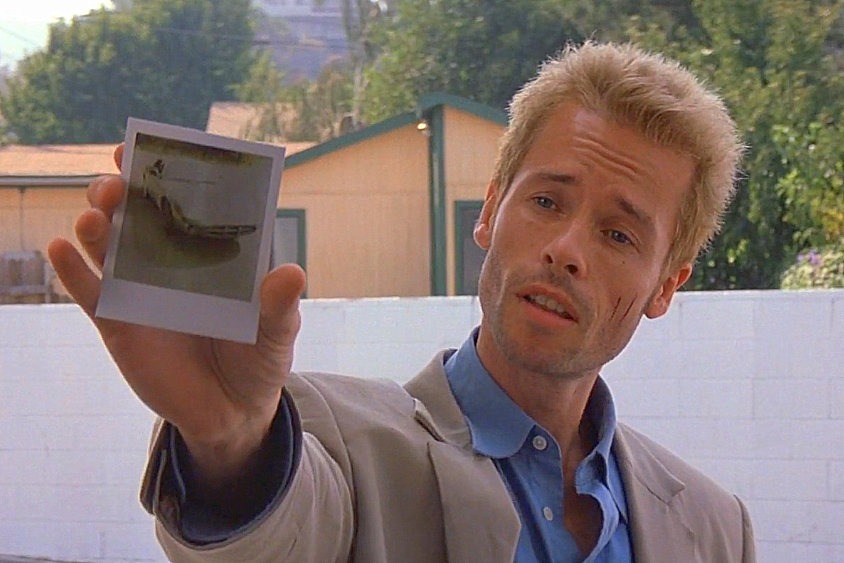
If Following was the spark, Memento (2000) was the absolute explosion. Released in 2000, Memento instantly transformed Nolan from an unknown indie director into one of the most talked-about filmmakers in the world. Made for around $9 million, this psychological thriller earned widespread critical acclaim and secured two Academy Award nominations for its screenplay and editing. The interesting thing is he wrote Memento between the search for a distribution for Following and its festival tour
But importantly—despite the massive step up in production value—it still felt like an indie film, fiercely retaining the bold structure, extreme risk-taking, and unconventional, reverse-chronological storytelling that defined his debut. Hollywood noticed that Nolan could scale his unique vision without diluting his artistic integrity, proving he was ready to handle the keys to the studio kingdom.
The Hollywood Leap
Nolan’s true test within the major studio machine came with Insomnia (2002), a high-profile remake starring Al Pacino that proved the young director could successfully manage massive A-list stars and studio expectations without flinching. Then came Batman Begins (2005)—this was the moment Nolan crossed over into the upper echelon of blockbuster filmmaking, reviving a dead franchise through a gritty, grounded cinematic lens.
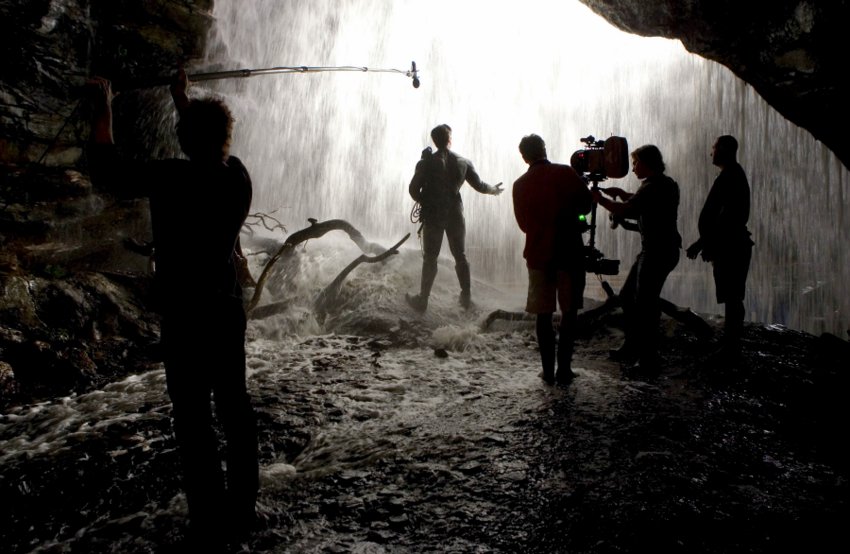
But unlike many directors who lose their voice when entering the studio system, Nolan kept his, refusing to let corporate oversight dilute his unique narrative instincts or his obsession with psychological depth. That’s why his films still feel personal—even at blockbuster scale.
Whether it’s Interstellar, Tenet, or Oppenheimer, his films never feel like manufactured studio products; instead, they all carry the fingerprints of someone who learned to create under pressure, applying the same uncompromising discipline he forged on the streets of London to the grandest stages in Hollywood.
Why Nolan Still Thinks Like an Independent Filmmaker
Ultimately, this may be Nolan’s greatest secret to enduring cinematic success like Oppenheimer. He became a studio giant without abandoning his independent mindset, carrying the lean, hyper-focused ethics of zero-budget production directly into the boardrooms of Hollywood.
Even with hundreds of millions of dollars at his disposal, he still champions original stories in an era dominated by repetitive intellectual property, fiercely fights for total creative control over his final cuts, favors practical effects over green-screen automation, and treats filmmaking as a sacred craft—not disposable streaming content.
He approaches a massive historical epic with the exact same spatial resourcefulness and narrative urgency he used to shoot a scene in a borrowed London flat. That mindset began with Following, not Hollywood, proving that while his canvases have grown infinitely larger, the artistic soul of the director remains entirely unchanged.
Following (1998) – Christopher Nolan’s Debut Feature Film
What Independent Filmmakers Should Learn From Christopher Nolan
Nolan’s story matters because it destroys a common excuse: “I need more money before I can begin.” No, you don’t. Waiting for a massive budget (like Oppenheimer) or a perfect production deal is simply a form of creative procrastination that keeps thousands of independent stories untold. What Nolan proves is this: you need a strong idea, discipline, resourcefulness, and the courage to start.
If your script is mathematically tight, your team is relentlessly disciplined, and you possess the resourcefulness to turn severe limitations into artistic choices, you already have everything required to make a masterpiece. That’s it. The cameras, the software, and the tools may change over time, but the principle doesn’t: cinema is defined by the depth of your vision, not the size of your wallet.
Final Thought
Christopher Nolan didn’t begin with Oppenheimer, but Following. He began with a cheap camera, a tiny budget, and a willingness to work weekends. He didn’t wait for Hollywood. Instead, he made something so undeniable that Hollywood came to him. And for every independent filmmaker wondering when their moment begins—that’s the lesson: it begins the moment you stop waiting.
Thanks for spending some time with us!
POPULAR