
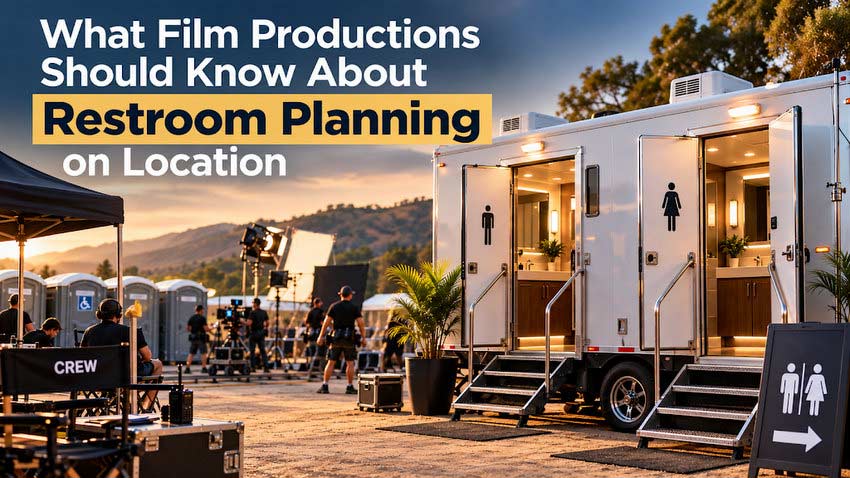
Film productions need smooth logistics to keep the crew and cast comfortable. Restroom planning is an important part of any well-functioning set. Whether you are shooting a full-length feature film, television show, or commercial shoot, high-quality restroom trailers ensure comfort, hygiene, and efficiency.
However, crew size, location, shot duration, comfort level, and servicing plan are the five most important factors to consider when planning restroom trailers for a film production. Getting them wrong delays the production and leads to complaints from the crew and cast.
Here is what producers, location managers, and line producers need to consider when planning restrooms for film productions of any size.
Assessing the Production Requirements
The size and type of facilities needed will depend on the type of production, be it a commercial, TV show, or feature film. Here are a few things to consider:
Location: Are you filming in a studio lot, a city, or a remote area? Remote areas with limited or no access to permanent restroom facilities will need larger and more portable sanitation facilities.
Crew Size: A multi-week production has different requirements than a one-day shot. Investing in high-quality, long-term rental options is important for maintaining comfort and hygiene for long shoots or productions that last multiple days or weeks.
Duration: These body paragraphs will expand on your product/service/campaign. Feel free to include sub-headings if your press release is wordy—this will help to organize the information, and allow for better readability.
Calculating How Many Units You Need
Don’t just count the main team members, but count background actors, drivers, security, and vendors as well. Industry planning guides generally recommend one unit for 10 to 20 people over a usual workday. However, multiple factors can increase that number, such as:
- Shoot days longer than 10 hours.
- Large numbers of background talent arriving at once.
- Locations where no other facilities are nearby.
- A mix of actors and crew who require private or separate options.
Underestimating capacity causes congestion. Therefore, plan more than the minimum when in doubt. An extra unit is far less costly than the time lost due to congestion.
Choosing the Right Type of Restroom Facility
Restroom trailers come in different sizes and styles. The production team can use restroom facilities from the following, as per their requirements and convenience:
Standard Portable Units: These basic portable restrooms suit remote areas with limited funding, small teams, and short shoots. They are portable and simple to set up, but they are not very comfortable for long days.
Luxury Restroom Trailers: These facilities include climate control, running water, flushing toilets, interior lighting, spacious layouts, and premium finishes. Productions looking for restroom trailers for film can rely on Platinum Potty Rentals, which ensures cast and crew have access to comfortable and professional restroom facilities throughout the shoot.
ADA-Compliant Restrooms: ADA-compliant restroom units are designed to support accessibility standards and accommodate individuals with mobility challenges. Discuss these needs early so the right restroom trailer is allocated.
Placement and Logistics
The restroom placement is just as important as how many you have. Remember these points:
Proximity: Position units near base camp and set, but keep them out of camera range and away from sensitive sound areas. Restrooms should be close enough to allow convenient access without interfering with filming operations.
Consider Terrain and Access: Install restrooms on flat, solid ground surfaces. Delivery vehicles require enough room to set up, maintain, and remove equipment.
Plan for Multiple Zones: Large productions often take place in several locations at once. Consider placing restrooms in strategic locations to save crew travel time.
Power and Water: Trailers with flushing toilets, sinks, lighting, and climate control usually require a power source (a generator or a nearby connection) and a water supply or an onboard fresh-water tank with a matching waste tank. Confirm early whether your units need external hookups or run self-contained.
Permits, Regulations, and Insurance
Sanitation rules vary by city, county, state, and country. A restroom setup that works in one location may require adjustments in another. Verify these points in advance before planning restrooms for your film production location:
- Local film permit requirements for portable sanitation.
- Environmental and waste disposal regulations.
- Union or guild sanitation standards.
- Property owner agreements covering equipment placement.
- Insurance and liability coverage for rented units.
Pre-production document management helps avoid last-minute equipment adjustments, shutdowns, and fines. Working with an experienced vendor can make the process easier because trustworthy vendors understand local regulations and can advise on compliance.
Climate Control Is Not Optional
Rain, freezing temperatures, and extreme heat all affect your film production. Summer shoots require ventilation and more routine servicing, while winter shoots require heated units to avoid frozen plumbing. Hence, you should book rental restroom trailers, which include climate control services like:
- Air conditioning for summer shoots.
- Heating systems for cold climates.
- Comfortable interiors with insulation.
Filmmaking often involves extreme weather. Long shooting days require practical restroom facilities that offer climate control to help actors and crew perform better.
Budgeting Smartly for Restroom Facilities
Restrooms are often seen as an afterthought in budgeting, which leads to rash and costly decisions. It may seem reasonable to accept the lowest quote, but the state of the restrooms on a film set directly affects performance.
Include them early in your line items and consider:
- Delivery and pickup fees
- Daily or weekly rental rates
- Servicing charges
- Generator or hookup costs, if needed
- Premium units for talent
However, reducing restroom expenses could seem simple; investing in the right facilities usually leads to cost savings by increasing productivity and decreasing production disruptions. By comparing quotations from reputable providers, you can weigh cost against comfort and dependability.
Wrapping Up!
Successful location shoots involve multiple logistical factors that work together. Restroom planning is also one of the vital components that directly impacts crew comfort, productivity, and overall production efficiency. Properly planned restroom facilities raise professionalism, reduce downtime, protect crew morale, increase productivity, and encourage safety and compliance. Treat sanitation as a core part of location logistics, and you will avoid delays, keep everyone comfortable, and leave every location in good shape for the next production.
You can comment below or join us on Facebook, Twitter and LinkedIn.
INDIE ACTIVITIES





Iconic Actress “Irina Maleeva” Brings “Sunny’s Closet” to Indiewood
International Actress at Film Festival with “Sunny’s Closet” — Before Taking It To Rome

