
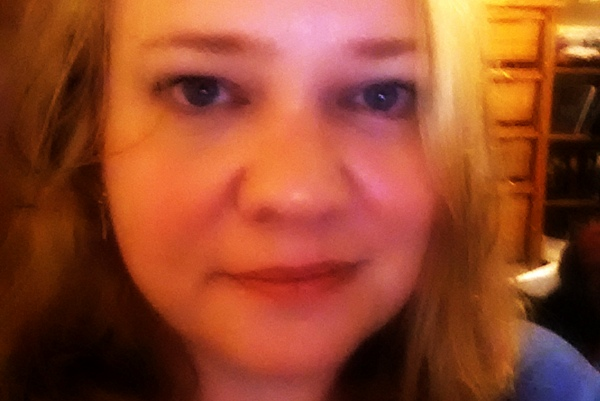
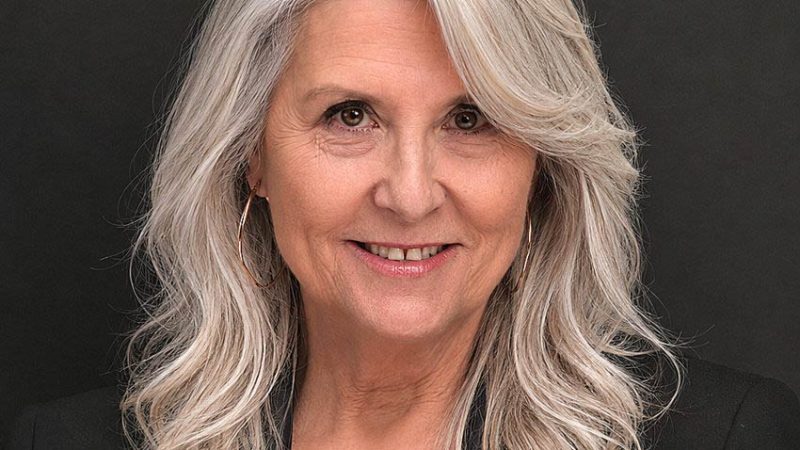
Saranne Bensusan came to filmmaking in 2014. After a successful career in NHS and Social Care Commissioning in the UK. She had worked on a few film sets and helped out friends as a hobby previously. Saranne decided that she wanted to go into filmmaking as a second career. Currently Saranne Bensusan has directed 6 shorts. She co-directed a feature length documentary and directed two feature films which got distribution. Saranne Bensusan also runs a film production company in London called From the 3rd Story Productions.
How would you describe your work as a director
Saranne Bensusan (SB): My work as a director is quite varied. I have worked on both live action and stop frame animations. I would say that my style is quirky and off-the-wall. This may not get me into mainstream film directing. I’ll probably never direct a tent pole production. But, I will get to direct the weird, the wonderful and the wacky.
How did you get into directing
Saranne Bensusan (SB): Once I had been onto a few sets. I started forging ideas of my own and thinking about how I would go about making them. I realize that I want to make my scripts into films. Then I would have to make them myself. Most directors at my level write or co-write their own work.
Saranne Bensusan 2019 – Award Winning Editor, Director & Producer
How do you choose a project to direct?
Saranne Bensusan (SB): As indie director, I usually direct material written by myself. At the moment however I am looking at feature scripts written by other writers. My view is to apply it to Creative Europe for slate funding as a producer. So, some of the things I am looking at are; first the story. If people would have an interest in watching it. Secondly numbers and types of locations. Thirdly of cast and extras. If there are any big action scenes that will hoover up the budget. As a director I am not picky about which types of project I work on. As long as it will challenge me in some way and I learn something new.
What uniqueness can female director bring into film or TV or Cinema?
Saranne Bensusan (SB): As a woman film director, recruiters regularly ask this question. That still demonstrates gender inequality in the film industry. No-one questions a man on whether he can bring something unique to the table to get the job?
Personally I haven’t directed anything that could be assigned to a gender or another. I would be against directing something assigned for a woman just because the film is about women or emotional issues. Men can do this type of work too. All it would achieve is a division in what would be seen as films men can direct. And films women can direct (a bit like saying blue is for boys and pink is for girls).
Nicola’s Shedim – A pitch video for the feature film
What women directors really need is to be equal consideration to their male counterparts. Without having to gender-based uniqueness synonymous to ‘why should we hire a woman”? The industry needs to stop asking this question.
Do you take courses to increase you craft?
Saranne Bensusan (SB): Juggling low paid and unpaid work makes it difficult. It is tough to take time away from responsibilities to go on courses. A lot of women with families and bills will be able to relate. This is a big barrier for women wanting to increase their knowledge and skills in the workplace.
I keep my skills up and learn new things by working on a regular basis. Being on set as a production assistant gives insights into how people work. This gives me an opportunity to ask questions and work under another director. When I directed my first short film I worked with crew who were shooting commercials and prime time TV shows.
This allows me the benefit of seeing what how the team works. In addition to learning more about what I need to do as a director. Any budding directors who can’t take time away from work can do courses. Or work with a professional crew and ask lots of questions. This is valuable.
Teaser Video for “I put my Heart into this Film” Book
What books do you read
Saranne Bensusan (SB): My reading preferences are quite varied. I am currently reading Jean M Auel’s ‘Earth’s Children’ series. I am on the last book in the series ‘The Shelters of Stone’. The story is set in Stone Age France about 35,000 years ago. It centres on the complex social relationships our ancestors would have forged for survival. As someone who specialized in palaeontology at University I find reading well-researched Stone Age fiction fascinating.
Why will you choose an actor, writer or producer. What do you look for?
Saranne Bensusan (SB): As an indie director, I am a producer on a lot of films as well. I choose producers who contribute to the film. I tend to go with people I have worked. As we have the same vision in where we want to go. I have tried a couple of times to recruit producers outside of this circle; however this hasn’t yielded any productions.
I choose actors based upon their performance. If they fit the role and if they fit together with other cast members. If I am casting a married couple or siblings. I make sure all actors on my sets receive pay. Even if this meant saving up or putting the shoot onto plastic. This has bought about fantastic results and has seen the quality of performances increase. It means I am not under restriction to who will work for free and if they will turn up. There are a lot of good showreels out there at the moment. I shall be eyeing #showreelshareday on 19th July to spot new talent.
Teaser Video for “I put my Heart into this Film” Book
When I recruit a writer as I am doing at the moment I usually put my producer hat on first. I look at if the script is viable financially and draft a budget. Indie producers/directors must keep locations to a minimum, and keep the cast numbers down. This will not only reduce the budget but will give actors something meaty to perform.
When you are offered a project what things do you put in place to deliver a good job
Saranne Bensusan (SB): Usually a good project plan. I use Prince 2 to project plan so I have a big-scale overview with milestones and outcomes. I also use other tools such as shot lists, which help me plan out how scenes will be shot, and camera assistant notes to help me identify which shots in post are the good ones and which ones won’t make the cut. This speeds up post production. As a director and an editor, I like to have a chat with the DOP, so that we get the variety of shots we need and the tone of the film sorted. I prefer to start the color grade on set with lights and filters, so that when we are in post we enhance what is there rather than creating it as the latter will reduce production value. I haven’t had the luxury of working with a storyboard artist yet!
Explain your latest work
Saranne Bensusan (SB): I shot a short film in January called Ménage du Trois, a story about a serial killer husband and wife who have a major disagreement, whilst their latest victim bound and gagged in the bathtub. So far it has made the official selection at Carmarthen Bay Film Festival which is BAFTA Cymru qualifying. I am currently in development with a sci-fi short called ‘Scheduled’, which will be a forerunner to a feature. It is about a world in the future where there are too many humans and life is timetabled by IA. The short will be in Danish and I have cast actress Stine Olsen in the lead role. As part of the funding strategy we will be producing eight short stories and corresponding graphic novels telling stories of different people in this future world.
Explain the key challenges on you last film
Saranne Bensusan (SB): The major problem on Ménage du Trois was funding. There are some options for public funding for short films by emerging filmmakers, but what is out there is ring fenced to encourage more BME writers, producers, directors into filmmaking to bring more diversity. Although this is a good thing and much needed, there aren’t are similar schemes for other underrepresented groups like women and people with disabilities (the other producer I work with has a complex physical disability).
We have run several crowdfunding campaigns in the past, however even though I had success with previous films on the festival circuit and with sales distribution; we raised just £30 on the last campaign. Ménage du Trois was paid for on plastic. The issues with funding it privately is that we have to scale back on expenses and work for free ourselves in order to pay other people. Secondly we miss out on qualifying for the good career-defining festivals that come as part of the development opportunities with public funding.
What thing/situation helps you during production
Saranne Bensusan (SB): As mentioned above, my shot list helps me when I am in production. It also allows me to be creative and shoot additional things on an ad hoc basis, and having a good AD on set to keep everyone on their toes – including the director!
Explain a creative choice you took on set on a recent production
Saranne Bensusan (SB): I was looking at making several organs that would be in a scene where a man was disembowelled, and I initially looked into making them out of latex. This involves various moulding stages, castings and painting, and is generally more expensive. We did this before on previous feature film however the detail wasn’t accurate enough for the close up shots I wanted. I decided (with the actor’s permission!) to use real animal organs in the scene. I used a pig’s liver and a heart, and hog casings for the intestines, which I filled with spaghetti to look realistic. The blood was theatrical and made a few days prior to the shoot.
How do you advise female directors to find projects
Saranne Bensusan (SB): Create the opportunities yourself. Agents are not recruiting women directors in the same number that they recruit men, and have very few women directors on their books as a result. This restricts the amount of paid directing work available to women because the bigger productions and commercials all recruit through agencies.
I am currently spearheading #directorshowreelday on social media, and hope to bring reels and work from emerging directors to the attention of producers, agents and writers. The first day is on 31st January 2017. All people need to do is share their work with the hashtag #directorshowreelday and retweet what others are sharing. If you are a woman director, add the hashtag #womeninfilm to your tweet
How can filmmakers finance projects
Saranne Bensusan (SB): In the UK public funding sources are available. There are also other sources like Crowdfunding or privately funding your film. I always say if you believe your film will be amazing and a good opportunity for others to work on, then invest in it yourself first.
What do you want from an actor in production
Saranne Bensusan (SB): To ask lots of questions! Seriously, you won’t look silly asking. Also actors bring part of the personality to the character so don’t be afraid of making suggestions that will make your character be more believable, or to change a line of dialogue that is tricky to deliver or will compromise the performance.
How do you prefer to work with a producer during a production
Saranne Bensusan (SB): We do most of our working together in pre-production really, so that we free up the production to being creative. This allows the producer some creative input on set, and having another person with ideas on set when problem solving only helps the end product. The only other thing managed on set is the budget, which is usually agreed beforehand.
Who is your favourite director
Saranne Bensusan (SB): I don’t really have a favourite director, nor a favourite actor.
Why this director
Saranne Bensusan (SB): I enjoy watching films and TV programmes and judge each thing on its own merits, e.g. good cinematography, good score, and good scripting and get my ideas from these things, rather than focussing on following a particular director. I think this allows me to think a bit more creatively and hopefully my style won’t be similar to someone else’s.
What advice would you give to female directors around the world
Saranne Bensusan (SB): Challenge discrimination. Use social media to get noticed. Network more. Create your own opportunities.
Briefly write about your career
Saranne Bensusan (SB): I started film making as a hobby in 2009, and made the transition to film directing professionally in 2014. I have produced 13 films and directed nine. A big portion of my film career has been dedicated to film editing (12 films) and film color grading (15 films).
I feel that my experience in post production has given me the insight I need as a director when it comes to storytelling, in addition to understanding what technical information is needed by the editor from the crew on set. This also helps me establish what I am going to do on set in terms of special effects on set, rather than leaving it to chance and saying ‘we’ll sort that in post’.
For example, with my short film ‘Mano a Mono’ I established that for the mirror scene when the man was having a crazy conversation with himself in the mirror, we would shoot the mirror scenes twice (once from each character perspective) and then matte the images together in the edit to get the effect of the character having a conversation with his other self in the mirror.
I also spent five years making a stop frame animated feature film called ‘The Hunting of the Snark’, which involved making puppets and props, recording the voices, and taking over 90,000 still images and making a film out of them! This has gone on to win six Best Animation awards at festivals and got screened at three Comic-Cons worldwide.
Socials
Website
Facebook
Twitter
Vimeo
IMDB
FILMMAKER INTERVIEWS
Actress Victoria Guthrie Demystifies Her Work
By Samantha Blackwell (Twitter)


I was amazed at how much input you put out into your work that you shot 6 shots, done 2 features in a short time. You are amazing