The integration of AI in filmmaking actively reshapes how studios develop, shoot, and edit major motion pictures today. For decades, bringing a script to the screen meant drowning in endless logistical paperwork and sprawling budgets before a single camera ever rolled.
When an overwhelmed college student faces an impossible schedule, they might seek out essay writing assistance from DoMyEssay to free up time for their core studies. Modern film producers treat artificial intelligence exactly the same way. By offloading tedious budgeting and scheduling tasks to smart algorithms, directors win back the time they need to actually craft their narratives.
From independent creators to major Hollywood studios, everyone is adapting to AI in film production. This digital integration significantly cuts costs and shortens timelines across the board. The technology now touches every single phase of a movie’s lifecycle.
Traditional filmmaking workflows versus AI-assisted production
| Production phase | Traditional workflow | AI-assisted workflow | Key efficiency gain |
| Pre-production | Manual script breakdowns, spreadsheets, hand-drawn storyboards | Automated script tagging, predictive budgeting, AI concept art | Compresses weeks of scheduling into hours |
| Production & VFX | Location shoots, green screens, frame-by-frame rotoscoping | Real-time LED volumes, automated depth-mapping, neural de-aging | Eliminates location travel and green-screen spill |
| Post-production | Manual sync, timeline scrubbing, standard voice dubbing | Text-based rough cuts, one-click dialogue isolation, visual lip-sync | Cuts assembly and localization time dramatically |
| Distribution | Static theatrical posters, broad demographic ad buys | Predictive box-office modeling, dynamic personalized thumbnails | Higher click-through and targeted ad spend |
Pre-production and automated script analysis
Generative tools for AI in films can read a feature-length script and instantly generate preliminary budgets, shooting schedules, and character breakdowns. Producers use platforms like ScriptBook to analyze screenplays for potential market success and demographic appeal. The software highlights specific locations, props, and cast requirements in seconds.
This immediate data processing eliminates weeks of manual highlighting and spreadsheet data entry for the production team. Creative teams can also use AI image generators like Midjourney to create vivid storyboards and concept art before hiring a full pre-production crew. This early visual planning helps directors pitch their ideas to investors with much greater clarity.
Research from McKinsey notes how AI and the film industry now collaborate to drastically accelerate the visual iteration process. Directors can test hundreds of visual styles in a single afternoon.
AI systems rapidly process these specific pre-production tasks:
- Identifying location requirements and tagging scenes
- Props identification
- Shooting schedules
- Cast budgeting
Visual effects and virtual production stages
Machine learning algorithms allow filmmakers to generate realistic background environments and complex visual effects without building physical sets. Virtual production stages use large LED volumes, such as Industrial Light & Magic’s StageCraft, to project AI-generated environments directly behind the actors in real time. This technology removes the need to fly entire casts and crews to expensive international locations.
Directors can shoot a desert scene and a snowstorm on the exact same soundstage on the exact same day. AI also drastically reduces the time needed for complex rotoscoping and motion tracking. Software can now isolate an actor from a background automatically without requiring a traditional green screen.
Visual effects artists now rely on AI in movies to:
- Generate digital crowds to fill empty stadium seats with unique background characters.
- De-age veteran actors using deep learning models trained on their older film appearances.
- Create hyper-realistic weather effects like rain, snow, or fog without actual environmental hazards.
- Seamlessly replace props or fix wardrobe malfunctions long after the cameras stop rolling.
- Animate digital creatures with physics-based movements that flawlessly mimic real-world biology.
Post-production and the digital editing phase
Editors use software powered by AI in film to automatically sync audio, sort through daily footage, and assemble rough cuts based on the script. Instead of spending hours searching for the perfect take, an editor can ask the software to find every clip where an actor smiles or picks up a glass. This rapid sorting process saves countless hours in the dark editing bay.
Colorists also use automated tools to match lighting and tones across different camera lenses in a fraction of the time. Audio engineers use AI to isolate dialogue and remove unwanted background noise, such as passing airplanes or sirens, with a single click.
Localization and international distribution also benefit greatly from these digital advancements. AI-driven dubbing software like Flawless AI can match a voice actor’s translated dialogue directly to the original actor’s precise lip movements. This creates a much more immersive and natural viewing experience for global audiences.
Audience prediction for marketing and distribution
Artificial intelligence fundamentally changes how studios market their finished films to the general public. Algorithms analyze vast amounts of consumer data to predict which demographics will respond best to specific genres or actors. Distributors use this data to target their advertising budgets exactly where they will generate the highest ticket sales.
Streaming platforms rely on these same models to serve customized movie artwork to different subscribers. One user might see a movie poster highlighting the romantic subplot, while another sees an action-packed explosion from the exact same film.
These smart algorithms ensure that the final product finds its ideal audience.
To successfully launch a film, marketing teams use AI to determine:
- Optimal release dates based on competitor schedules and historical box office data.
- Which social media platforms will yield the highest engagement for the film’s trailer.
- The best geographical markets to target for limited theatrical releases.
Copyright risks and ethical industry challenges
The integration of AI in film industry workflows introduces severe legal questions regarding intellectual property rights and the fair compensation of artists. Generative AI models learn by scraping millions of existing images, scripts, and videos from the internet. Many writers and artists argue that these systems use their copyrighted work without permission, credit, or payment.
Studios must carefully navigate these legal gray areas to avoid infringement lawsuits. Under current U.S. Copyright Office rulings, purely AI-generated scripts and images cannot be copyrighted without substantial human authorship. The active legal battle centers on how much human editing is required to qualify for partial protection, alongside training-data infringement lawsuits and union guardrails negotiated by the WGA and SAG-AFTRA to protect traditional roles.
The industry must work alongside labor unions to address these specific legal and ethical challenges:
- Determining the exact threshold of human modification required to copyright AI-generated scripts and imagery.
- Protecting actors’ digital likenesses and voices from unauthorized commercial use.
Democratization of filmmaking for independent creators
Independent filmmakers can now produce studio-quality content on a micro-budget by using AI tools to replace expensive equipment and large crews. Creators no longer need a multimillion-dollar backing to create a visually stunning science fiction or fantasy film. Artificial intelligence levels the playing field by providing affordable access to high-end visual effects and sound mixing software.
This technology empowers diverse voices and amateur creators to tell their stories without seeking approval from traditional Hollywood gatekeepers. As these tools become more accessible, the AI film industry landscape will see a significant influx of unique, creator-driven content.
However, no matter how advanced the software becomes, the future of cinema relies on balancing these powerful digital tools with authentic human emotion. Technology provides the canvas, but human experiences still drive the story.
You can comment below or join us on Facebook, X and LinkedIn.
INDIE ACTIVITIES
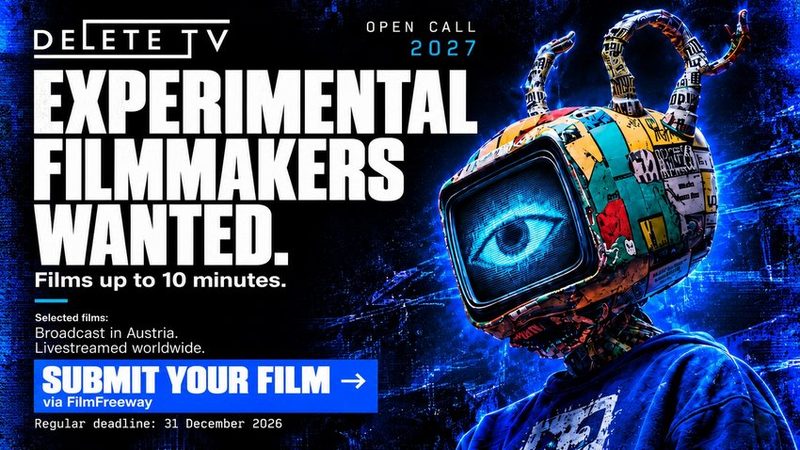
DELETE TV Opens Season 13 Submission for Experimental Film & Video Art
International open call welcomes films up to 10 minutes for Austrian broadcast and worldwide livestreaming