
My first memory of anything theatrical was at the dinner table with my 3-older brothers, father and mother. There was so much laughter and mayhem all the time. My poor mother was Margaret Dumont to our Marx Bros. I was 4 or 5, so I turned to my brother Seth and asked “when will I be funny too?” He laughed and boom I was in! My stage debut was in 1969 (!) in elementary school. I was cast in the Lollipop Princess as The Trumpeter. My sole direction was to appear, stage left, balance my green, plastic, Yankee Stadium horn on the ground, announce the arrival of the Lollipop Princess, and exit….
Unfortunately, I dropped my horn. When I rushed to pick it up, I kicked it out of my grasp. This could have been a career ending move, but rather, upon hearing laughter echoing from our school auditorium instinct took over. I dashed toward the horn, bent down, and kept kicking it out of my grasp… clear across and off stage right. The laughter grew with each kick (as did the poor director’s blood pressure). I strutted back on stage triumphantly, blew the horn, and pronounced; The Princess to even louder laughter and applause… My blood has been tainted with the acting bug ever since.
indieactivity: Did you study acting?
Ethan Marten (EM): My brothers were my earliest teachers. As for them, Jonathan came out of the womb wanting to be an actor, and Seth performed his own scripts for classes at NYU. I was 8-years old when I saw Steinbeck’s Grapes of Wrath with Henry Fonda. The story, one of corruption and brutality surrounding poor farmers forced to flee their homes and the American dustbowl during the early 20th Century captivated me.
Tom Joad (Fonda) says goodbye to his mother, and she wants to know if she’ll ever see him again. Ma Joad: How am I gonna know about ya, Tommy? Why they could kill ya and I’d never know. They could hurt ya. How am I gonna know?
Tom Joad: Well, maybe it’s like Casy says. A fellow ain’t got a soul of his own, just little piece of a big soul, the one big soul that belongs to everybody, then…. It don’t matter. I’ll be all around in the dark I’ll be everywhere. Wherever you can look wherever there’s a fight, so hungry people can eat, I’ll be there. Wherever there’s a cop beatin’ up a guy, I’ll be there. I’ll be in the way guys yell when they’re mad. I’ll be in the way kids laugh when they’re hungry and they know supper’s ready, and when the people are eatin’ the stuff they raise and livin’ in the houses they build I’ll be there, too.
It’s been more than 45-years, and I’m still fighting tears recalling these words, and hearing Fonda’s voice echo in my mind. The impact of those words made me want to be more than just a funny man: I knew at that moment there was a whole range of emotions that could move an audience. And, I wanted to be part of it. In the mid 1970s, I was in New York City, visiting my big brother and his cool, college thespian friends and he asked me if I would read a scene with him. He tossed me the script from Sam Shepard’s True West.

Here I was, a 14 year old kid, in the big city, and my bohemian street smart brother was asking ME to read a scene with him? When we had finished the scene, one of Seth’s friends said, “Well, at least we know the kid can act.” Everyone laughed. That friend, as it turned out, was Kevin Spacey. He went on to have a modicum of success. This was the final epiphany: it was acting or bust.
To this day, my brothers Jonathan and Seth amaze me with their incredible acting abilities. Even my oldest brother, Richard, who normally stays on the opposite side of the camera is a ham. My brothers, and experience were my early teachers. I studied Meisner with Sylvia Harman, and read the works of Stella Adler, Brecht, Stanislavsky…. Lee Strasberg was a client of my father’s, and Jonathan studied with him. The wisdom he gleaned he passed on to me.
What acting technique do you use?
Ethan Marten (EM): Of all the “methods” I have been exposed to, Meisner feels the closest. Yet, I don’t feel comfortable “subscribing” to any one method. What works for me may not work for you. Being real and being in the moment are key. Acting for me, is active listening and reacting, spontaneously in every single moment.
Tell us about the work you have produced?
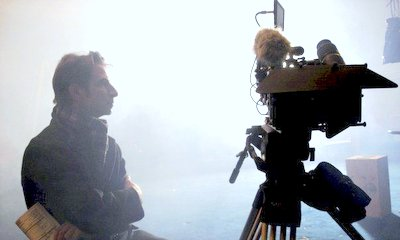
Ethan Marten (EM): I’ve produced several seasons of award winning theatre and scores of TV and movie productions. In terms of characters what interests me as an actor or a producer is a good story with rich, deep characters. I want to care What happens both in the story and to these characters. If I’m caught up in reading the story or in the characters then I’m hooked. The features takes years from concept to completion. So I have to want to delve into the depths of why and what makes these people on the page do what they do.
Do you take courses to improve your craft?
Ethan Marten (EM): Read a lot. Watch interviews with my favorites, and still lots of scene study.
How do you combine acting and producing?
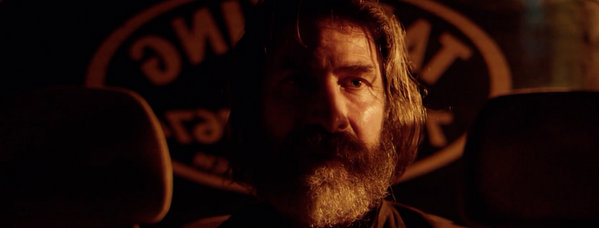
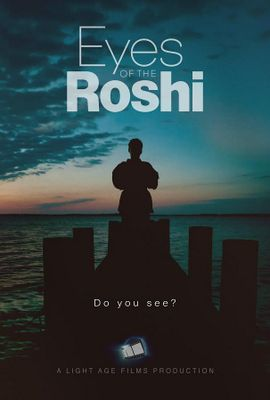
Ethan Marten (EM): Many years ago, Craig Fincannon, who cast me in Eddie (Whoopi Goldberg), and The Young Indiana Jones Chronicles, was dispensing some rather fatherly advice; “Ethan, if you want to be cast in more major roles, start producing your own films.” He was telling me to create my own success. It was great advice. Eyes of the Roshi is a good example of having had the opportunity to sink my teeth into a role that I will never forget and it didn’t hurt that I was acting opposite Academy Award Nominee Eric Roberts.

As a result of being on both the producing and acting side of this movie, I am now well equipped to continue down the road of success with future projects, including, the suspenseful Lost April, by brother Seth, the comedic Reel Life, by brother Jonathan, and my sister in law’s beautifully scripted screenplay, Euphoric Tendencies.
How do you keep fit as an actor?
Ethan Marten (EM): I live a full life. I focus on what’s important: my significant other, my friends, my family. I’m a father, a brother, an uncle mishpoca ershter family first. Other than that, I love to travel. Meditate. I get lots of fresh air. And, of course, Yoga with Master Adam.
How do you prepare for a role?
Ethan Marten (EM): Story is King (or Queen)! Always start with the script.‘ If it ain’t on the page’ says Robert Evans, ‘it won’t be on the screen.’ I love to read and rehearse. I’ll keep rehearsing until most actors beg for mercy! Every time I rehearse, it’s an opportunity to discover something new. Then the character can take over and I can be spontaneous and in the moment. The words may be memorized, but the reaction to what you’re hearing, seeing, feeling is in the moment. Oops, I think my Meisner is showing.
Eyes Of The Roshi starring Eric Roberts and Grandmaster Adam
How do you take a character in a script to a honest, believable and breathing person?
Ethan Marten (EM): I keep reading, digesting, and exploring. Developing the backstory. Trying to understand my character’s arc, and relationships. What makes him tick. Does he have any quirks? When I get to the point that I’m not speaking of the character in the third person, but the character says, “I’ll do this….” Then “we’re” ready.
How do you stay fresh on set?
Ethan Marten (EM): Focus. Pace. On set, the words of Michael Caine ring in my ear; “You’re paid to wait not to act.” Really, different situations call for different approaches: looking for some levity during a tense period on set. Sometimes it’s remaining in character or grabbing a nap, rehearsing…. It just depends. Truth is, we’re so lucky. I keep shaking my head in disbelief that I get to do what I love every single day. I’m really happy.
Explain one creative choice you took on set?
Ethan Marten (EM): During an episode of Young Indiana Jones, the character of George Gershwin turns to me as Irving Berlin, and asks me to explain what love is to lovesick Indy (Sean Patrick Flannery). The line was; “Well you see, you can’t stop thinking about her because, a pretty girl is like a melody, that haunts you night and day….” The characters are huddled around the piano in a Tin Pan Alley bar.
Our characters are song pluggers, and composers, and mostly Jewish immigrants not too long from the Old World. I was suddenly possessed by by Yiddish ancestors, and the line came out; “Vell you see, it’s very simple Boychick, you can’t stop thinking about her, because….” CUT! The director liked the read, but what was this boychick? I promised him it was grade A authentic. He trusted me, and that’s what aired. God Bless Syd Macartney. It was spontaneous, real, and in the moment, and I could feel all the deceased mishpocheh (family) smiling and nodding approval.
Describe a memorable character you played?
Ethan Marten (EM): If Nurse Ratchet and Charles Manson had a love child with good dental hygiene, it would be Carey, the hitman from Eyes of the Roshi, 2016.
What do you want most from a director?
Ethan Marten (EM): Trust
What actors do you long to work with?
Ethan Marten (EM): Dustin Hoffman, no hesitation.
The acting reel for Ethen Marten
Why?
Ethan Marten (EM): Brilliant. Fully engaged. Hilarious. Professional. To be nosetonose with Benjamin from The Graduate, Ted from Kramer vs. Kramer, Raymond Babbitt from Rain Man, Michael Dorsey and Dorothy Michaels from Tootsie, Babe from Marathon Man, Jack Crabb from Little Big Man…need I go on?
What advice would you give to actors?
Ethan Marten (EM): Stay Committed. Have patience and don’t WANT it to be more than it is.
Briefly write about your career?
Ethan Marten (EM): Ethan founded Light Age Films in 2010 after co-producing the Sci-Fi thriller Atlantis Down, starring Michael Rooker (GotG, The Walking Dead, JFK, Mississippi Burning). The development and production company is in the pre-release stages of the action drama Eyes of the Roshi starring Academy Award Nominee Eric Roberts (Best of the Best, Pope of Greenwich Village, Star 80 and Runaway Train), and post production of the Native American documentary, White Buffalo: An American Prophecy.
Ethan has appeared onscreen with Harry Dean Stanton, Eve Best, Academy Award Winners Jason Robards, Piper Laurie, Jose Ferrer, Frank Langella, and Whoopi Goldberg. His stage credits span more than 40-years on the boards.
Marten was Vice President of Marketing for Atlantic Film Studios Virginia’s first full service film studio. As VP of Atlantic Entertainment Inc., He was a distributor of such films as What Ever Happened To..? starring Lynn and Vanessa Redgrave, In The Deep Woods, starring Anthony Perkins, and Our Sons, starring Hugh Grant, Julie Andrews and Ann Margret.
Marten first started working behind the camera in 1988 with Craig and Mark Fincannon on Buzz Kulik’s Too Young the Hero. He has since worked in front of or behind the camera with Lucas Films, Hollywood Pictures, Discovery Channel, Family Channel, New Dominion Pictures, and NASA. It’s been a magical long distance run that is just beginning to turn into a sprint. I’ve laced up my track shoes, and am taking on all hurdles!
You can comment below or join is on Facebook, Instagram or on Twitter
Socials
Website
IMDb
Facebook
Twitter
Vimeo
ACTOR INTERVIEWS



Actress Victoria Guthrie Demystifies Her Work
By Samantha Blackwell (Twitter)