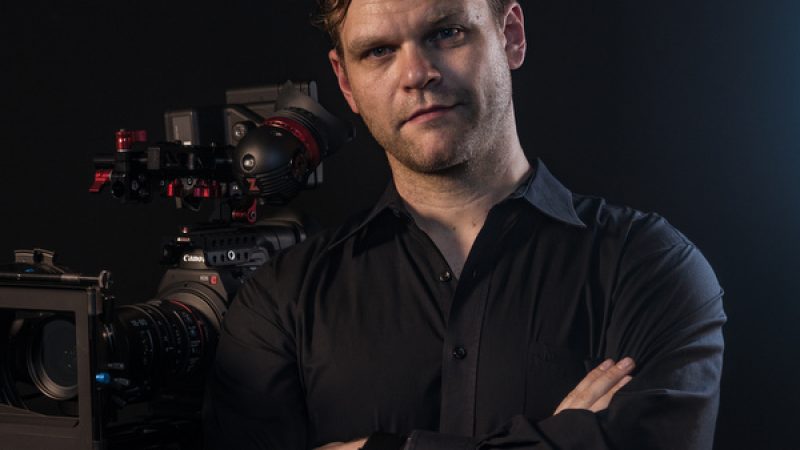
I started directing in my first year of film school in 2023. I was honestly dumbfounded to learn that you’re only expected to make one film a year. That wasn’t going to cut it for me. I wanted more, to direct more, learn faster, make mistakes, and grow. I’ve always believed you shouldn’t ask anyone to do something you wouldn’t be willing to do yourself, and directing felt like the most hands-on way to lead by example.
My style revolves around an abundance of information compressed into simple, intentional structures, always leaving space for collaboration and surprise. I don’t like things to be too predetermined. You have to leave room for the organic to happen.
indieactivity: Do you hire a casting director, or cast yourself? What criteria goes into your casting?
Benjamin Martin (BM): As a writer-director, my casting process often begins during the writing stage, sometimes I write with specific actors in mind, tailoring roles to their strengths. Other times, I start with a visual idea of the character and build from there. I usually begin the search on social media or by reaching out to agencies, and from there I request audition tapes. As an independent filmmaker, I prefer this route, it’s cost-effective and allows me to quickly shortlist potential talent. I handle most of the casting myself, especially since I’ve built a fairly large network in that space. That said, I’m always open to discovering and working with new talent.
What went into the casting process for “Lila’s Ribbon”?
Benjamin Martin (BM): The casting process for Lila’s Ribbon was a really interesting one. I had already built a network of actors from the previous year, but I felt the need to push beyond that, to challenge myself by working with talent I hadn’t seen before.
The Official Trailer for Lila’s Ribbon by Benjamin Martin
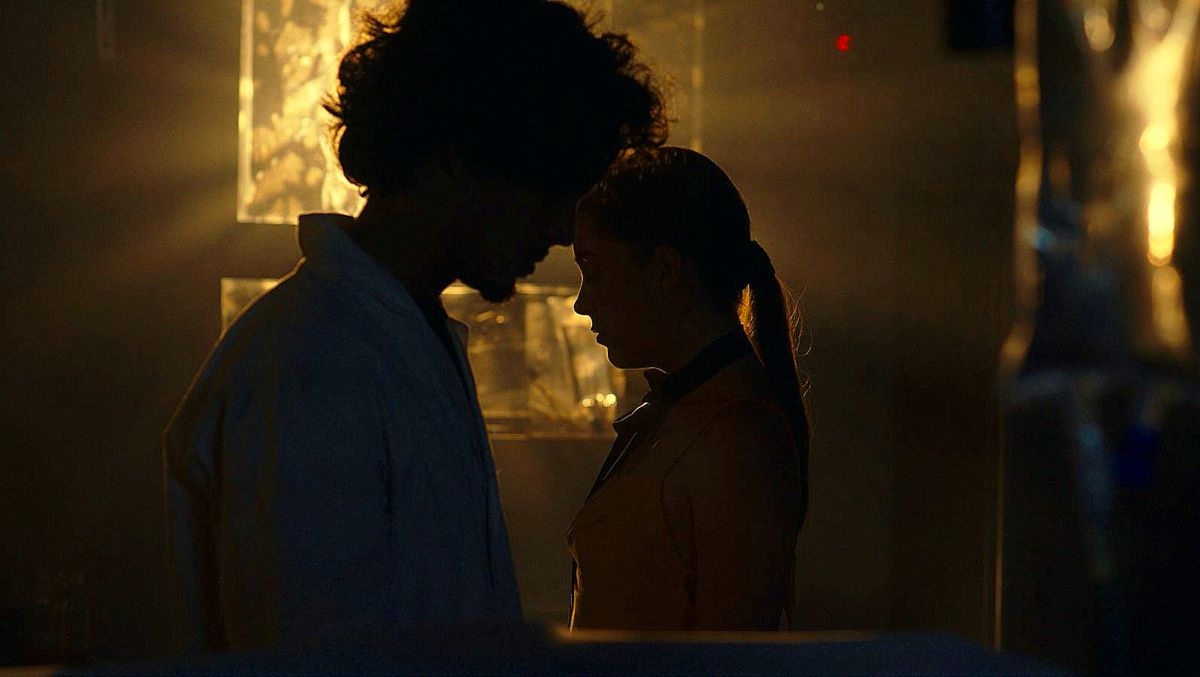
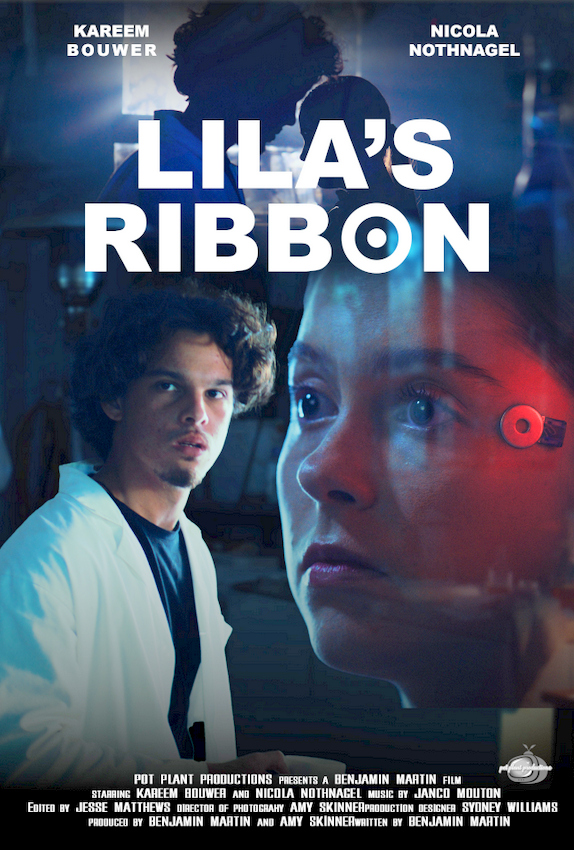
Lila, the main character, is an artificial intelligence, a robot, which made casting especially tricky. The actor needed to embody a very specific kind of movement and physical control, or the illusion just wouldn’t sell.
I came across Nicola while scrolling through ArtistOne. Her most recent work had been a Netflix series, and now here I was, reaching out to her for an independent short, offering only to cover her travel costs. To my surprise, she one-upped me: Nicola offered to do the project for free after seeing how committed we all were to making it happen. That kind of generosity and belief in the work meant a lot.
Kareem, on the other hand, was a total wild card. I found him through a Facebook ad, and honestly, we got lucky. He brought something fresh and grounded to the role that we hadn’t expected.
Without giving anything away, tell us a little bit about the script, how did you come up with the idea?
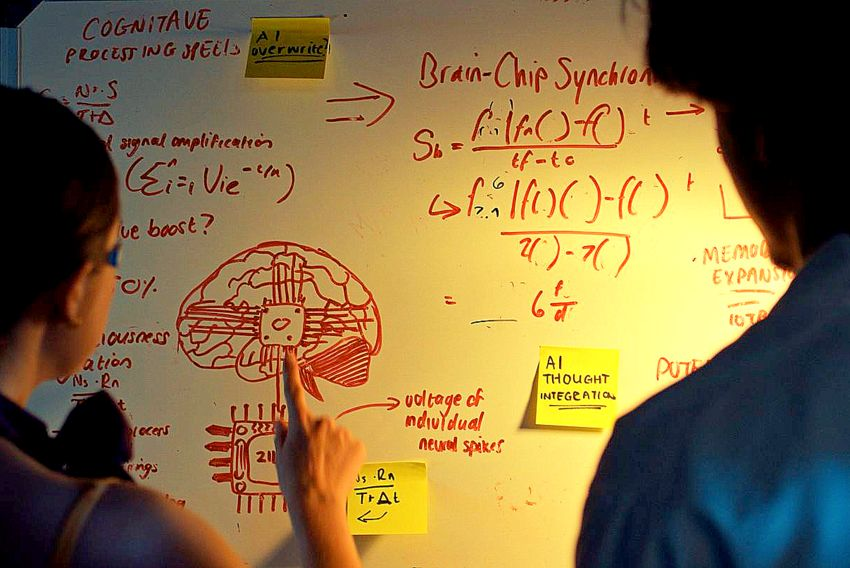
Benjamin Martin (BM): I came up with the idea for Lila’s Ribbon shortly after the success of my previous short film, Foreigners, which went on to win several awards across mid-level festivals. I knew I wanted to follow it up with something even more relevant, something that tapped into a global conversation. AI immediately stood out to me as a topic that felt urgent and culturally resonant. But rather than telling a typical sci-fi story, I wanted to explore how we treat artificial intelligence, how our behavior toward it reflects deeper questions about what we define as life or living. The roots of the concept are definitely inspired by Ex Machina, but Lila’s Ribbon takes its own path by focusing on emotional perception and morality in our treatment of the non-human.
Who is “LILA’S RIBBON” for? Who do you think would enjoy it the most?
Benjamin Martin (BM): Lila’s Ribbon is for anyone who’s ever questioned the boundary between emotion and programming, who’s fascinated by how we define life, love, and humanity. I think sci-fi fans will naturally be drawn to it, especially those who enjoyed films like Her, Ex Machina, or After Yang. Whether you’re into tech or not, it’s ultimately a story about empathy, and how we choose to give or withhold it.
How long did it take to shoot the entire film?
Benjamin Martin (BM): Funny story, we shot the film over two separate weekends with a fully planned schedule… except for one small detail. We had already started filming in our first location, but for the following weekend’s shoot, we hadn’t even locked down the second location yet. Classic indie filmmaking. It forced us to improvise a lot. But in the end, it all worked out. If there’s a will, there’s always a way.
How long was the post-production process?
Benjamin Martin (BM): This is where things got interesting. While working on the set of a Davido music video, I met Steyn Fourie, who reached out after our first week of filming to invite me to a private screening for his new film IRON. He also asked if I had a project I could screen as an undercard before his film. Of course, I had one, but the big question was whether it would be finished in time. That left us with just one week to edit, grade, and do VFX, and one more week for sound. It was an intense sprint, fueled by persistence, long hours, and an incredible team. It was an opportunity I didn’t want to miss, and we pulled it off.
The film had a lot of talent working behind the scenes as DPs, sound designers, composers, etc. Why is diversity important both in front of and behind the camera?
Benjamin Martin (BM): Diversity is essential because storytelling thrives on a variety of perspectives and experiences. As a director, my style is rooted in collaboration and openness, leaving room for fresh ideas and authentic contributions, creating space for magic to happen on set.
Our DP, for example, is a neat freak who insists everything be perfectly in order. That brought a controlled, meticulous approach to the production, which balanced nicely with my more flexible style. This blend resulted in a production that was both precise and peculiarly alive.
In front of the camera, diversity allows stories to feel real and relatable to wider audiences. Behind the camera, it pushes the craft forward by challenging conventional ways of working and thinking. For independent filmmaking especially, embracing diversity isn’t just a value, it’s a practical way to unlock unique voices and richer stories.
What are your goals with Lila’s Ribbon?
Benjamin Martin (BM): Lila’s Ribbon was the first film under my co-producer’s new production company, which made it a milestone, but for me, its purpose is the same as every project I take on: it’s what I love to do. I make movies for myself and for people like me, people who connect with the same themes, emotions, and tone.
You never really know which project might be your “big break”, and if you go chasing that, trying to force it into everything you create, it’ll never happen. The story has to come first. Inspiring people is the goal. Creating something honest and meaningful is the dream. And you never know, if you stay true to that, you might just find your film being categorized as your “big break” after all…(my mentors words)
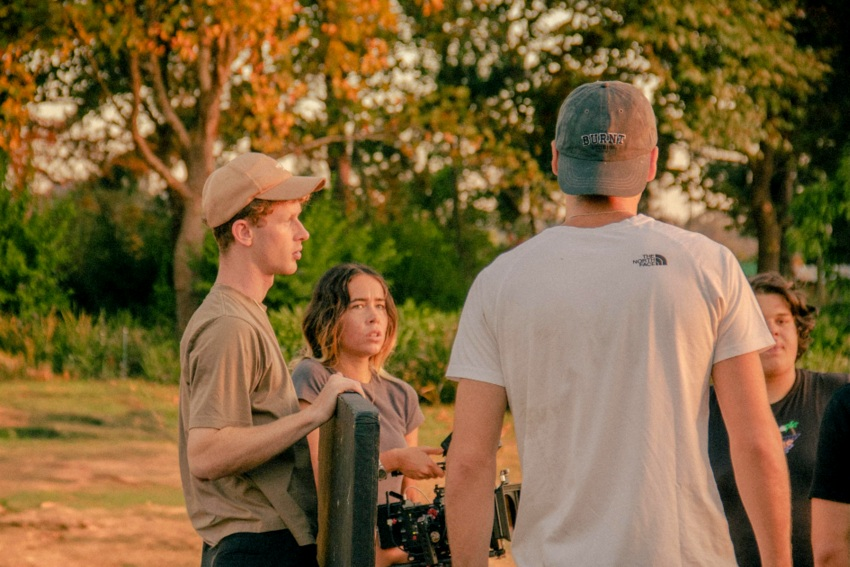
What’s next for you? What are you working on right now?
Benjamin Martin (BM): Up next is my graduation film, Where The Stars Meet. It’s actually a script I originally wrote in my first year of college, and now, as I near the end of this chapter, I’ve reworked it, matured it, into something I believe is really beautiful.
Despite the success of my independent projects, I still have one final commitment as a student, and I want to make it count. Graduation films have long served as calling cards for great filmmakers, and I’m treating this the same way. I’ve brought together my strongest crew yet, and we’re aiming high. Our goal is to take it all the way to Sundance.
What would you recommend to a new director at the beginning of his/ her journey? Any special courses, workshops, helpful books they can read?
Benjamin Martin (BM): I’ll be honest, I still consider myself pretty green, so I’m learning as I go. But one thing I know for sure: make movies with no money. Use every loophole, every connection, and make time for the work. Don’t wait around for funding or approval, just keep creating.
If you love it, that love will show. People might hate it, love it, or not get it at all… but they’ll watch. And there’s no such thing as bad criticism, every note, even the tough ones, can teach you something.
One book that really stuck with me was Notes: The Making of Apocalypse Now. It’s an incredibly insightful read, not just about the chaos behind a massive production, but about the mindset and relentless drive required to push a vision through to the end. It really reframed how I think about the role of the director.
Who is your favorite director? Why?
Benjamin Martin (FL): That’s a tough one, but I’d have to say Denis Villeneuve. His recent work across genres has completely captivated me. Whether it’s intimate storytelling or massive-scale world-building, his films always carry a quiet intensity and emotional depth that I really admire. He has this incredible ability to make even the most complex ideas feel human is a skill for sure.
What advice would you give directors around the world?
Benjamin Martin (FL): If there’s a story you want to tell, tell it. Don’t wait for permission, validation, or the perfect conditions. If it’s important to you, there’s someone out there who will value it too. Trust your voice. That’s where the best stories begin.
Let’s have your comments below or on Facebook, Instagram, or Twitter
Socials
Website
IMDb
Facebook
Twitter
Instagram
Vimeo
FILMMAKER INTERVIEWS