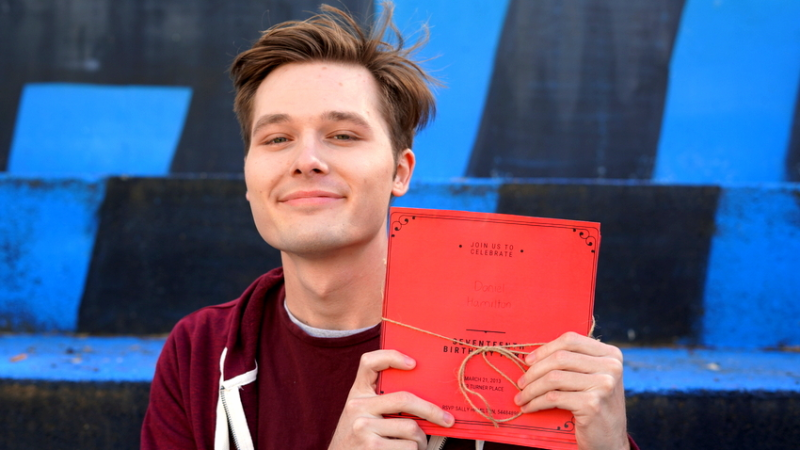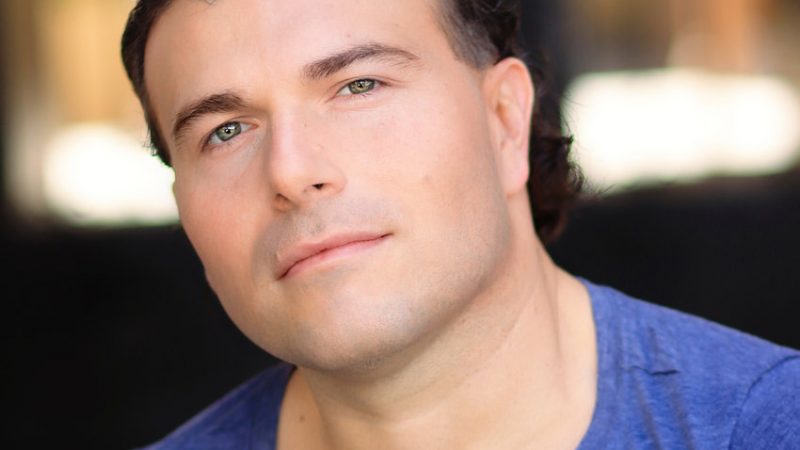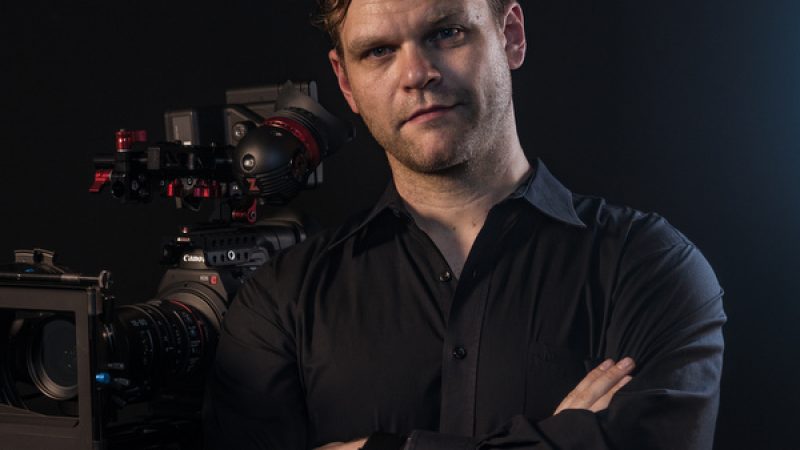
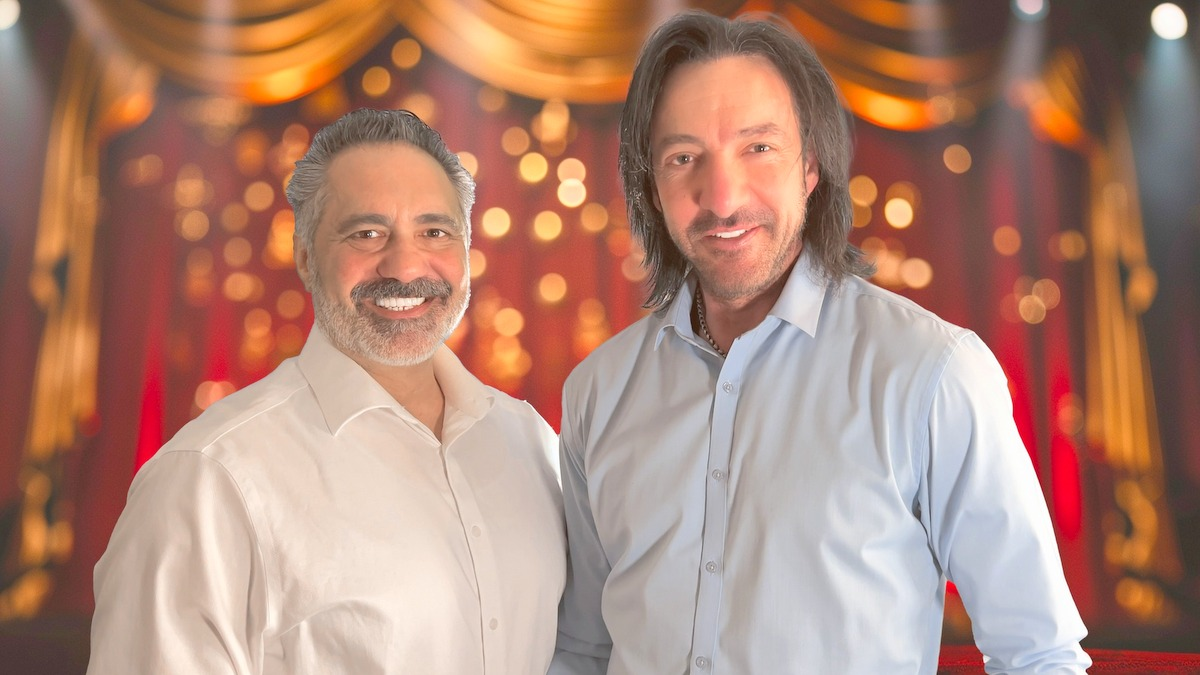
Four Olives Productions is a dynamic and innovative independent film company. It is rooted in the vibrant cultural landscape of Philadelphia. It is founded by two lifelong friends Fabian Farina and Mariano Mattei from South Philadelphia. Their journey began in 2020 with a shared passion for authentic storytelling and a commitment to cinematic excellence. In just a few years, we have produced three full-length feature films. They are all available on Amazon Prime and other major streaming platforms. We have alongside it done nine distinctive short films. We have an unwavering dedication to quality and compelling narratives. This has garnered us over twelve awards across various film festivals. It reflects our ability to resonate with both audiences and critics.
indieactivity: Introduce the story, cast and crew of Sacrum Vindictae?
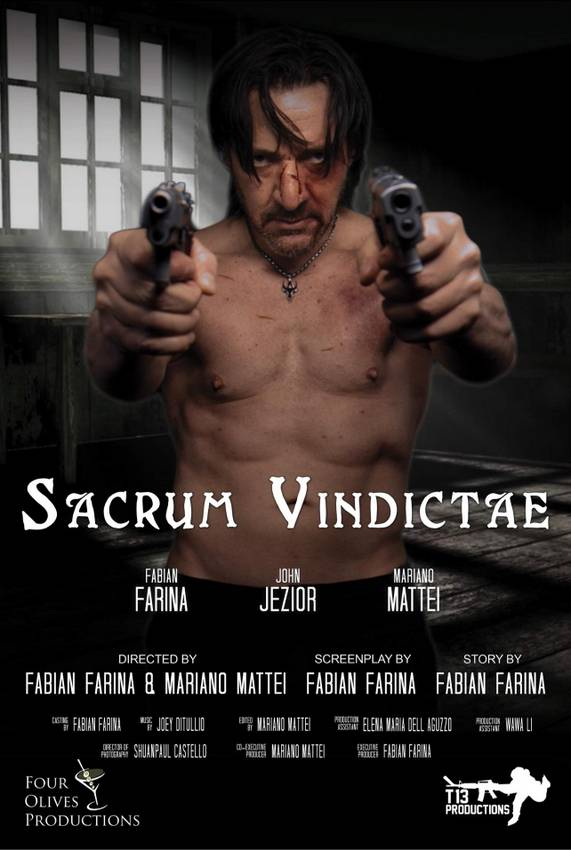
Fabian Farina (FF): My name is Fabian Farina. The story of Sacrum Vindictae centers around an ex-military Special Forces operative. He leaves the military when his wife becomes pregnant with their first child. He made the decision because he wanted to be present in his child’s life. Also, he figured the military (and personal risks of the Special Forces) wouldn’t be the way to start a family. It was born from a short film we did several years ago. The was literally only meant to be a short story. I was approached with numerous questions about the film. The characters, the story line, etc. It gave me the opportunity to think if I answered these questions, I would have a screenplay.
From there, I was off to the races. I wrote the first film in about two months. I purposefully left the story with a cliffhanger. Not so much because I wanted to do a second film of this story. But, mostly because I enjoy un-typical endings. We had a very positive reaction to the film, which inspired me to write Sacrum Vindictae II. After Part II, the reaction was extremely positive, and most people wanted to see more. I honestly thought, I am not sure what else could be told. But, after some consideration, Part III (The final chapter in the story of Nathaniel Nucci) was born.
The Official Trailer of Sacrum Vindictae by Fabian Farina and Mariano Mattei
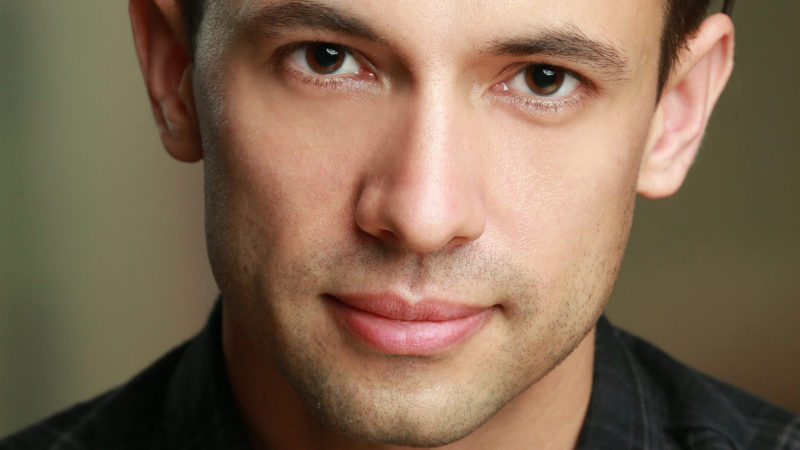
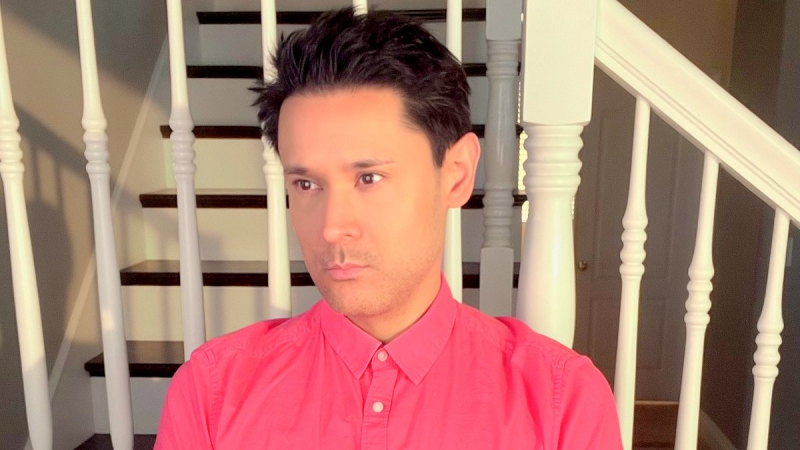
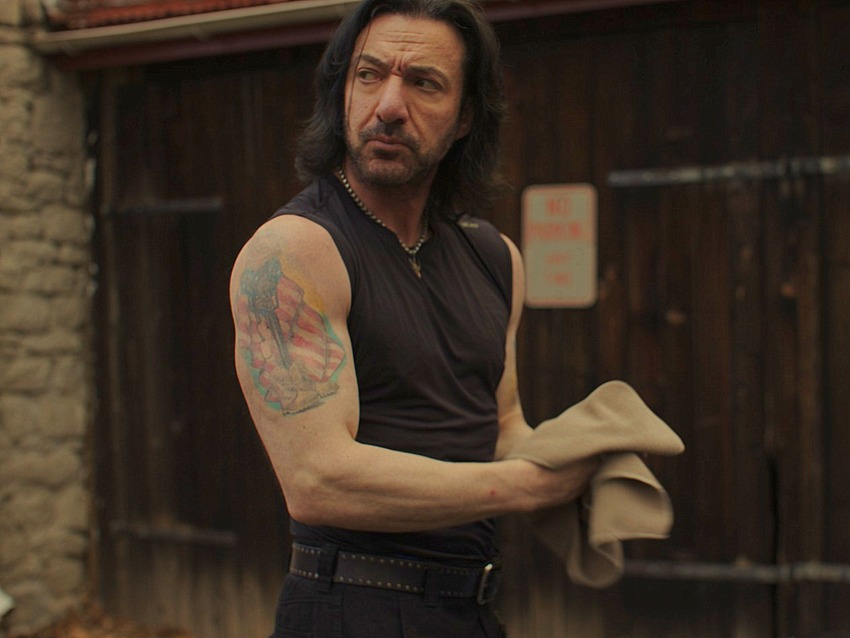
The main cast includes myself playing the role of Nathaniel Nucci, with other amazing actors in/around the Philadelphia area. Mariano Mattei is my partner in Four Olives Productions. He played the role of “Frederico Pasini” in the first installment, and reprised this role in Part II. One of the main characters throughout all three films is an extremely talented actor named John Jezior. Who plays the role of “Falco [Falcon] Conti” aka the Philadelphia Mob Boss. There are many other talented actors including: Marc Sandler (NYC Mob Boss Tony Milano). Frank Volpe (NYC Underboss Vincenzo Cavallo) and Tyrone Reeves (Nathaniel’s best friend Lamar Robinson). Denise Parella (Nathaniel’s wife Abigale Nucci) and Elena Maria Dell Aguzzo (Nathaniel’s sister Nicola Nucci).
What is your experience working screenplay, production, premiere and marketing of Sacrum Vindictae?
Fabian Farina (FF): Developing the story is always the most challenging, at least for me. I like a lot of twists and turns in my stories. It keeps the audience guessing. I help them to think one thing. Then turn it into something else, while making it entertaining.
The screenplay comes along in phases. Once I have a story developed, I typically know the beginning and the end. Understanding how we get from point A to point B is the screenplay. The biggest challenge, again for me is to ensure a scene advances the story. I like to use the approach of each scene. Having a beat between it and the next scene answering the question of either therefore… or but… If this beat instead answers and then… you basically have a boring / monotonous story. I will typically have a first draft of a screenplay written anywhere from two weeks. The shortest time I have ever done this, to about six weeks.
After this, there are multiple rounds of revisions, tweaking dialogue, potentially changing the order of events, etc. All in all, start to finish typically takes about three months. Even when we are on the final version of the screenplay. I will typically tweak dialogue as close to the day before a shoot. Sometime, I try my best not to make this a general practice. However, I have been known to collaborate with the actors to the extent of hearing them out. When they feel a line is too cheesy, too obvious, repetitive, etc. and taking all that into consideration.
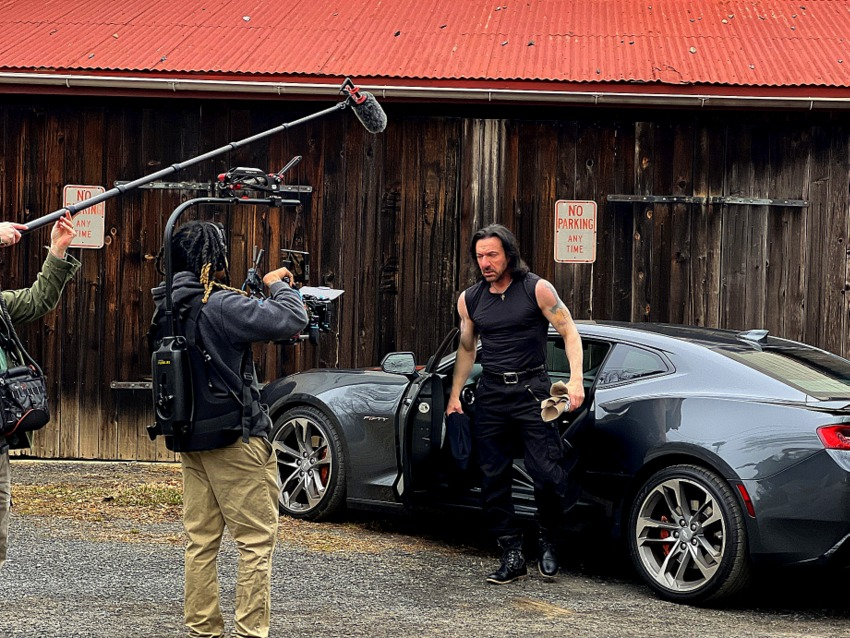
The production is also challenging in terms of location scouting. Crew co-ordination and meeting with the DP to discuss shot lists, angles, coordinating props, etc. Yet, this is also a fun step. Because it starts to bring your story to life. And, you can visualize what the final product will be. Postproduction is very labor intensive. Piecing everything together is the most time consuming. However, it is also an opportunity to add to your story with some unexpected things that happened during filming; reactions from characters that you could use to focus attention, etc. I always think that if an actor gives me the right emotional expression / reaction to a line – it is worth more than a bunch of words of dialogue.
The premiere is definitely (by far) the funnest part. Seeing all your hard work on a big screen is the best feeling in the world. There is no synthetic drug that can produce that type of “high”. I like to sit in the back of a theater and listen/watch the audience when they laugh, cry, react, etc. to different scenes. That tells me we have done our job as a filmmaker. I also enjoy the conversation/questions at the end of the film that tells us they were really paying attention and processing the story. Our goal as filmmakers is to ensure that the audience leaves and talks about what they just saw on their drive home. If this happens, you know it was a compelling story vs. them saying “…okay, let’s go home and go to bed…”
The marketing aspect is always the toughest. This can also sometimes cost more money than the entire production. When you are on limited funds, you do the best you can. We are fortunate to have social media that potentially reaches large numbers of people. Aside from that, we do the best we can to promote our films in publications, newspapers, industry sites, securing reviews, etc. Anything and everything. We recently secured the help of a publicist, because even with all the above – there are so many things you don’t know that you don’t know. Our expertise lays more on the production side, so we recognize the need to bring on people and forge relationships with others that know marketing much better than we do.
How did you put crew and cast together? Did you start with a known cast?
Fabian Farina (FF): Assembling a crew is a tough thing, and especially when you are on a limited budget. The first thing to consider is a capable DP who knows how to shoot the genre of film you are producing. For example, someone with experience shooting documentaries will likely not know how to shoot an action sequence. Getting samples of what they have shot, including lighting and sound, is critical. We have developed many relationships over the course of shooting films, so we typically have a go-to in mind before we start anything. It really comes down to price / budget and timing.
Cast – this one is also tough, but fun at the same time. I have been taking classes for the past six plus years at one of the most respected acting classes in Philadelphia (The Actors Lab – acting coach Bryan Fox). I would say that we cast about 90% of our actors from this studio. Being in the classes, I typically have a good sense of who would best fit each of the characters we are trying to cast. I typically don’t write a story with anyone particular in mind, other than myself when I think a character is in my wheelhouse. However, I have done this in the past. A good example is the Sacrum Vindictae trilogy where I knew John Jezior was the actor I wanted for the role of Falco Conti.
What and how long did it take to complete the script? (Was it a team effort or was it solo?)
Fabian Farina (FF): Most of the initial script writing is a solo effort, and the revisions are typically done in collaboration with others. I have written scripts in as little as two weeks (initial drafts) up to about six weeks. Start to finish typically takes a few months. On this latest script, we employed the help of one of our actors (John Jezior) as a script doctor. He has a really good sense of dialogue and was extremely helpful in this regard. It really heightened the story.
When did you form your production company – and what was the original motivation for its formation?
Fabian Farina (FF): Four Olives Productions was originally formed in March of 2020. The primary motivation stemmed from a long-time partnership between me and Mariano Mattei. We had played in an all-original rock band for many years where we not only produced music, but also music videos. Once our band days were over, we were looking for another creative outlet. I had already been involved in acting for some time and decided to start writing my own films.
The primary motivation for my first screenplay came when I was going through a divorce and feeling a bit sorry for myself. I sat on my couch one particular evening watching a Rom-Com film. Within the first five minutes of the film, I knew exactly what was going to happen-boy meets girl, boy and girl get into an argument, boy chases girl through an airport to stop them from getting on a plane because he realized that he made a mistake by letting her go. I yelled at the TV, BULLSHIT! I thought, I am going to write a story of what really happens.
Three weeks later, I had my first screenplay written (One Night). It is a romance story with a surprise ending. I have always described it as, if the film “The Notebook” and “The Sixth Sense” had a baby-it would be One Night. While shooting this film, I came up with several other ideas for short films, so we decided to start a production company. Five years later, we have produced and distributed three features with our fourth currently filming, as well as nine short films that have won several awards on the film festival circuit.
What was the first project out of the gate?
Fabian Farina (FF): I may have jumped the gun on this, but (One Night – described above) was the first project we created. It won several awards in film festivals and we also gained distribution onto Amazon Prime, Tubi and some other online streaming channels. It was certainly a learning experience for us where we may not have become “experts” on what to do, but definitely learned what not to do moving forward. Since then, we pride ourselves with each film being progressively better than the last – both from a production perspective as well as writing and storytelling.
During production, what scene was the hardest to shoot? And why?
Fabian Farina (FF): During One Night, I would say the most challenging shoot was an outdoor scene on a busy street in South Philadelphia. The thing that made this the most challenging was the amount of foot and car traffic going on while we shot it. People yelling “can I be in your movie” in the background while the actors were trying to deliver their lines. Made for a long shoot – for about a five-line scene. Outside of that, on the Sacrum Vindictae films, definitely the most challenging scenes were the fight sequences. Getting the right camera angles, making the fights believable and impactful are always a challenge. During Part III of this series, we hired actual fighters (not actors) to play the role of “goons” in the film. This made choreography, as well as the actual shoot, go much smoother – and the outcome on screen much more impactful.
What worked better in this latest production that mightn’t have worked so well in the last one you did?
Fabian Farina (FF): Without a doubt, the DP and crew we hired for the last film made a huge impact on many things including lighting, sound and most notably, capturing fight sequences. An upgrade on the actual camera we used as well as more handheld movement made an incredible difference in production value and selling the scenes. It made the audience “feel” they were part of the action.
You donned several hats on the film, what did it take to put out all these to get the film done?
Fabian Farina (FF): Donning several hats is one of our mainstays and something we do on every film out of necessity rather than “control” (per se). This is nothing “new” to us, but I would have to say, without the support of Mariano Mattei (my partner in Four Olives Productions), none of this would be possible. Being the Director, Actor, Stunt coordinator, scheduler, location scout, etc. etc. etc. absolutely takes a lot of time, work, long hours in preparation, etc. But, having the support of a person you trust is invaluable. Mariano is the 1st Assistant Director on all our shoots and takes the primary role of Directing, when I am acting in a scene. We discuss each scene, and he knows exactly what we are looking for in the film. It also helps that he is the main editor on the film – so ensuring we have the right angles, cutting points, etc. becomes critical for post-production. Most importantly, I trust him completely.
What about independent filmmaking and the business do you still struggle with?
Fabian Farina (FF): To sum this up in one word: “funding”. It is really amazing to me what we can do with the limited funds we have, which is primarily self-funded. When looking at what we can produce vs. films with triple/quadruple the funds we have, we are still comparable (or better) from a production perspective. I am confident if we had more funding, we would produce films on a Hollywood level without costing millions.
Where do you think your strengths lie as a producer?
Fabian Farina (FF): I think this comes in the form of a few things. First and foremost, being a fan of movies, means that I look at films both for entertainment but also as a study. Watching how scenes are filmed, where cutting points are made, wide angles vs. close-ups, understanding what a scene needs in terms of intimacy (closeness) vs. establishing (wider views). The list goes on and on… but ultimately, I take all these things into consideration when planning my own projects as well as viewing other’s work. (I can be a bit of a pain to watch a movie with, because I typically will stop, rewind, watch a scene over pointing out “WOW, look what they did here”. The second thing, being an actor, I feel that I can bring another level of perspective on what exactly is needed for a particular scene. Challenging actors to “peel the onion” and get depth in their delivery. This is also an advantage because I can explain things from an actor’s perspective without (hopefully) being vague.
Let’s talk finance, how did you finance the film?
Fabian Farina (FF): To date, 100% of our films have been self-financed. Not the best method by any means. We do this out of necessity. This is not for lack of trying to secure funding. Simply put, we don’t know what we don’t know. This is a learning process that we hope to rectify by expanding our network and securing some help to put us in a better position to get in front of the right people and pitch our films/concepts.
How much did you go over budget? How did you manage it?
Fabian Farina (FF): We typically stay at, or below, budget. Another asset to having Mariano on this team. One of the biggest expenses on a film is post-production (editing, coloring, sound, music, etc.). We do all this in-house. Between myself (the creative editor) and Mariano (the technical editor), we complement each other very well. There have been a few instances where we needed to do a re-shoot or reschedule a shoot, but these are very few. Planning and preparation are the key to playing within what you have budget wise.
How important is marketing? Do you think a project can make a dent without it nowadays?
Fabian Farina (FF): Marketing is probably the MOST important thing. You can make a great movie, but if no one knows about it, then who cares… This is something we recently turned more of our attention to on the priority list. In the past, we relied primarily on social media to get the word out (ourselves as well as cast and crew). Although we have found some success, this can only get you so far. A better understanding of marketing, which we don’t necessarily have expertise in, will help to not only gain more exposure, but hopefully make more of an impact on the local (and eventually National) filmmaking scene.
Tell us about marketing activities or efforts on this project – and how it worked or didn’t work?
Fabian Farina (FF): Social Media is a great way to get people interested and excited about your film. Showing BTS photos, videos, etc. always helps to generate engagement. The challenge, at least for us, is getting larger scale exposure. For example, getting local media involved to promote the fact that we are independent, we’re Philly guys making movies IN Philly, about Philly, with Philly based cast/crew… for some reason does not seem enough to get the support we would hope for. We are hoping to change this with the latest addition to our team – Cindy Mich, our Publicist extraordinaire! She has been doing a bang-up job for us in a very short time. With her on board, we feel like the future looks very bright.
What do you hope audiences will get from the presentation of your film?
Fabian Farina (FF): Excitement and entertainment. The main thing I enjoy is when our films motivate discussion. The worst thing would be if someone watches your film and says “that was good” and moves on… For example, I like when the audience has debates about whether a character is a “hero” or a “villain”, when they feel sympathy for characters, when they can relate to characters, etc. In other words, when the audience is invested in the film and the outcome.
What else have you got in the works?
Fabian Farina (FF): Right now, we are in the process of writing two more films. One is in the science fiction genre and another in the horror/thriller genre. We feel both are solid stories and bring about topical issues like AI while keeping a foundation of practicality. We just finished shooting SVIII and hope to have that released by November of 2025. However, as is typical with our work ethic, we multitask with the best of them.
Let’s have your comments below or on Facebook, Instagram, or Twitter
Socials
Website
IMDb
Facebook
LinkedIn
Instagram
FILMMAKER INTERVIEWS