
What Quentin Tarantino’s Reservoir Dogs still teaches independent filmmakers
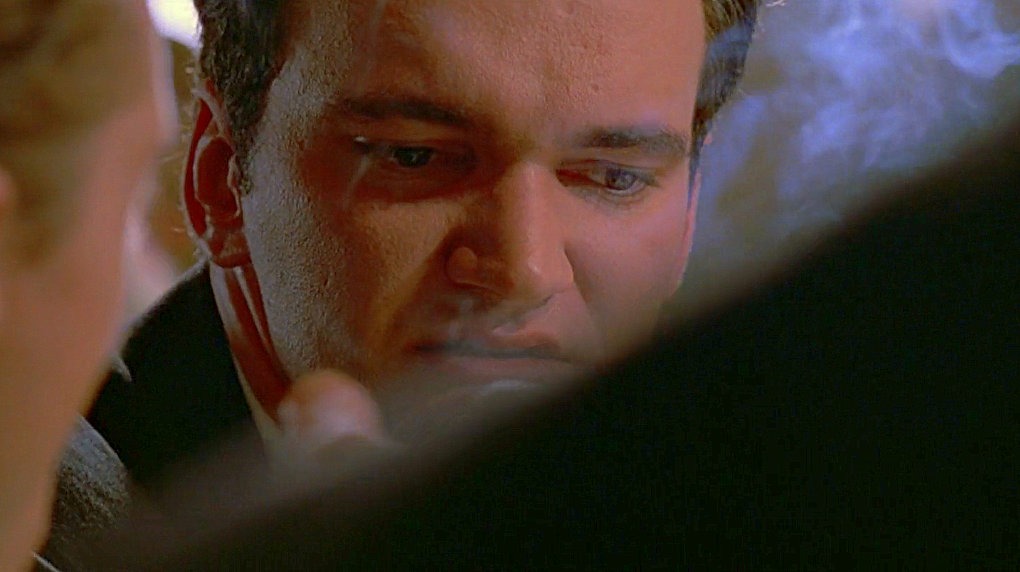
Quentin Tarantino in Reservoir Dogs (1992) Diner Scene
Lights, camera and action! Before the Oscars and Pulp Fiction, Quentin Tarantino was a clerk at Video Archives. A former video rental store in Manhattan Beach, CA. He spent five years working there back in the 1980s. There his deep immersion in movies and pop culture served as his unofficial “film school”. So, he made a movie.
An unreleased amateur comedy, shot in black and white (see below). My Best Friend’s Birthday was made for $5k, and co-written by Craig Hamann. Quentin Tarantino’s 1987 directorial debut exists today is a 36-minute fragment after a lab fire destroyed the original 70-minute cut. The surviving footage showcases early trademarks of rapid-fire pop culture dialogue, signature monologue, a raw amateur production made with friends.
“When people ask me if I went to film school, I tell them, ‘No, I went to films.'” – Quentin Tarantino
Later, he had a short stint at Sundance Institute in June 1991 before shooting Reservoir Dogs (1992), where he met Robert Rodriguez. Tarantino learnt to light scenes and understand lenses by under studying his DoP Andrzej Sekula when shooting kick off on 21st July 1991. He was learnt “framing” from VHS tapes. And, in many ways, that unconventional education would become his greatest advantage making Reservoir Dogs (1992).
Before making Reservoir Dogs (1992), he had tried acting, and then screenwriting. He optioned a screenplay “True Romance” but got no response, and he tried another screenplay, but failed. In his frustration, he wrote Reservoir Dogs, from influence of watching and studying from certain old crime and Hong Kong films.
Quentin Tarantino’s My Best Friend’s Birthday | 1987 | Subtitled
Origins: When Quentin’s Style Began
In the early 1970s Tarantino’s stepfather, Curtis Zastoupil, exposed him to mature, but boundary-pushing cinema. Zastoupil took the young Tarantino to films like Carnal Knowledge (1971), Deliverance (1972), and The Wild Bunch (1969). Which became a blueprint for Tarantino’s signature pacing and stylized bloodshed. Such a raw, unconventional exposure built a creative worldview rooted in genre subversion and dark humor, which Tarantino later analyzed in his 2022 memoir, Cinema Speculation. So, the stylistic nature of Reservoir Dogs (1992) came from this era.
Reservoir Dogs (1992) is a postmodern, formalist independent crime-film. It neo-noir thriller that subverts the traditional genre conventions. It relies heavily on a high-tension, novelistic structure rather than visual spectacle. Although, he planned to shoot it with a budget of $30,000k. Lawrence Bender requested production be delayed to raise $1.5 Million. Which they did after Harvey Keitel signed up not only to act but to also produce.
10 1990s Movies That Tried (and Failed) to Be Tarantino
The 1990s were a wild decade for cinema because Reservoir Dogs (1992) and Pulp Fiction (1994) released. Then, every filmmaker shot edgy, violent and dialogue-heavy movies. There were a dozen movies that attempted so hard to be the next Tarantino but fell flat. Here are ten 1990s movies that didn’t just quite get the vibe and missed.
- Boondock Saints (1999)
- The Way of the Gun (2000)
- 8 Heads in a Duffle Bag (1997)
- Freeway (1996)
- Truth or Consequences, N.M. (1997)
- Things to do in Denver when You’re Dead (1995)
- U-Turn (1997)
- Lock, Stock, and Two Smoking Barrels (1998)
- Get Shorty (1995)
- Grosse Pointe Blank (1997)
The First Break: Reservoir Dogs
In 1992, When Tarantino released Reservoir Dogs, El Mariachi from Robert Rodriguez would debut February of 1993. If you love tense stand-offs, sharp, rapid-fire dialogue, and confined settings, you’ll want to explore the gritty world of neo-noir crime and heist thrillers. Reservoir Dogs fits in that genre. It is a violent, dialogue-heavy crime film made for roughly $1.2 million. But it is done in style. Although Quentin eventual agree, his plot was quite similar to the Hong Kong film City On Fire (1987), and he was also inspired by Stanley Kubrick’s The Killing (1956)
By Hollywood standards, Reservoir Dogs was tiny. By independent film standards, it was bold. The film was largely contained to a few locations, a small cast, and limited action. But it felt explosive. Why? Because Tarantino understood something many first-time filmmakers miss: style can be a weapon.
Reservoir Dogs Trailer (1992) Harvey Keitel, Michael Madsen, Steve Buscemi Directed by Quentin Tarantino
Tarantino Didn’t Invent His Voice—He Trusted It
Before Quentin Tarantino, independent filmmakers copied success by imitating Hollywood. So, Tarantino took a different path. Instead of hiding his quirks, he presented them. He filled his stories with lengthy dialogue, they seem to wander yet reveal character. He chose to pack scenes with pop-culture references, fractured timelines, bursts of shocking violence and a gallery of unforgettable personalities.
These choices stayed outside the conventional rules of commercial filmmaking. The fact is many industry professionals considered them risky. Yet with these choices, Tarantino’s work felt unmistakably personal. He wasn’t trying to sound like anyone else—he was leaning fully into his fascination.
Audiences did respond because of its authenticity, it was difficult to fake. Tarantino’s voice wasn’t revolutionary, he didn’t invent something entirely new. It was revolutionary because he trusted his instincts when other filmmakers tried to fit in. His success became a reminder that originality often comes from embracing what makes you unique rather than suppressing it.
Film School in a Video Store
Quentin Tarantino was a clerk before he became the darling influential filmmaker. He was a movie obsessive working behind the counter of a California video store. While many aspiring directors spent years in film school, his education was at Video Archives. A small video rental shop where he immersed himself in cinema dailyy.
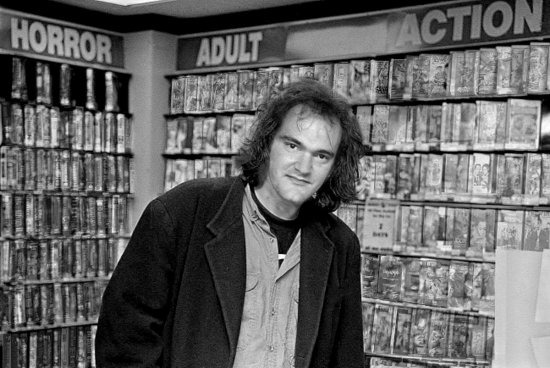
His film school curriculum was unconventional. He devoured Classic Noir Thrillers, Kung Fu movies from Hong Kong cinema, and Spaghetti Westerns from Italy. Tarantino drowned in low-budget exploitation films and the groundbreaking works of the French New Wave. He watched and studied their techniques relentlessly. He discussed with customers and co-workers and began connecting ideas across genres and cultures.
What made Tarantino different was not simply that he watched a lot of movies. Many aspiring filmmakers do. He watched with purpose and vision. He treated every film as a lesson in storytelling, character, dialogue, pacing and style. Over time, he developed an encyclopedic knowledge of cinema that rivaled that of many film professors.
The influence of that self-directed education appears in his own work. The sharp dialogue, genre mashups, unconventional storytelling and deep affection for movie history. These define Tarantino’s films and can be traced back to the years Video Archives. His film school come without a degree, a campus or a classroom. It came from curiosity, discipline, and an almost obsessive love of movies. What others saw as entertainment, Tarantino saw as an education—and that obsession is the foundation of his unique cinematic voice.
Sundance Changed Everything
By the time Reservoir Dogs premiered at the Sundance Film Festival in 1992, Quentin Tarantino had spent years studying movies, writing scripts, and refining his voice. What happened next changed the trajectory of his career—and, in many ways, the future of independent filmmaking.
Sundance Institute 1991 Film Lab | Reservoir Dogs with Steve Buscemi
The film arrived like a lightning bolt. Audiences had never seen anything quite like it. Its razor-sharp dialogue, fractured storytelling, dark humor, and bursts of shocking violence felt fresh, unpredictable, and unmistakably original. Whether viewers loved it or hated it, they could not ignore it.
Sundance is the launchpad to transform him from an unknown filmmaker into one of the most talked-about new voices in cinema. But the impact of Reservoir Dogs extended far beyond a single career. The film challenged assumptions about what an independent movie could be. Until then, people viewed indie films as small, quiet, and artistically restrained. Tarantino changed all of that. It could carve out its own identity.
The success of Reservoir Dogs opened the door for a new generation of filmmakers who took creative risks. It demonstrated that a distinctive voice could be more valuable and could become a filmmaker’s greatest asset. With one film, Tarantino didn’t just announce his arrival. He helped redefine the possibilities of independent cinema. The door had been kicked open, and countless filmmakers would walk through it in the years that followed.
Pulp Fiction Success
If Reservoir Dogs introduced Quentin Tarantino to the film world, Pulp Fiction turned him into a cultural phenomenon. Released in 1994, it took everything that made Tarantino unique and amplified it. The non-linear structure, unforgettable dialogue, eccentric characters, dark humor, and genre-blending storytelling were all present, but this time on a much larger stage. What could have been a niche independent film instead became a global event.
Then Came Pulp Fiction
The movie’s impact was immediate. It won the prestigious Palme d’Or at the Cannes Film Festival and went on to earn more than $200M worldwide. An extraordinary achievement for a film that refused to follow conventional Hollywood formulas. Critics celebrated it, audiences embraced it, and filmmakers everywhere took notice.
Yet the true significance of Pulp Fiction went beyond awards and box-office success. The film shattered the assumption that originality and commercial success were mutually exclusive. For decades, aspiring filmmakers had been told that reaching a mass audience required compromise—simpler stories, safer choices, and familiar formulas. Tarantino proved otherwise. Here was a filmmaker who remained completely committed to his own voice, his own interests, and his own storytelling style. Rather than watering down his vision for mainstream audiences, he invited audiences into his world—and they followed.
The success of Pulp Fiction sent a powerful message throughout the industry: authenticity could be a competitive advantage. An independent-minded filmmaker with a distinct perspective could not only break into the mainstream but reshape it. In doing so, Tarantino became more than a successful director. He became proof that originality, when executed with confidence and skill, could become a cultural force.
Why Tarantino Still Feels Independent
Pulp Fiction (1994) – Cannes Film Festival – Tarantino’s Palme d’Or Acceptance Speech
Success has a way of changing filmmakers. Many directors who begin on the fringes eventually adapt to the expectations of studios, franchises, and market trends. Quentin Tarantino took a different path. Even after Hollywood embraced him, he never fully became a Hollywood filmmaker in the traditional sense. He wrote his scripts, kept creative control over his projects, and worked at his pace. Rather than chasing trends or attaching himself to major franchises, he focused on telling the stories that interested him, in the way he wanted to tell them.
This commitment to authorship is one reason Tarantino’s films remain recognizable. Each of Jackie Brown, Kill Bill, Inglourious Basterds, or Once Upon a Time in Hollywood carry his unmistakable signature. The dialogue, characters, structure, humor, and influences all feel personal rather than being shaped by committee.
Hollywood is driven by intellectual property, cinematic universes, and market-tested formulas. Tarantino has remained fiercely protective of his creative voice. He has built a career on the belief that audiences respond to vision more than conformity. So despite his enormous success, he still feels independent. Not for his budgets or distribution model, but because of his mindset. His films feel authored rather than manufactured. They are driven by passion rather than strategy. At its core, such a commitment to creative independence is personal, as it is the very spirit of independent filmmaking.
What You Should Learn From Tarantino
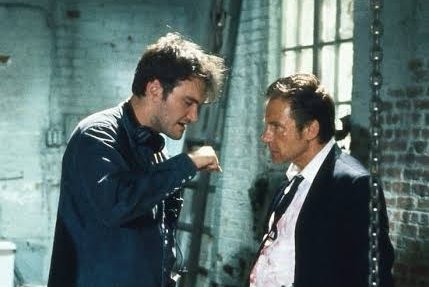
Quentin Tarantino was a video-store clerk writing scripts and studying movies obsessively. What broke through was not privilege or access. It was clarity of voice. Tarantino succeeded because he had an unmistakable point of view. Tarantino’s career is a reminder that imitation rarely creates lasting impact. Distinctiveness does. That doesn’t mean networking and opportunity are useless. They matter. But they are not the foundation. A strong voice eventually attracts attention.
Tarantino had three things that every indie filmmaker can develop:
- Obsession. He took cinema like a lifelong study, learning from films across genres and eras.
- A point of view. His work reflected his taste; humor, rhythms and storytelling instincts not mainstream.
- Courage to sound like himself. He didn’t wait for permission. He commits to his unconventional voice.
That combination is powerful because it cannot be easily copied. A genuine creative voice is uniquely yours. For emerging filmmakers, the takeaway is simple: stop asking, “How do I sound professional?” and start asking, “What do I actually sound like?” The filmmakers who endure are the ones whose work feels personal, specific, and unmistakably authored.
Final Thought

Quentin Tarantino’s story is powerful because it strips away many of the excuses aspiring filmmakers tell themselves.
That may be the most valuable lesson his journey offers independent filmmakers. The path rarely begins with recognition. It begins with conviction. It begins with believing in your voice before anyone else does. He decided he was a filmmaker long before the world agreed. Then, through his work, he proved it.
And that is where every independent filmmaker’s journey begins.
Thanks for spending some time with us!
POPULAR