
— How one director built an emotionally driven film through performance and precision
Across the Tracks is an African Movie Academy Award–winning (AMMA) short film. The film is set in the racially charged 1960s of South Georgia. This story follows two mixed race African American sisters, whose lives diverge when one, born with fair skin, chooses to pass as white during school integration. Years later, the sisters reunite in their hometown following their mother’s death, forcing the past to resurface.
Through memory and reckoning, the film examines identity, colorism, and the lasting consequences of a single moment that reshapes an entire life. In independent cinema, there’s a constant conversation around limitations of budget, time and access. Mike Cooke considers this an opportunity.
He is a filmmaker trying to capture emotional truth through performance, and not scale. His story begins with the two sisters, now older and living very separate lives. As they lay their mother to rest, the past rises up to meet them and we witness the moment that tore their family apart. Mike Cooke tackles the damage one momentary lapse in judgment can have on an entire life.
Across the Tracks (2016) starring Walter Lee, Nicky Buggs, Berkeley Clayborne & Thursday Farrar
Never so often, a project will emerge that shifts our focus entirely. Yet, it is not toward what’s missing, but toward what truly matters. Across the Tracks, directed by Mike Cooke is one of those projects. Across The Tracks present a story which with such a challenge that sits right at the intersection of craft, limitation and execution.
The film: Across the Tracks
At its core, Across the Tracks is a character-driven story—one that leans heavily on emotional realism rather than spectacle. It is the x-ray of a few moment in the lives of two characters (sisters). It is Jim Crow period and segregation is a law in Georgia. Then the best thing to happen to a person is to be white; and the worst thing is to be black.
The story draws elements from Georgia’s deep south and applies them to a family of four: father, mother and two girls. The two girls are inseparable, but are eventually split by the lure of segregation. The younger of the girls who is born fair skinned decides to change her destiny by passing for a white girl.
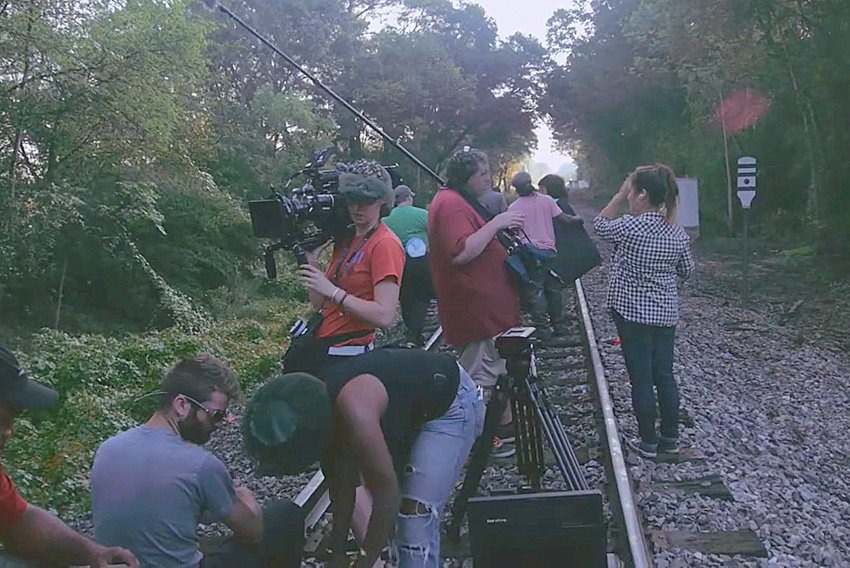
A short BTS of the locations behind Across The Tracks.
“This story was written out of a few things,” says Cooke. “My grandparents grew up in Arlington, Georgia. I spent time there as a kid and it held a certain beauty to me; its landscape, plantation, vegetation and mood. This is a great picture of a town,” and Mike knew he had solved the problem of location. The film places its weight here.
However, Across the Tracks doesn’t rely on elaborate large-scale production design. “As a filmmaker you have to be resourceful and I knew I had access to Arlington, a town steeped in civil right movement history. So, we began to think; ‘What type of story could we tell there?’ ‘What type of story is worth telling?’ says Cooke. Later, Kim and I felt a moral obligation to tell a story that served a purpose higher than entertainment.
Building a Film Around Performance
So, for Cooke, the foundation of the film was not to be the camera, rather the performance. At that point, casting became critical and a challenging part of the pre-production. How to find performers who can carry the emotional nuance wasn’t an option. It was essential, because in a film like this, there is nowhere to hide.
A short BTS of the casting for Across The Tracks.
If you’re a Casting Director, you start with a brief from the filmmakers, which come from the screenplay. “As a Producer, it was clear this film project needed a distinct match of characters, so casting started early on. We couldn’t make the film without a great cast,” says Kim. “It was important to have two sisters that were younger and match them with two sisters who are older. The “life history” of the characters (adult sisters) must depict forty years after childhood. It’s a huge hurdle.”
“I tip my hats off to the casting director for putting together such as amazing cast. It is very believable to follow the transition of the characters from children to adults” says Producer Errol Sadler.
“I thought it was the perfect project for me; because I look white; my dad’s black and my mom’s white. I’m this girl or character in the story who tries to pass for a white girl to fit in a white school,” says Berkeley Clayborne (young Ella).
“I have these conversations with my friends all the time. There’s always a struggle; if you’re a lighter, you’re better and that still resonates now,” Brynn Crosby (young Tara). Mike Cooke determined there will be no visual distractions, or no production excess. Only the truth of the moment.
Directing for Authenticity
Across the Tracks Behind The Scene Featurette
What defines Across the Tracks is not just who was cast—but how they were directed. Mike Cooke chose a very strict shot list, and stuck to it. We made sure the locations were within short distances of each other. The cast had come from very diverse backgrounds (a casting choice), and understood what a caste system can do.
Each had experienced racism, bullying and rejection in their life. The psychological effect of such abuse is not remote. The actors had such a reality in their own lives. So then, because they were all mixed race actors, my direction relied on the delivery of their dialogue and staging. In most cases the staging helped the actors deliver their lines with some improv.
Three factors intersected during Across the Tracks film project; “craft“, “limitations” and “execution“. The filmmakers dove into this film project with intention and direction. Mike chose to collaborate with his usual technical crew, which took care of any communication issues. As a cinematographer, he shot the film so, he didn’t have to give direction to a DP, except for the Steadicam operator.
Seed&Spark Crowd Funding Video
Across The Tracks Crowd funding Video
We had prepared and developed a schedule for a six day shoot in Arlington. We asked, and the city council gave us the permission and even police support. The producers Kim, Errol and Mike solved problems on set in brief conversations and in a moment. They’d hurdle up and talks ideas to problems and resolve in moments. We had to move from New York to Georgia. We had to deal with rain; we set up, then the rain came, and we’d break until it stopped, then continue.
Cooke’s approach leans into restraint. The less the dialogue the more you can show and tell. Rather than pushing for exaggerated emotion, performances are grounded to be natural, measured and believable. This kind of direction requires trust. Mike put his trust in the actors, they trusted him. They were familiar with the material. And perhaps most importantly, trust in the audience to engage without being led.
Working Within Constraints
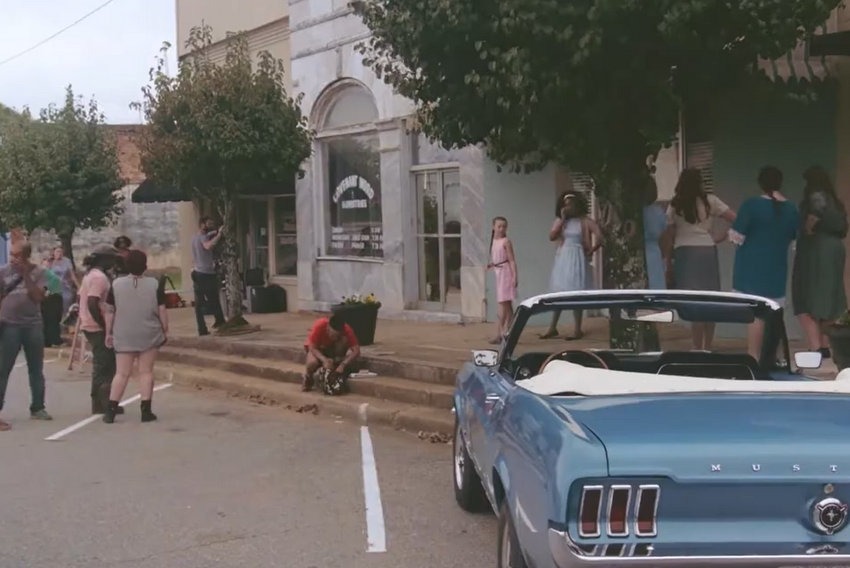
Like many independent productions, the film was shaped by limitation. Time was tight. Resources were controlled. Every decision had to be intentional. But instead of becoming a barrier, these constraints created clarity. When you don’t have everything… You focus on what matters.
Craft Over Scale
There’s a tendency in filmmaking to equate quality with scale. Bigger sets. Bigger budgets. Bigger visuals. Across the Tracks challenges that idea. It suggests that: what makes a film compelling isn’t how much you show but how deeply you make the audience feel. And that comes down to craft.
Why It Matters
Films like Across the Tracks highlight an important truth about independent filmmaking today: you don’t need scale to create impact. You need: strong performances, clear direction and emotional honesty. In an industry often driven by visuals, this kind of work is a reminder that storytelling still begins—and ends—with people.
Across The Tracks by Michael Cooke
Final Thought
Independent filmmaking has always been about working with what you have. But the best filmmakers understand something deeper: It’s not about what you don’t have. It’s about what you choose to focus on.
With Across the Tracks, Mike Cooke makes that choice clear. And in doing so, proves that sometimes… the most powerful films are the simplest ones.
Let us have your comments below
Socials
Website
IMDB
Instagram
Facebook
LinkedIn
Vimeo
POPULAR