You’ve written a baseball movie. The script works, the lead can act, and you have nine shooting days at a county ballpark. Then you watch the first dailies and your shortstop throws like someone who learned last Tuesday.
Sports audiences are unforgiving because they know what the real thing looks like. They’ve watched thousands of hours of it. A small budget won’t sink your film, but a wrong detail will. These seven are the ones to get right.
Detail #1 – Cast People Who Can Play
Cast for athletic ability early, because you can’t fake a throwing motion in the edit. An actor who has played the sport moves differently from one who hasn’t, and viewers see it in a single frame.
Hold a physical audition as well as a reading. Look for:
- A natural throwing, hitting or running motion
- Comfort with the equipment
- Stamina for repeated takes
- Willingness to train before the shoot
If your best actor can’t play, hire a double who matches their build and shoot around it. Fill the rest of the roster with real players from a local league or college team. Schedule a week of practice before filming, so the cast looks like a team that has played together.
Detail #2 – Shoot Action That Looks Real
Sporting action convinces when it’s planned like a stunt and shot like a game. Random coverage of people playing rarely cuts together.
Choreograph Every Play
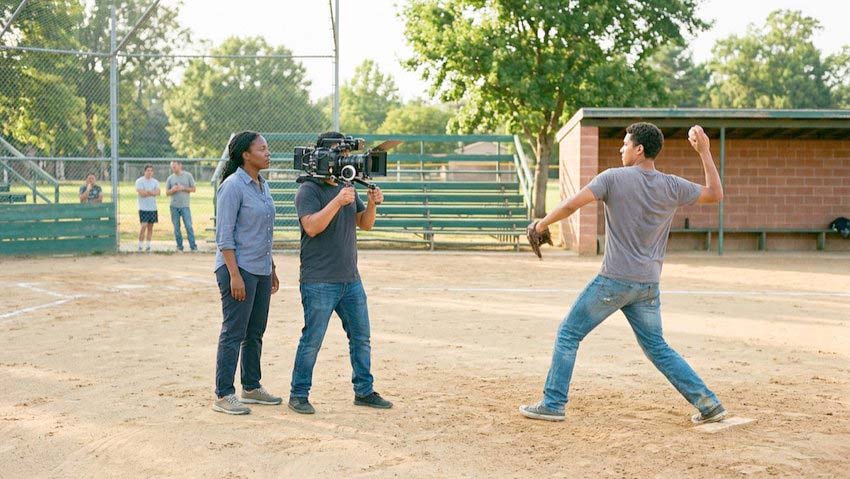
Write each play as a sequence of beats: the pitch, the swing, the throw, the tag. Rehearse it at half speed until everyone hits their marks, then run it at full speed. Hire a coach or former player as a technical adviser, and listen when they say a play looks wrong.
Let the Camera See It
Wide shots prove your actors can play. If every pitch cuts away before the ball leaves the hand, the audience notices. Get at least one clean wide take of each key play before you move in for close-ups.
Cut for Rhythm
Real games have pauses, and so should yours. Hold on the pitcher’s breath and the batter’s reset. The stillness makes the action hit harder.
Detail #3 – Build a Team Identity
A fictional team needs its own name, colors and logo, and they should look like they’ve existed for years. Invent them. The USPTO explains that a trademark can be any word, phrase, symbol, design, or a combination of these things that identifies goods or services. A real team’s name and logo are exactly that, so leave them alone.
Design the identity as a small system: a primary logo, a cap mark, two team colors and a typeface for numbers. Then put it everywhere a real team would, on the dugout sign, the scorebook and the faded banner on the outfield fence.
Give the team a history you can see. A championship year painted on the wall or a retired number tells the audience this club existed before the film started.
Detail #4 – Choose Locations With Wear
Locations sell the world when they show their age. A freshly painted set looks like a set, while a real field with patched fencing and a hand-lettered concession sign looks like a place people have loved.
The Library of Congress describes A League of Their Own as rich with period detail. That kind of detail is available to a small production. Scout municipal parks, high school fields and minor league grounds. Look at the dugouts, the scoreboard and the stands as much as the playing surface.
Ask what you can change and what you can’t. Check where the sun sits at game time, and visit on a weekday to hear how loud the nearby road is.
Detail #5 – Record the Sound of the Game
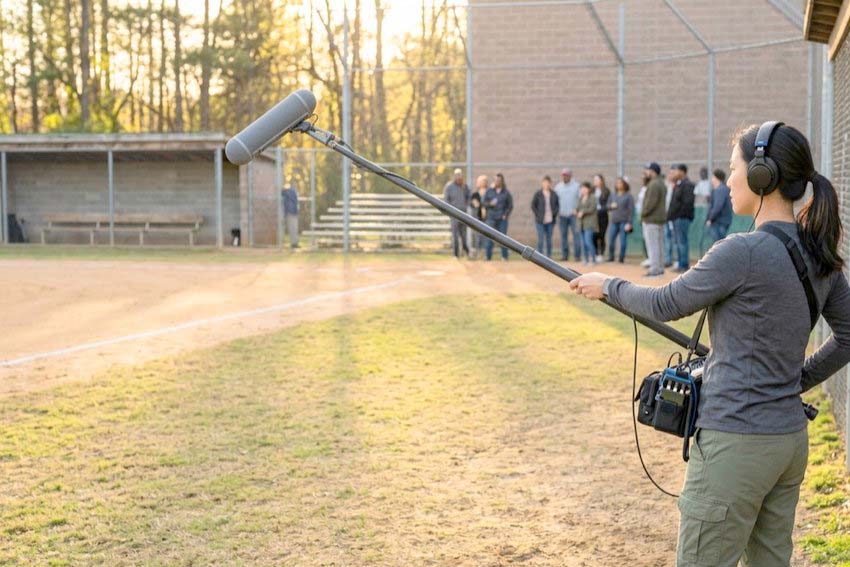
Sound carries much of the realism. The crack of a bat, cleats on concrete and chatter from the dugout tell the audience they’re at a game before they’ve seen a play.
Record these on location, separately from dialogue:
- Bat on ball, with several bats and pitches
- Ball hitting leather gloves
- Crowd reactions at three sizes
- Dugout and infield chatter
Record a real game’s ambience at the same field if you can get permission. Thirty people in the stands sound nothing like three hundred, so plan which crowd your story needs and build it in layers.
Detail #6 – Protect Continuity
Continuity is harder in a sports film because uniforms get dirtier with every take. If your catcher slides in scene 12 and appears spotless in scene 13, the audience feels it even if they can’t say why.
Photograph every player at the end of each setup, front and back. Track dirt, sweat, taped fingers and eye black on a continuity sheet, along with the score, the inning and the count.
You’ll need more than one of each uniform. A production ordering Sports Gear Swag’s sublimated custom baseball jerseys, for example, can add a single jersey when a late cast member joins, since there’s no minimum order. Whoever supplies yours, order at least two per principal player and number the duplicates inside the collar.
Wash every jersey a few times before the shoot so nothing looks new, and age the duplicates together so they match.
Detail #7 – Raise the Emotional Stakes
The game matters only if the audience knows what your character stands to lose. The sports films that last are about a person, and the sport is where their problem plays out.
Decide what the final game means beyond the score. A reconciliation, a last chance or a promise kept gives the audience something to hope for. Put the stakes in a scene before the game, so the last inning is about that and the scoreboard only measures it.
Keep the outcome honest. A loss that changes your character can be more satisfying than a win that changes nothing.
| Top Tip: Before you lock the edit, screen the game sequences for two people who play the sport and two who don’t. Ask the players what looked wrong and the others where they got lost. The first group catches the false notes in the action, and the second tells you whether the story still reads when the rules don’t. |
Start With the Tryout
Hold your physical audition this month, before you finalize the cast. Bring a coach, a camera and a bucket of balls, and film every candidate from a wide angle. That footage will tell you who can carry a game scene.
Frequently Asked Questions
Do actors in a sports film need to be real athletes?
Not all of them, but the ones the camera watches closely need a natural motion. If your best actor can’t play, hire a double who matches their build, and fill the roster with real players from a local league or college team.
Can I use a real team’s name and logo in my film?
It’s safer to invent your own. A fictional team needs its own name, colors and logo, because a real team’s name and logo are its trademarks.
How many uniforms does a sports film need?
Order at least two per principal player and number the duplicates inside the collar. Uniforms get dirtier with every take, so duplicates aged together keep continuity between scenes.
You can comment below or join us on Facebook, X and LinkedIn.
INDIE ACTIVITIES

DELETE TV Opens Season 13 Submission for Experimental Film & Video Art
International open call welcomes films up to 10 minutes for Austrian broadcast and worldwide livestreaming