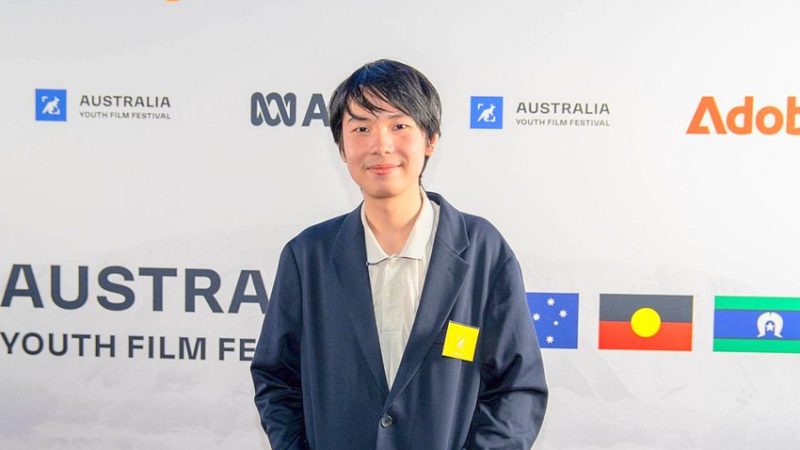
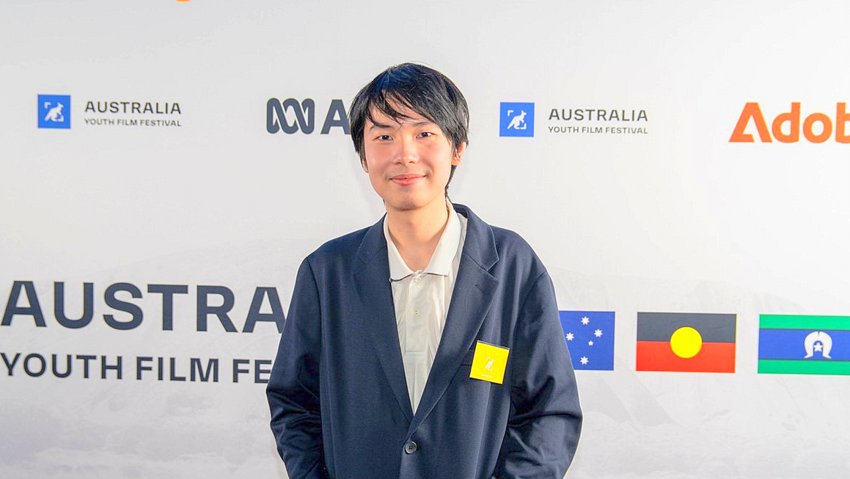
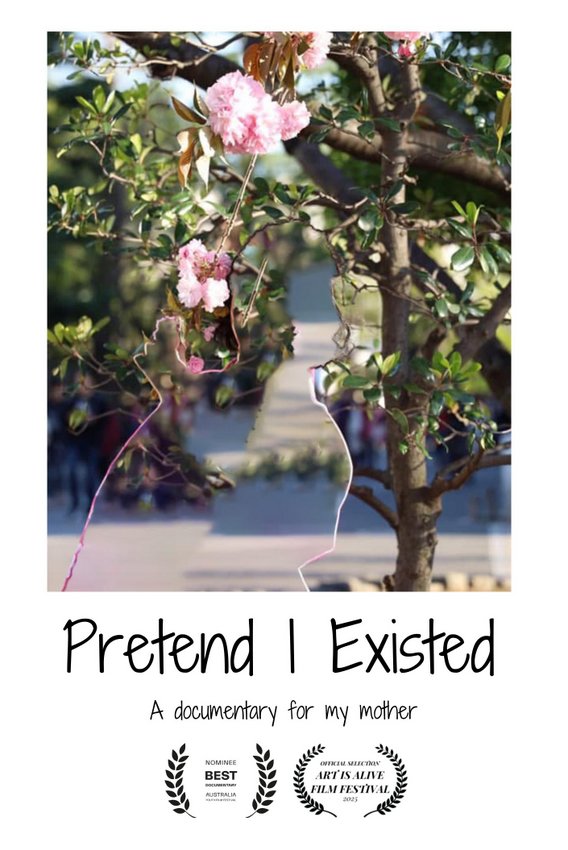
Quoc Huy Tran is a Vietnamese filmmaker based in Sydney at the moment. The film “Pretend I existed” is an autobiographical documentary. “It is about my mother’s cancer treatment. Which I made mostly by myself, with only some help from my father and godmother for collecting archival footage” says Quoc.
indieactivity: What is your experience on story, screenplay, production, premiere and marketing?
Quoc Huy Tran (QHT): I had thought of making this documentary for years. But, I would always hesitate to make it. My mother wanted me to make a movie about her battle against cancer during her treatment in Japan. I just can’t bring myself to do it.
The thought crossed my mind again after I enrolled in a documentary course at my film school. Where I it is a requirement to create a personal archival documentary as part of an assignment. I thought to myself, “Why the hell not? I am probably too lazy to do it in my free time anyway”. And, just forced myself to make the documentary. Instead of doing what is their expectation. Which is using archival footage and a voice-over narration on top. I wanted to do something different. That is why I chose to frame it more like a memoir because I want it to feel more intimate. So, I can also vent my feelings, too, I guess.
When it first screened in class, by the time the film ended. My tutor was on the verge of tears, and the room fell silent for almost a minute. That is when I knew the film resonated with people. And, I want to share this story with a wider audience. I think it is a story a lot of people can relate to, about how loss can affect us. And, the struggle to cope with that and navigate our own emotions.
How did you put the crew and cast together? Did you start writing with a known cast?
Quoc Huy Tran (QHT): I never expected to have a crew; I knew that I had to do it alone from the start. It was scary, but I got over it eventually and became more confident in my abilities. However, I don’t recommend people to follow me. It takes a lot of effort to make a film alone.
What and how long did it take to complete the script? (Was it a team effort or was it solo?)
Quoc Huy Tran (QHT): There was no script; only a basic outline. Even then, I didn’t follow it most of the time.
When did you form your production company – and what was the original motivation for its formation?
Quoc Huy Tran (QHT): This was not made with the support of a production company, but my film school did offer some support with feedback.
What was the first project out of the gate?
Quoc Huy Tran (QHT): This is the first project that I have shown to anybody. To be honest, I am happy that it got shown in festivals internationally, I didn’t expect it to have the success it did. I am new to the festival scene, so I wasn’t sure where to submit. Hence, I just winged it and submitted to festivals that looked good. So far, it has been featured in festivals in Australia and is now also available in the United States.
During the film production, what scene (that made the cut) was the hardest to shoot? And why?
Quoc Huy Tran (QHT): The part when I practiced the interview with my father and had a breakdown in the bathroom. It was just supposed to be me practicing, but having two cameras on at the same time for coverage truly made me nervous and vulnerable. Although I knew I had to confess about what happened in Japan with my mother, the breakdown was genuine. Thinking about it now, I am glad I did that because it did lift a weight off my shoulder mentally. At the end of the day, I didn’t want to sugar-coat the documentary.
What worked better in this latest production that mightn’t have worked so well in the last one you did?
Quoc Huy Tran (QHT): It’s how spontaneous and unplanned this production was as a whole. I mostly do editing in narrative shorts and commercials for NGOs, and they usually are very planned, with call sheets and such. I didn’t really do that in this one, but it surprisingly works out. It is probably the main difference between narrative and non-fiction. With non-fiction, sometimes you just have to improvise, and sometimes that can be for the best. There are times when I simply keep the camera rolling and hope for the best, and because of that, I can sometimes be really surprised when I see the rushes.
You must have donned several hats on this film, the measure of your input required intellect, effort, tenacity, skill (…you know better). What did it take you to put out all these qualities to get the film done?
Quoc Huy Tran (QHT): I knew the limit I had to work with, so I knew the film had to be small; very small. I had to do pretty much everything, being the producer, director, DOP, and sound recordist at the same time while recording myself. I pretty much had to plan around it, finding creative ways around my problem. For coverage, I sometimes had to use two cameras, and for sound, I used a Rode Wireless GO lapel mic to record myself. It took some time to plan how I would approach it, but I eventually got around to it, and it wasn’t as complicated as I thought.
What about independent filmmaking and the business do you still struggle with?
Quoc Huy Tran (QHT): As an indie filmmaker, I struggle with everything that is related to film business. I can’t even decide what festivals are right for my films most of the time. It is hard to balance the creative and business side when you have to do it mostly alone and when you’re still a film student, no less. I do pray that in the future, I can get an actual producer or I get my shit together and learn how this business works.
Where do you think your strengths lie as a producer?
Quoc Huy Tran (QHT): I am a filmmaker, first and foremost. However, one of the advantages of this is that I always prioritise the quality of the film above all else. So, I don’t really rush things; I don’t force a deadline. I do think that to make a good film, you must have enough time to polish the film, even from pre-production to post-production. I’m not even sure if it’s really a strength, but it’s the only good thing I can say about myself as a producer.
Let’s talk about finance. How did you finance the film?
Quoc Huy Tran (QHT): It’s a 0$ film, mostly because it is made with equipment borrowed from my film school. It’s one of the things film schools are good for as to production.
How much did you go over budget? How did you manage it?
Quoc Huy Tran (QHT): I didn’t go over budget; not even a cent. I could have hired a sound recordist or a DOP, but I didn’t have the money for it or the time. The university only gives us about two months to complete the production. I would say it’s a miracle that it even got completed.
How important is marketing? Do you think a project can make a dent without it nowadays?
Quoc Huy Tran (QHT): Marketing is extremely important, but I don’t have a lot of experience with this. I just tried to submit to a film festival and hope to find an audience there. It’s something indie filmmakers have always had trouble with, at least from the people I have met in past festivals. It’s a struggle to find the right platform, audience, or money to market my film because it’s hard to get people interested in an autobiographical documentary like this, which is not about a social or environmental topic. I think that festivals are the best platform for unconventional stories or ones that are hard to market.
Tell us about marketing activities or efforts on this project – and how it worked or didn’t work?
Quoc Huy Tran (QHT): I didn’t really do any marketing for this film aside from a few Instagram posts on its status with festivals. As a solo filmmaker, I can’t afford to do any marketing.
What do you hope audiences will get from the presentation of your film?
Quoc Huy Tran (QHT): I want them to just reflect on their relationship with their own family and appreciate how important that relationship is as a whole. I always feel like I did not spend enough time with my mother, so I don’t want anyone to ever feel that way. Moreover, I also want people who have lost their loved ones to feel less lonely; that it is okay to be vulnerable in the face of loss. I was overwhelmed after my mother passed away, I really didn’t want people to know that I was a mess, so I just didn’t really share my struggle to anybody – even my own family. With this movie, I want to make people have the courage to share their feelings with their loved ones.
What else have you got in the works?
Quoc Huy Tran (QHT): I’m writing and producing a short dramedy about a mother who goes to extreme lengths to pay for the subscription of her AI chatbot daughter. It’s based on stories of people who fed ChatGPT emails and text messages from their deceased loved ones to train the AI and pretend to talk with it like they were still alive. It is called “digital necromancy”. It’s something that really interests me, and I have someone on as director already. It’s a really exciting project!
Let’s have your comments below
Socials
Website
IMDb
Facebook
Twitter
Instagram
Vimeo
FILMMAKER INTERVIEWS