Paige Morrow Kimball on WAIT and Using Narrative Film to Change the Conversation Around Consent
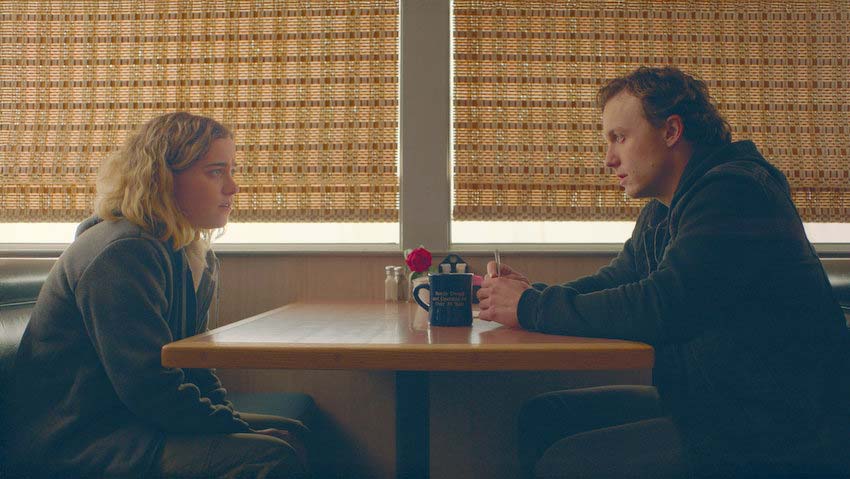
A HollyShorts Casestudy
Narrative | Dramatic Features.
Film Name: WAIT.
Genre: Narrative Drama / Social Impact Short Film.
Date: December 2025.
Director: Paige Morrow Kimball.
Producer: Fearon DeWeese, Paige Morrow Kimball.
Consulting Producer: Lisa Engel.
Writer: Paige Morrow Kimball & Jade Raybin.
Cinematographer: Trevor Hooper.
Production Company: Makazan Films, Inc. & Ashella Productions.
Budget: Under $50,000.
Financing: Privately financed through donors with support of fiscal sponsor StreamFest Society.
Shooting Format: ARRI AMIRA, digital.
Screening Format: Digital / DCP / 16:9.
World Premiere: Cleveland International Film Festival, Cleveland, Ohio – April 2026.
Website
The Official Trailer for WAIT
Watch The Trailer for WAIT Directed by Paige Morrow Kimball
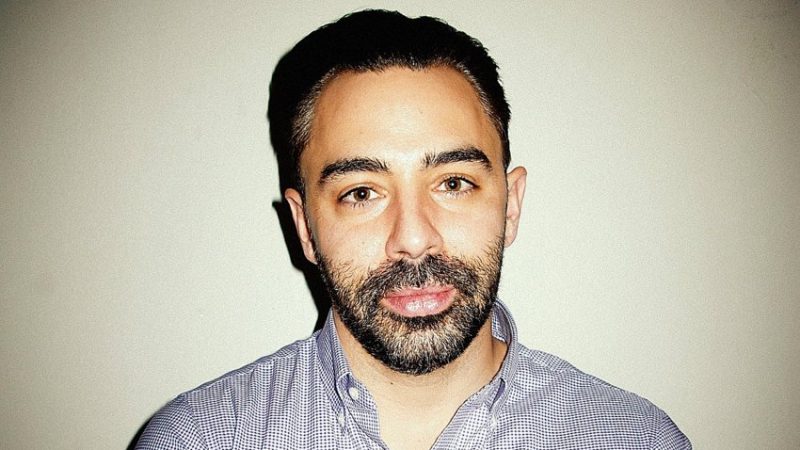
A Short Bio of Paige Morrow Kimball
Paige Morrow Kimball is an independent filmmaker working in both documentary and narrative storytelling. As an actor, Paige has appeared in television, film, and theatre. She trained extensively making her a deeply collaborative, actor-focused director. Her Makazan Films Inc., is a full-service production company taking projects from concept through final delivery. Paige has written, directed, and produced original scripted films for Sesame Street on HBO. She produced Olympic documentaries, and directed unscripted television segments for HBO. Including FOX, CBS, NBC, PBS, FX, AMC, TLC, NHK, and more.
The Paige Morrow Kimball Interview
indieactivity: What is your film about?
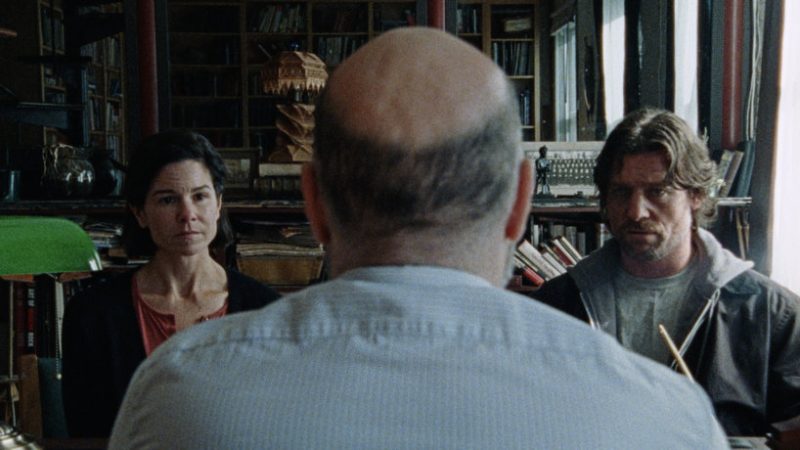
Paige Morrow Kimball (PMK): WAIT is a 15-minute narrative short about Evie. A 23-year-old woman who comes face-to-face with Matt, the man who sexually assaulted her when they were teenagers. Seven years later, Matt wants to apologize, but he doesn’t fully remember what happened. Evie has carried the memory, and the shame, with her every day. Alongside adult Evie is her 16-year-old self. The younger, braver version of herself. Who is finally able to say the things Evie has never been able to say.
At its core, WAIT is about hope and healing. I wanted to explore consent, accountability, shame, and ultimately self-forgiveness. I wanted to tell a story that didn’t provide easy answers or reduce either character to a stereotype.
Tell us about the festival run, marketing and sales?
Paige Morrow Kimball (PMK): WAIT had its world premiere at the Cleveland International Film Festival in April 2026. There we screened to two packed houses. Since then, the film has continued to build momentum. With screenings and selections including Napa Valley StreamFest, and BraveMaker Film Festival. HollyShorts, the SAG-AFTRA Foundation Short Film Showcase, and Imagine This Women’s International Film Festival. Port Townsend Film Festival, San Jose International Short Film Festival and more to come.
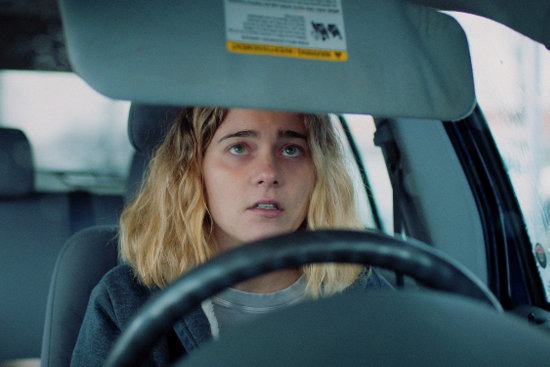
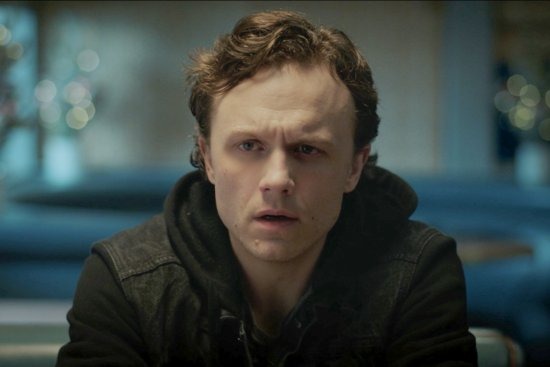
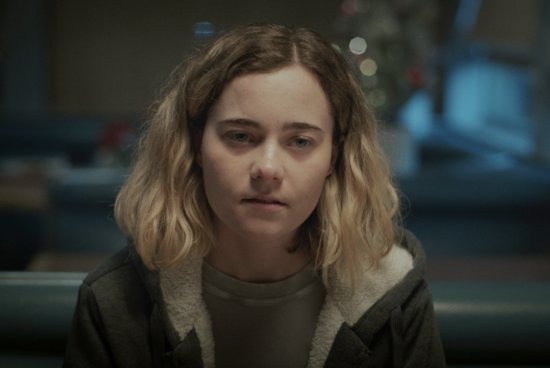
The SAG-AFTRA Foundation Short Film Showcase is an especially meaningful milestone for our actors, Lexi Simonsen and Eian O’Brien, whose performances have been consistently singled out for praise. WAIT is an intimate, performance-driven film, and so much of its impact depends on the complexity and honesty they bring to these two characters.
The festival run has also shown us that the film has a life well beyond traditional festivals. At screenings, audiences have wanted to stay and talk about what they’ve just seen, leading to panels and conversations around consent, accountability, survivor support, and healing.
That response ultimately inspired the WAIT Impact Screening Tour, which launched in August 2026. We’re now scheduling screenings at colleges, universities, organizations, and conferences around the country, using the film and guided conversation as a modern, creative complement to traditional educational programming.
For us, that has become one of WAIT’s most exciting accomplishments: watching a 15-minute narrative film grow from a festival short into a tool for meaningful conversation and change.
Give the full official synopsis for your film?
Paige Morrow Kimball (PMK): When Evie, 23, agrees to meet Matt, 25, the man who sexually assaulted her in high school seven years earlier, she is forced to confront the shame she has buried ever since. Matt has asked to meet to apologize, but he doesn’t remember what he did, only that “something happened.” Bubbling just beneath the surface is a rawer version of Evie, her 16-year-old self, who says what adult Evie is too afraid to say. As Evie takes Matt back to that night, speaking about it for the first time in seven years, past and present begin to blur. With her younger, braver self urging her forward, Evie confronts her rage and misplaced shame and finally finds the voice to speak the truth that might set her free.
Development & Financing?
Paige Morrow Kimball (PMK): When I first heard this story, I couldn’t stop thinking about it. It stayed with me for years, and I finally optioned it. Sadly, it came from someone’s true experience. My co-writer, Jade Raybin, and I then began the process of developing the screenplay. We rewrote it many, many times. The story depended on emotional precision because so much of the film is two people sitting across from each other having an extraordinarily difficult conversation. The writing and what the characters couldn’t say had to carry it.
One thing that was very important to us was not turning Matt into a cardboard villain. That would have made the film easier, but I think it also would have made it less truthful and less useful. We wanted to maintain very clear lines around consent while allowing both characters to be fully dimensional human beings. The question wasn’t whether what happened was wrong. It was what happens seven years later when two people arrive at the same table carrying profoundly different experiences of it.
The film was privately financed through the generosity of donors who believed in the film and its message, with the support of our fiscal sponsor, StreamFest Society. Having people believe in what we were trying to say and support us in bringing the film to life was incredibly meaningful.
Production?
Paige Morrow Kimball (PMK): We originally hoped to shoot WAIT over three days, but ultimately had to cut the schedule back to two, which was incredibly tight for a 16-page film. We had to be extremely prepared.
I’m very actor-focused as a director, and the performances were central to the film. The central conversation had to feel intimate, uncomfortable, unpredictable, and truthful. We spent a lot of time preparing in rehearsals and working with our intimacy coordinator, Heather Ondersma, so that the assault scenes were carefully choreographed and the actors felt safe. Once we were on set, that preparation gave the actors room to be fully present rather than simply hit predetermined moments.
We were also incredibly fortunate with our primary location. We found the perfect diner, which became almost a character in the film itself. Its texture, and timeless quality gave us tremendous production value and created exactly the environment I had imagined for Evie and Matt’s conversation.
We prepped extensively and somehow managed to make our days without a single pickup shot. There was a wonderful flow on set, and I think all that preparation gave us the freedom to embrace some unexpected gifts along the way.
The very first shot we filmed was actually the last shot of the movie. Evie has had her catharsis and is washing her car, finally feeling hopeful. She turns toward us and breaks the fourth wall, and in that moment we know she’s going to be all right.
We were shooting in Vacaville, California, in December 2024, starting around 3:00 PM because we were heading into a night shoot. I had envisioned Evie strongly backlit by the low sun, but the sky had been completely overcast all day. I asked my DP what would happen if we recreated the sunlight artificially. He told me we’d get something, but it wouldn’t be as beautiful as the real thing.
And then, out of nowhere, someone yelled, “The sun is coming!”
The clouds parted just long enough for us to get exactly what I had imagined. As Lexi gave us the perfect expression, the sunlight streamed directly into the lens until it nearly obliterated the image. It was magical. I could have wrapped the movie at that moment and been happy. The production gods were definitely with us.
The next morning we moved to the diner parking lot to shoot the opening of the film, and it was pouring sheets of rain. Another gift. We hadn’t planned for rain, but I couldn’t have designed it better. The wet pavement gave us instant production value, and the gloom and rain surrounding Evie became a visual reflection of where she is emotionally at the beginning of the story.
Those two moments really encapsulate the production for me. We had an incredibly ambitious schedule and very little room for error, but because we had prepared so thoroughly, we were able to respond when something unexpected happened instead of fighting it. Sometimes independent filmmaking is about knowing exactly what you want and then being open enough to recognize when reality gives you something even better.
Post-production was equally important because WAIT lives in its rhythm. My co-editor Jill D’Agnenica and I passed the film back and forth for months, continually refining the pacing and emotional rhythm. Because so much of WAIT lives in what isn’t said, we paid particular attention to when to hold on a face, when to cut, and when to simply allow a silence to breathe.
Festival Preparation & Strategy
Paige Morrow Kimball (PMK): Our initial strategy was a traditional festival run, with an emphasis on respected and Oscar-qualifying festivals where the film could reach audiences and build credibility. Cleveland International Film Festival became our world premiere, and the response there was an important turning point.
Very quickly, though, we realized that WAIT was generating something beyond the usual post-screening conversation. Audiences wanted to stay. They wanted to talk about consent, accountability, their own experiences, how we educate young people, and how we support survivors.
That changed our strategy.
Instead of thinking only about how many festivals we could get into, we began thinking about how the film could actually be used. We started building relationships with educators, Title IX professionals, survivor advocates, prevention specialists, law enforcement, clinicians, and organizations working in sexual violence prevention and response.
That ultimately became the WAIT Impact Screening Tour. For my co-impact producer, Lisa Engel and me, that is an exciting evolution of the traditional independent-film model: the festival run creates visibility, but the film’s impact doesn’t have to end when the festival circuit does.
We decided to ‘DIY’ the Impact Campaign. Instead of hiring someone else, we took a six month guided campaign course from Looky Looky Pictures and learned how to impact produce ourselves. We came away with invaluable strategy and marketing skills.
The Release?
Paige Morrow Kimball (PMK): WAIT is still actively screening at festivals, so in many ways we’re in the middle of the release rather than looking back at it
We officially launched the WAIT Impact Screening Tour in August 2026. We’re now scheduling screenings and conversations with colleges, universities, organizations, and conferences across the United States.
The format is intentionally flexible. A partner might simply screen the film or build an event around it with a facilitated conversation, panel, filmmaker participation, or other programming tailored to its community.
The goal isn’t simply to get people to watch WAIT. It’s to use the emotional experience of watching a narrative film to make it easier to begin conversations that people often don’t know how to start. Our North Star is to contribute to changing the culture around consent, with the ultimate goal of helping reduce sexual violence on campuses and in communities.
Advice from the Filmmaker?
Paige Morrow Kimball (PMK): Make the film you actually need to make, not the film you think the marketplace is asking for.
And prepare. Independent filmmaking rarely gives you enough time or money, so preparation is what buys you freedom when you’re on set. We shot 16 pages of WAIT in two days. That only works when you know what matters most before you arrive.
Rehearsal with your actors is key, as is a close creative relationship with your DP. Lexi Simonsen and Eian O’Brien brought so much to their roles, and my DP, Trevor Hooper, spent countless hours planning with me and brought such a calm presence to the set. I truly couldn’t have asked for more.
I also learned not to decide too early what a film’s life is supposed to be. My producer Fearon DeWeese and I made WAIT as a narrative short and entered the festival world with it. It was the audiences who began showing us that the film could have another purpose.
Sometimes the most important part of making an independent film happens after you finish it. Listen to how people respond. Pay attention to where the film creates energy. Then be willing to follow it.
WAIT taught me that every film has its unique place in the world.
Leave your comments below
Socials
Website
IMDb
Twitter
Instagram
Vimeo
MORE STORIES FOR YOU