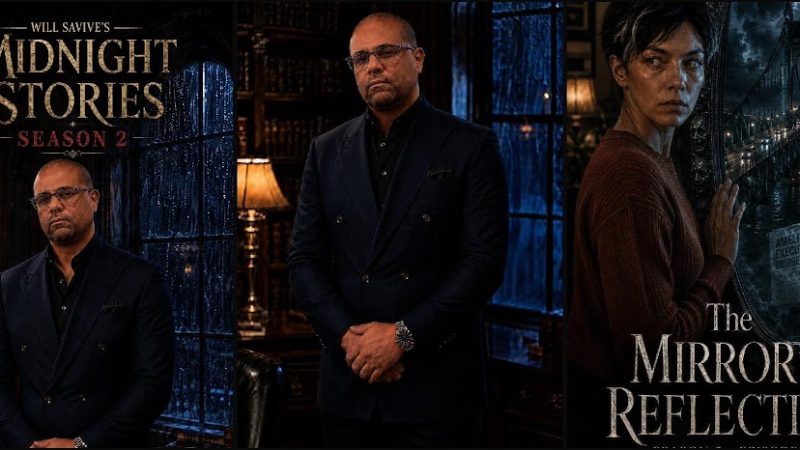
You’ve picked the double bill: a slow-burn haunted house film, then something louder. Six friends are coming at seven. Right now the living room has the overhead light on, a laundry basket on the couch and a TV that sounds like a phone in a coffee can.
A cinema works because everything in the room points at the screen. You can borrow most of that at home in an afternoon, without buying a projector. Work through these six steps before your guests arrive.
Step 1 – Arrange the Seating
Seating decides whether your guests last through two films, so set it up first. Every seat needs a clear view of the screen and enough room that nobody is perched on an armrest by the second act.
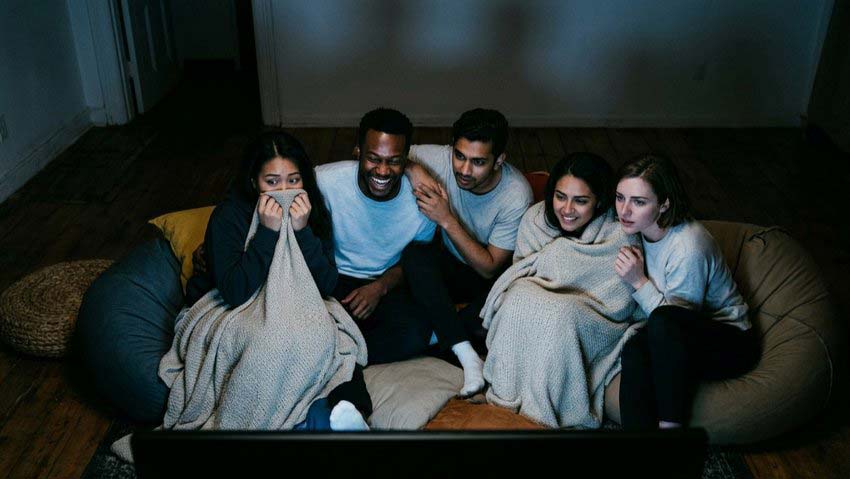
Sit in each spot yourself and look at the screen. Move the coffee table so legs can stretch out. Angle the end seats inward so nobody watches with a turned neck, and put floor cushions or beanbags in front for anyone who likes to be close.
If you’re replacing seating anyway, think about how people watch a long film, which is sprawled. Options such as wide sectional couches from Home Reserve give each person more room to stretch out, and that counts by the second feature. Whatever you sit on, measure the distance to the screen and check the view from the farthest seat.
Add a blanket for every seat. Horror audiences like something to hide behind.
Step 2 – Set the Lighting
Lighting does more for atmosphere than any decoration, and the rule is simple: dark room, no glare on the screen. Turn off the overhead light before anyone arrives.
Before the Film
Greet guests in low, warm light. Lamps at table height, a string of amber bulbs or battery candles on the shelves all set a mood without making the room hard to cross. If you use real candles, keep them on a stable surface away from curtains and blankets.
During the Film
Kill every light that reflects in the screen. Stand where your guests will sit and look for glare from lamps, windows and the kitchen. A dim light behind the TV eases the contrast for the eyes and doesn’t wash out the picture.
Between Films
Bring the lamps up slowly at the break. Mark the route to the bathroom with a nightlight or battery candles, so nobody has to turn on the hall light and break the mood.
Step 3 – Tune the Sound
Sound is where horror lives, so give it more attention than the picture. The creak on the stairs and the silence before a scare need speakers that can do quiet as well as loud.
Use the best speakers you own. A soundbar or a pair of bookshelf speakers is a big step up from the TV’s own. Then set the level for a long evening. The National Institute on Deafness and Other Communication Disorders says sounds at or below 70 A-weighted decibels, even after long exposure, are unlikely to cause hearing loss. A free meter app on your phone gives you a rough reading from the couch.
Test the loudest and quietest scenes before guests arrive. If whispered dialogue disappears, turn on the TV’s dialogue or night mode, or use subtitles. Silence phones, the dishwasher and anything else that hums.
| Top Tip: Play a few minutes of ambient sound as people arrive: wind, rain on a window or a slow organ piece at low volume. Fade it out and let the room go quiet for ten seconds before you press play. That short silence does the job of the lights going down in a theater, and it tells everyone the film has started. |
Step 4 – Serve Themed Refreshments
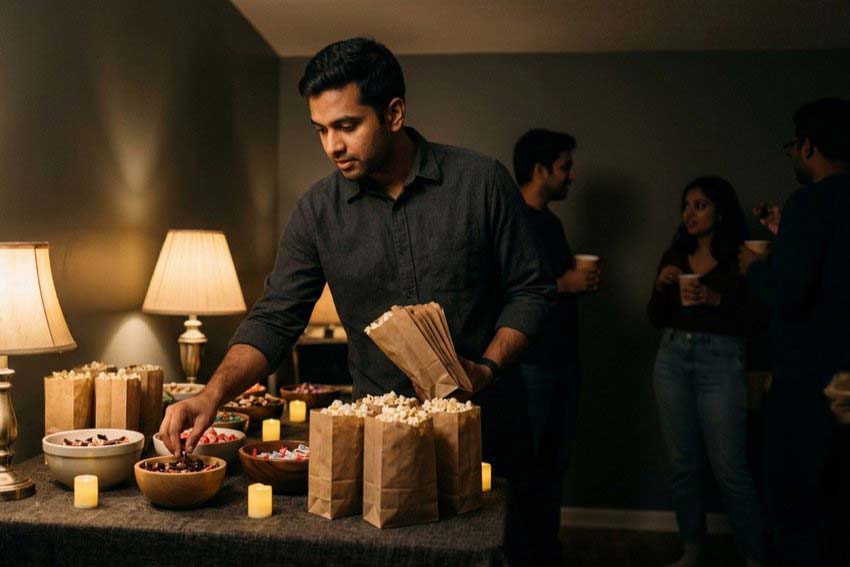
Refreshments work best when they’re ready before the film and easy to eat in the dark. Put everything on one table behind the seating, so nobody crosses the screen for a refill.
Choose food that’s quiet and tidy:
- Popcorn in individual bowls or paper bags
- Soft candy instead of crinkly wrappers
- Finger food that doesn’t need a plate
- Drinks in cups with lids
Give the table a theme. Dark tablecloth, handwritten labels with film-inspired names and one centerpiece are enough.
Coffee suits a late double bill, and themed coffee is an easy touch for a host who screens films often. With something like the flavored coffee subscription Bones Coffee Company runs, the bags arrive with illustrated artwork, so the coffee can sit on the snack table as part of the display. Brew a pot before guests arrive and keep it in a thermal carafe, so nobody misses a scene waiting for the kettle.
Step 5 – Plan an Intermission
An intermission gives the evening its theatrical shape, so schedule one between films. Fifteen minutes is enough to stretch, refill and talk about what you’ve seen.
Announce the running order at the start: first film, break, second film, and a finish time. People relax when they know how the night goes.
Think about the late hour when you refill cups. For most adults, the FDA has cited 400 milligrams a day, about two to three 12-fluid-ounce cups of coffee, as an amount not generally associated with negative effects. Offer a decaf option at the break for anyone who wants to sleep afterward.
Step 6 – Make Room for Conversation
Conversation is what a home screening has over a cinema, so plan for it. Half the fun of a horror film is arguing about it afterward.
Introduce each film in a sentence or two: who made it, when, and one thing to watch for. Keep it short and don’t spoil anything. Then agree on the house rule for talking during the film, whether that’s silence or open commentary.
After the credits, bring the lights up a little and have two or three questions ready:
- Which scene stayed with you?
- What did the film do with sound?
- Did the ending earn its scare?
- What should we watch next time?
Let the quietest guest answer first. It keeps the loudest film fan from setting the verdict for the room.
Start With the Lights
Tonight, turn off your overhead light, sit where a guest would sit and look at your screen. Note every reflection and every seat with a poor view. Fixing those two things costs nothing, and it’s most of the difference between watching TV and going to the movies.
Frequently Asked Questions
How should I light a room for a horror film night?
Keep the room dark with no glare on the screen. Greet guests in low, warm lamplight, turn off anything that reflects in the screen during the film, and put a dim light behind the TV to ease the contrast.
How loud should a home film night be?
Set the level for a long evening and test the loudest and quietest scenes before guests arrive. The National Institute on Deafness and Other Communication Disorders says sounds at or below 70 A-weighted decibels, even after long exposure, are unlikely to cause hearing loss.
What food works best for a film night at home?
Choose food that’s quiet and tidy, such as popcorn in individual bowls, soft candy and finger food that doesn’t need a plate. Put everything on one table behind the seating so nobody crosses the screen for a refill.
You can comment below or join us on Facebook, X and LinkedIn.
INDIE ACTIVITIES

DELETE TV Opens Season 13 Submission for Experimental Film & Video Art
International open call welcomes films up to 10 minutes for Austrian broadcast and worldwide livestreaming