A HollyShorts Casestudy
Narrative | Dramatic Features
Film Name: A Scent
Genre: Drama
Date: 10/04/2026
Director: Johnny Russell
Producer: Harry Moore, Laura Rollins, Francesco Loy Bell
Writer: Johnny Russell, Archie Thomson
Cinematographer: Max Brunner
Production Company: Milk Machine
Budget: £80,000
Financing: Executive producers who had experiences with Parkinson’s
Shooting Format: Digital
Screening Format: Digital
World Premiere: HollyShorts
Awards: N/A
Website
A Short Bio of Johnny Russell
Johnny Russell is a Cannes Lions YDA winning director specialising in dark comedy, surreal drama and heightened imagery. He has directed commercials and online content for household brands including Skyscanner, Quickbooks, Motorway and Sky Sports. His short films have received three separate Cannes Lions Young Director Award nominations, alongside selections at OSCAR, BAFTA and BIFA qualifying festivals, with premieres at the BFI and Aesthetica. He is mentored by BAFTA and Emmy-winning producer Laurie Borg, and is an official mentee of Directors UK x Inspire.
The Johnny Russell Interview
indieactivity: What is your film about?
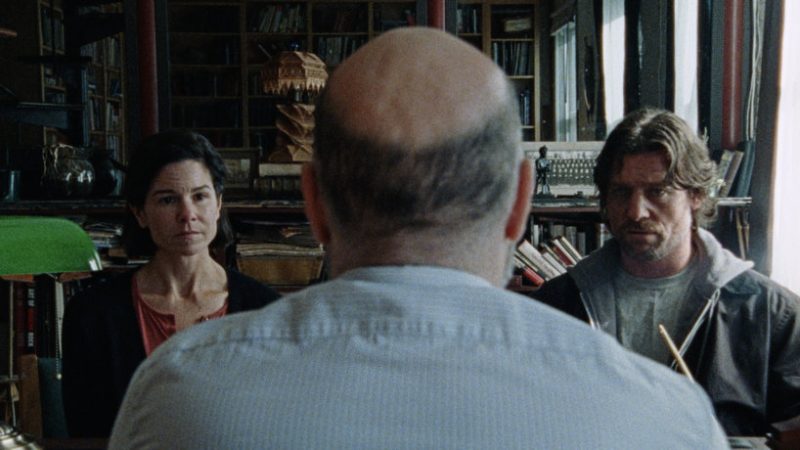
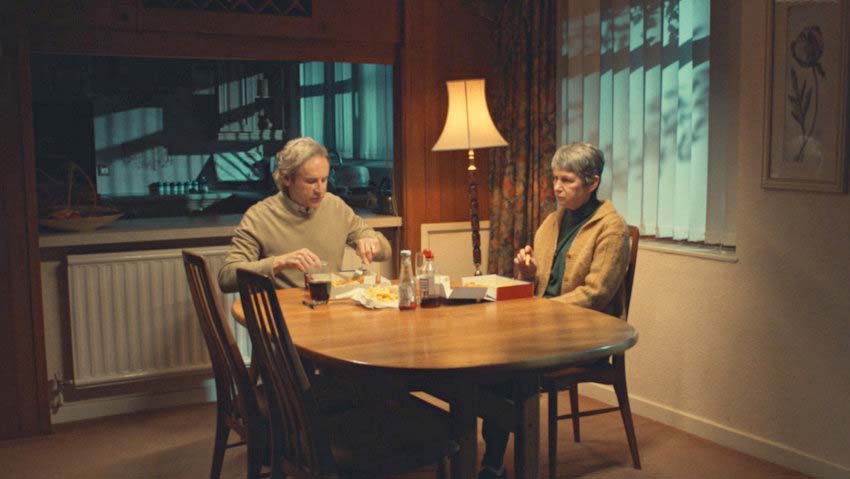
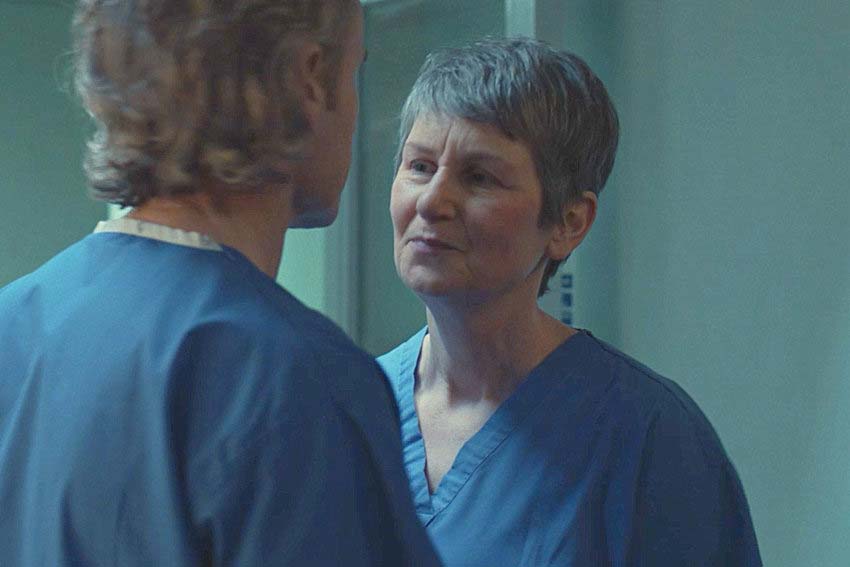
Johnny Russell (JR): Inspired by the extraordinary true story of Joy Milne, A SCENT follows Nancy (Josie Walker), a Scottish scrub nurse whose life begins to unravel after she detects a strange, persistent smell during a routine operation. Convinced she
has discovered an ability to detect a disease through scent, Nancy’s concerns are dismissed by her husband and lead surgeon, Gavin (Cal MacAninch). But as her certainty grows and those around her refuse to listen, she puts her profession and her marriage on the line to fight for her credibility.
Tell us about the festival run, marketing and sales?
Johnny Russell (JR): A Scent entered the festival circuit two months ago and has had a strong run since. It screened at the Cannes Lions Young Director Award, alongside BAFTA and BIFA nominees and winners from 2025. The film will next make its American Premiere at HollyShorts Film Festival, which is BAFTA and Oscar-qualifying, before screening at Kino Film Festival, a BIFA-qualifying event, at the end of August.
The film has also drawn strong critical attention ahead of its HollyShorts screening. Reviewing for In Their Own League, Joan Amenn praised the film’s visual craft, describing it as “beautifully shot” with a muted palette that gives way to warmth in its closing moments, and noted that director Johnny Russell portrays the marriage at its centre with more depth and sympathy than many feature films manage. Film-business.com called it one of HollyShorts’ “mustsee” selections – an “atmospheric drama” built on two exceptional lead performances, in a story understated enough to linger with audiences well after it ends.
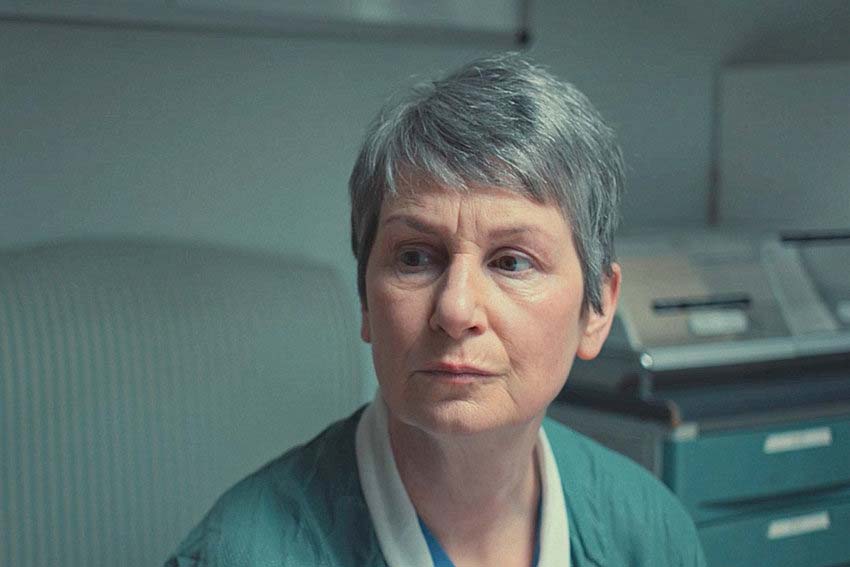
At the centre of the film is Nancy (Josie Walker), a Scottish scrub nurse whose growing certainty that she can detect disease through smell puts both her marriage and her professional credibility on the line. Walker’s performance has been singled out by critics for its warmth, restraint, and observant quality – one review calling it “understated, humble and compassionate,” with an “effortless warmth” that anchors the film emotionally. Cal MacAninch, playing her husband and the film’s lead surgeon, has also been praised for the vulnerability and sincerity he brings to a character caught between denial and reluctant acceptance.
The film has also secured a distribution agreement with Network Ireland, ensuring it will have a life beyond the festival circuit through streaming platforms, extending its reach to awards audiences long after individual screenings conclude.
Give the full Official Synopsis for your film?
Johnny Russell (JR): Logline: When a Scottish scrub nurse begins detecting a strange, persistent scent she comes to believe is an early sign of disease, she must fight to be believed by the people closest to her, including her husband, before her discovery costs her both her marriage and her career.
Synopsis:
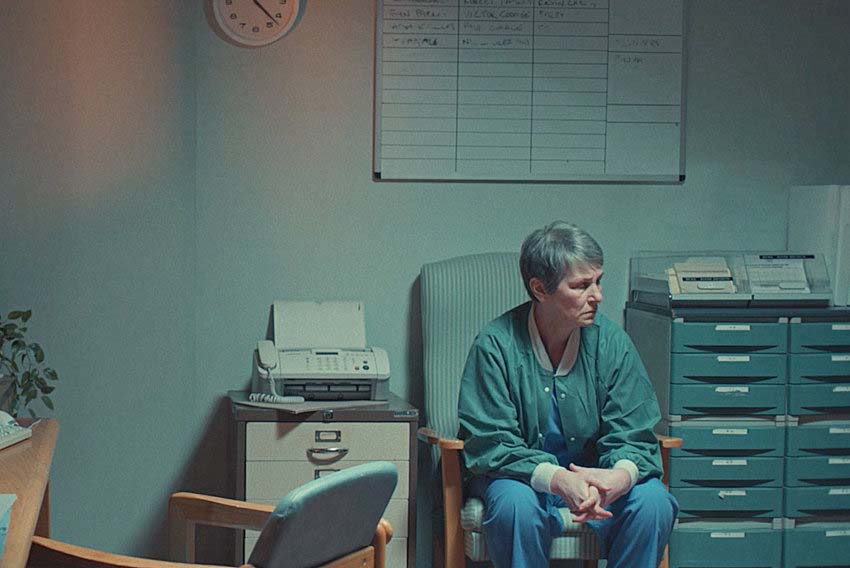
Nancy is a scrub nurse working alongside her husband Gavin, the hospital’s lead surgeon, in a life built on routine, competence, and quiet trust. During a routine operation, Nancy notices something unsettling: Gavin’s hand trembles just as he’s about to make an incision, and beneath it, a strange new scent she can’t place, clinging faintly to him. At first, she dismisses it as stress, exhaustion, the pressures of a demanding job. But the smell persists, and so does her unease. As Nancy pays closer attention, she begins to suspect the impossible: that she can smell disease before its symptoms fully emerge, and that Gavin is the one now carrying it.
When she raises her concerns, Gavin – certain of his own body, and reluctant to accept a diagnosis rooted in something as unscientific as scent – dismisses her outright. Colleagues are equally skeptical. Nancy is left isolated, caught between the instincts of a lifelong caregiver and the quiet fear of being wrong, or worse, of being right and unheard.
As her certainty grows, so does the toll on her marriage and her professional standing. Testing finally confirms what Nancy always sensed: her ability is real, and Gavin is in the early stages of the very disease she detected in him. What began as a moment of doubt becomes a story of vindication, but also of reckoning, as Nancy and Gavin are forced to face what her discovery means for the life they’ve built together, and for the fragile trust between them. Inspired by the true story of nurse Joy Milne, A Scent is a tender, understated portrait of instinct, marriage, and the courage it takes to trust what you know to be true, even when no one else will.
Development & Financing?
Johnny Russell (JR): I first came across Joy Milne’s story five years ago, in an article in The Guardian. It struck me immediately as a fascinating premise, and I saved it, knowing it was something I wanted to return to eventually. The story resurfaced for me in early 2024. I’d begun writing magical realist stories around that time, and sadly, two members of my family were going through neurological illness simultaneously. That combination, my own creative instincts pulling toward the strange and the real, and a personal, lived understanding of what it’s like to watch someone you love change, brought Joy’s story back to mind. I found I could sympathize with it in a way I hadn’t been able to five years earlier.
I started researching in earnest, working from what existed in the public domain, and made the decision early on that I didn’t want to tell a straight biopic. Because I was working from publicly reported material rather than Joy’s life story directly, I didn’t need to secure any screenplay rights. We did attempt to reach out to Joy directly, out of respect, but were told she prefers to remain a private individual, so instead, I built an entirely fictionalized dynamic and set of characters around the premise. I wanted to take the kernel of Joy’s story, her extraordinary ability, and dramatize it through my own imagination: what would that dynamic actually look like, lived out, day to day, inside a marriage? I built the story around a nurse who believes she can smell disease and must convince both the medical community and her own surgeon husband that her ability is real, knowing that the very act of proving herself risks destroying the thing she’s ultimately trying to protect: her marriage.
I spent the better part of nine months writing the script delivering drafts to my producers Harry Moore and Laura Rollins, as well as my mentors Laurie Borg and Matthew Bardsley. I brought on Archie Thomson to work with me on the final draft, shaping the story into the version that ultimately got made. Financing took roughly five months. We didn’t go through film markets; instead, we approached executive producers directly, drawing on our personal networks as well as cold outreach, prioritising people who had personal connections to the illness at the centre of the story, alongside self-financing a portion of the budget myself, using money I’d made from directing commercials and writing treatments.
Production?
Johnny Russell (JR): We entered a soft phase of pre-production at the beginning of 2025, once our budget was secured, with a shoot date pencilled for early March. During this period, our primary focus was establishing heads of department, opening conversations with casting directors, and scouting locations, all while working out whether the budget we had could genuinely deliver the film we’d written. Medical locations and equipment proved to be one of our biggest cost pressures early on. We scouted more than ten hospital locations, spanning university teaching hospitals, disused wings of still-functioning hospitals, and purpose-built hospital sets in film studios. We ultimately landed on a hospital set at a West London studio, paired with a disused wing at Hemel Hempstead Hospital, both within budget and carrying an atmosphere reminiscent of the 1990s that suited the film perfectly.
Around this time, alongside producers Laura Rollins and Harry Moore, I visited Virtual Motion Dance, a Parkinson’s dance class, where we spent time with participants and learned firsthand about the therapy, and the hope and humour shared within that community. It proved vital to understanding the illness beyond its clinical presentation, and we ultimately incorporated the dance company into day four of filming, where their presence brought real emotional depth and authenticity to those scenes.
By February, we’d moved into hard pre-production, beginning in earnest with my heads of department. Given how stripped-back the script was, it was essential to find actors capable of carrying real emotional depth while doing very little on the surface. Lucy Amos, a brilliant casting director introduced to me by my executive producer Laurie Borg following their collaboration on Hamlet, was instrumental here. She understood immediately that we needed performers who felt genuinely real, since the film’s impact depended entirely on an unquestionably naturalistic tone. We found a brilliant cast in Josie Walker, Cal MacAninch, Laura Rollins, Rob Jarvis and Jane Paul-Getts, all of whom brought such truth and sensitivity to their roles.
Alongside casting, I began developing the film’s visual language with my collaborators Max Brunner (cinematographer), Elena Isolini (production designer), and Danielle Westwood (costume designer). Budgetary constraints pushed us to lean into the existing colour and texture of our locations rather than dressing against them, favouring sickly greens and blues that reflected a subjective, almost diagnostic point of view. As a counterpoint, we decided any moment of hope in the film should carry a distinct, almost divine brightness, achieved through lighting and a softer, less oppressive palette. Anchoring the film clearly in the 1990s was a genuine challenge on our budget, so we took a stripped-back approach to sets overall, letting individual, carefully chosen props carry the period detail rather than overly dressing every frame.
One of the hardest creative problems we faced was how to visualise smell itself. Working closely with Max, who I’ve shot four previous shorts with, we settled on the use of a zoom to convey this sense, drawn to its uncanny quality and the subtle unease it can create in an audience, which felt like the right emotional register for Nancy’s experience. Principal photography ran over five days in early March, with a crew of thirty and up to fifteen background artists across the shoot. Day one was spent at the hospital studio location, covering scenes requiring technical medical equipment. We then moved to Hemel Hempstead for two days, followed by a day in Shoreditch for the dance class scenes, and a final day in Orpington for the home-set scenes. The shoot ran smoothly overall; we went over schedule on day one as the cast and crew settled into their rhythm, but clawed the time back the following day. We worked without any fixed external deadlines, which gave us the freedom to prioritise getting the performances and detail right rather than rushing to hit a date.
From there, we moved straight into the edit with my longtime collaborator Lesley Posso, whose understanding of both emotional truth and editing rhythm, particularly her use of sound, shaped the film from the outset. We didn’t require
any ADR; the production sound captured on set held up throughout. Our first cut came in at twenty minutes; the bones of the film were very much there.
Festival Preparation & Strategy?
Johnny Russell (JR): We prepared for the festival run by speaking with festival specialists, including Festival Formula, as well as established filmmakers who have trodden the festival path many times before us and could speak honestly about their experience. Given the sentimental, emotionally driven nature of the film, we decided early on that our strategy should be ambitious: targeting top-tier, BAFTA and Oscar-qualifying festivals. From there, we curated a shortlist of festivals to target, drawing on my own past experiences, my collaborators’ experiences, and the advice we’d gathered from Festival Formula and other established filmmakers, before beginning submissions in April.
Shortly after completing the film, we got in touch with Catherine Lynn-Scott of London Flair, and she decided to take the film on before we’d even entered the festival circuit ourselves. She’s been an exceptional collaborator ever since, guiding us through the strategy of the circuit and building press and momentum around the film — it’s through her efforts that we secured coverage such as Joan Amenn’s review for In Their Own League and the “must-see” write-up from Film-business.com, both ahead of our HollyShorts screening. It was also on her recommendation that we connected with Network Ireland, with whom we ultimately signed our distribution agreement. Network Ireland has since become an active festival partner in its own right, pointing us toward festivals we hadn’t even had on our radar and submitting the film to several new ones on our behalf.
Of everything we’ve done on the festival circuit so far, being accepted into HollyShorts has been the real turning point. As one of the largest and most prestigious short film festivals in America, and a genuine gateway into the Oscar and BAFTA qualifying conversation, HollyShorts has given the film a level of credibility and visibility nothing else on our circuit has matched. It’s opened doors to conversations we simply wouldn’t have had access to otherwise, brought serious press attention our way, and put the film in front of an industry audience far beyond what a smaller festival could offer. If any single festival has given A Scent its edge, it’s unquestionably this one.
The Release?
Johnny Russell (JR): The film is yet to be released.
Advice from the Filmmaker?
Johnny Russell (JR): The most important lesson I’ve learnt through making this film is tenacity. Whether you’re bringing on finance or collaborators, you have to be willing to walk away from any given conversation knowing you’ll make the film regardless. That certainty is infectious — it’s what turns what you’re creating from a favour someone might do for you into an opportunity they want to be part of.
Leave your comments below
Socials
Website
IMDb
Instagram
MORE STORIES FOR YOU