
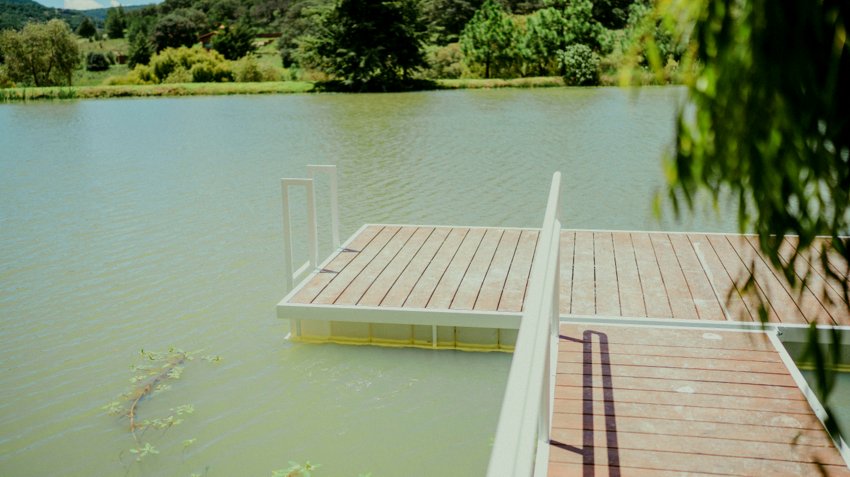
A floating dock should do more than provide a place to tie up a boat. It must respond to changing water levels, support the intended loads, remain stable under local wind and wave conditions, and fit the way people actually use the waterfront. Working with an experienced Floating Docks Builder helps turn those requirements into a complete system instead of a collection of unrelated parts.
The best dock begins with decisions about the site, frame, flotation, hardware, anchoring, access, and long-term maintenance. Addressing those factors together creates a dock that performs reliably for a private property, community waterfront, campground, club, or commercial marina.
Begin With the Water and Shoreline
Every waterfront behaves differently. Lakes may experience seasonal drawdowns, rivers add current and debris, reservoirs can change elevation quickly, and coastal sites must account for tides, salt exposure, storms, and larger wave action. Water depth, bottom conditions, prevailing wind, boat traffic, and ice can all influence the design.
The shoreline matters just as much. A steep bank may require a longer gangway, while a shallow approach may need the dock to extend farther before reaching usable depth. Property boundaries, setbacks, environmental restrictions, and permitting requirements should be confirmed before the layout is finalized.
Define How the Dock Will Be Used
A residential platform for swimming and two small boats has different requirements from a marina serving frequent traffic. Begin by listing the boats, personal watercraft, kayaks, and activities the dock must support. Consider the number of users, expected equipment, storage, utilities, and whether the system may expand later.
Useful planning questions include:
- What types and sizes of vessels will use the dock?
- How many slips or launch positions are needed?
- Will the dock support swimming, fishing, seating, or events?
- What live and concentrated loads must the structure carry?
- Are water, power, lighting, or fuel services required?
- Does the layout need ladders, kayak access, or personal-watercraft lifts?
- Will future sections or fingers need to connect to the original system?
A clear use plan prevents undersizing and helps place slips, fingers, cleats, ladders, and access points where they are practical.
Select a Frame for the Application
The dock frame establishes the shape and structural character of the system. American Muscle Docks offers several frame approaches, including wood, reinforced polymeric framing, steel truss, steel channel, and aluminum. Each has a different balance of strength, weight, appearance, maintenance, configurability, and cost.
Pressure-treated wood is widely used because it is familiar, adaptable, and easy to modify. Reinforced polymeric framing is designed for a low-maintenance system that resists rot, mold, mildew, and insects. Steel truss frames suit heavy-duty applications where strength and stability are priorities. Low-profile steel channel systems can provide a configurable metal option, while aluminum offers a lightweight, corrosion-resistant structure with a clean appearance.
Material should be chosen for the actual water environment and intended duty—not appearance alone. Saltwater compatibility, corrosion protection, frame profile, connection details, transportation, assembly, and maintenance all deserve review.
Match Flotation to the Dock Load
Float drums provide the buoyancy that keeps a floating dock above the water. Their size, quantity, spacing, and placement determine total flotation, freeboard, trim, and stability. The calculation should include the frame, decking, hardware, accessories, utilities, people, and expected equipment.
More flotation is not a substitute for balanced design. Poorly distributed floats can allow corners or fingers to sit unevenly even when total buoyancy appears adequate. A builder should consider concentrated loads, changing occupancy, and the effect of accessories such as ladders or personal-watercraft systems.
Choose Hardware as a System
Hinges, corner brackets, side brackets, chain retainers, pile guides, pipe holders, fasteners, and connectors transfer forces between dock sections. Hardware must match the frame type, loads, movement, and exposure. Mixing components without checking hole patterns, dimensions, coatings, and material compatibility can create weak points or accelerate corrosion.
Heavy-use areas and long fingers may require stronger connections than a small residential platform. Hardware should allow the movement a floating system needs while controlling twisting, separation, and impact.
Plan the Anchoring Method Around Site Movement
A floating dock must rise and fall while remaining in position. Common approaches include piles with guides, pipes, stiff arms, chains, cables, or other engineered anchoring arrangements. The right method depends on water-level variation, depth, bottom conditions, current, wave energy, ice, available shoreline structure, and local rules.
Pile guides can provide controlled vertical travel where piles are practical. Other sites may require anchoring that permits more horizontal movement. The builder should evaluate the complete force path rather than choosing anchoring by dock size alone.
Get the Gangway Geometry Right
The gangway connects land to a moving dock. Its length and hinge position affect slope as the water level changes. A gangway that feels comfortable at normal pool may become too steep during low water or interfere with the dock during high water.
Measure the expected elevation range, shoreline height, landing space, and required clear width. The design should also consider handrails, transition plates, walking surface, load, and any accessibility requirements that apply to the property.
Finish the Dock for Everyday Use
Decking should provide dependable footing and suit the desired maintenance level. Cleats must be located and sized for the vessels. Rub rail and bumpers can help protect both dock edges and boats, while ladders need safe placement with clear water access. Lighting, grab posts, kayak launch features, and personal-watercraft lifts should be integrated without blocking circulation.
Accessories are most effective when considered during design. Adding them later may affect flotation, create conflicts with framing, or require new hardware.
Think About Assembly, Delivery, and Future Service
A complete dock may be delivered assembled, partially assembled, or as components, depending on the project and location. Confirm access for trucks, cranes, boats, or shoreline assembly before ordering. Large and complex systems also need a realistic installation sequence.
Long-term planning should include routine inspection of decking, floats, fasteners, connections, anchoring, and accessories. Look for loose hardware, corrosion, damaged sections, reduced freeboard, uneven trim, cracks, or movement that differs from the original design. Storms, impacts, ice, and changes in use may justify a professional review.
Build the Dock as One Coordinated System
A dependable floating dock comes from matching every major component to the same site and use case. Frame material, flotation, hardware, anchoring, gangway geometry, and accessories must work together.
Planning the complete system with a knowledgeable dock builder reduces guesswork, supports easier maintenance, and produces waterfront access that can serve its owners for years. The result is not simply a platform on the water, but infrastructure designed around the shoreline, the vessels, and the people who depend on it.
You can comment below or join us on Facebook, Twitter and LinkedIn
INDIE ACTIVITIES



Iconic Actress “Irina Maleeva” Brings “Sunny’s Closet” to Indiewood
International Actress at Film Festival with “Sunny’s Closet” — Before Taking It To Rome