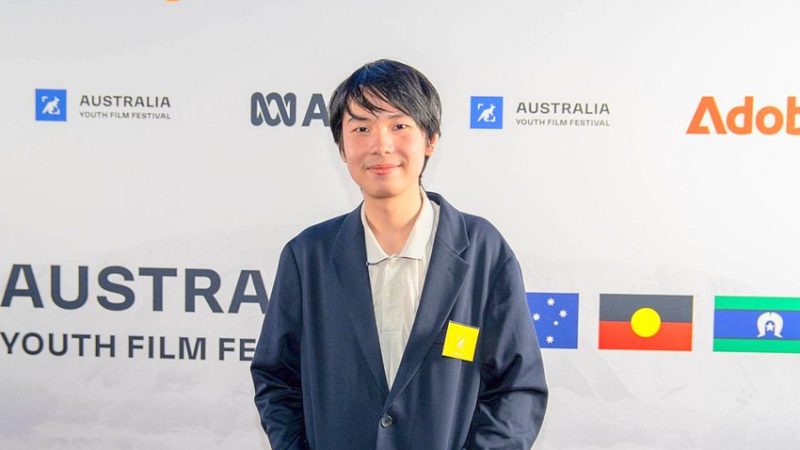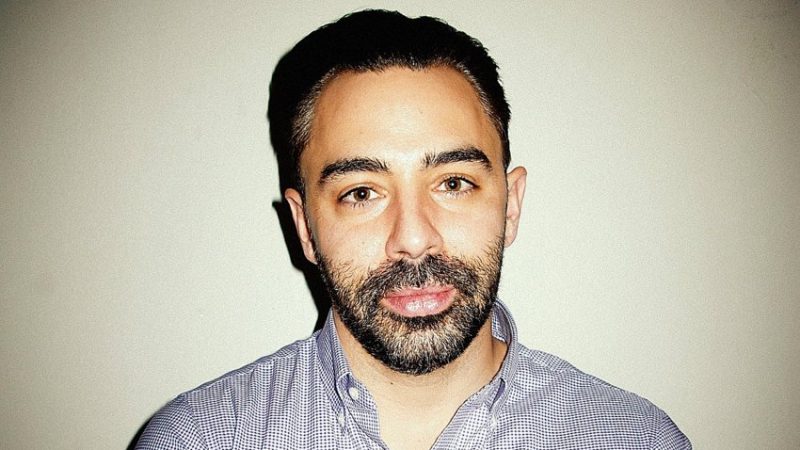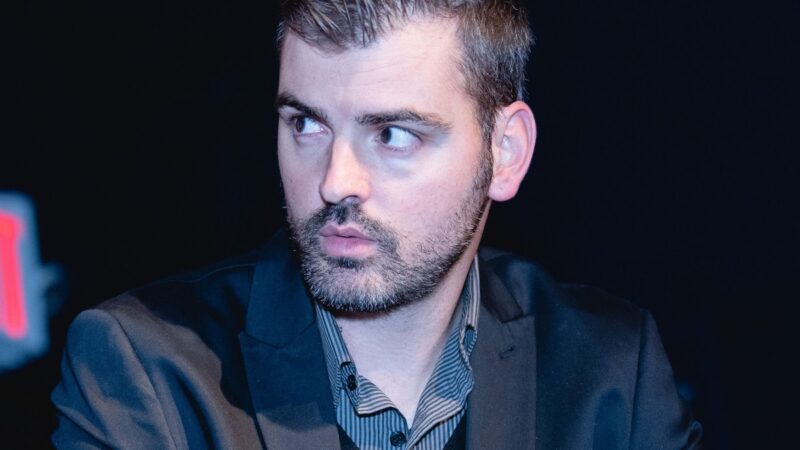
indieactivity: How did you get into directing? How would you describe your style?
Scott Vickers (SV): I’ve been in performing arts since I was young. After years in musical theatre, I studied cinematography and screenwriting, which pulled me toward completing the creative circle. I landed acting roles, including a lead in a UK continuing drama. I worked with 50-60 directors over about ten years. That combination – screenwriting, acting, and studying cinematography – naturally led me to directing.
My style is performance and narrative-led. The story and the actor’s performance always dictate my choices as a director, not the other way round. A lot of directors start from a shot that’ll cut well in the edit — that’s an outside-in approach. I start with the story and let performance guide me. But, I also lean into visual storytelling over dialogue wherever I can. It’s a bit contradictory, but that’s where I land.
Do you hire a casting director, or cast yourself? If so, what criteria go into your casting?
Liam James Collins (LJC): We didn’t require a casting director. Because, the project is a creation from the beginning with the intention of me playing the lead role. That was actually part of the initial motivation for creating the characters. The world and the script, and ultimately funding the film myself.
For the other lead, I knew I wanted a significant British actor who I respected. Someone, I’d genuinely want to work opposite, and someone who could completely inhabit the role of a medieval king. I created a very small shortlist and Charlie Creed-Miles was at the top of it. I sent the script directly to his agent with an offer, and fortunately he loved it. He described the script as bold and brave. He speaks something that really a fact: “Most short films are set at a bus stop.” I knew exactly what he meant. We were deliberately attempting something much more ambitious in scale.
Official Trailer for King of the Iron Will Directed by Scott Vickers & Produced by Liam James Collins
Tom Tully, who plays the eunuch, is a recommendation by Charlie. Hudson Vickers, who plays young Baron, is our director Scott Vickers’ son. So between us, the casting came together very organically. There was never a need to bring in a casting director.
What went into the casting process for “King Of The Iron Will”?
Liam James Collins (LJC): It was actually a very straightforward process. I was always going to play Baron. So, I created a small shortlist of British actors I’d love to play Draven, with Charlie Creed-Miles at the top. I sent the script and an offer directly to his agent. Fortunately Charlie loved it, describing the script as bold and brave. Charlie then recommended Tom Tully for the role of the eunuch. Scott recommended his son Hudson to play young Baron. So the whole cast came together very naturally from there.
Without giving anything away, tell us a little bit about the script, how did you come up with the idea?
Liam James Collins (LJC): The inspiration goes all the way back to when I was seven years old. My dad gave me a battered, pirated VHS copy of Braveheart. I had one of those tiny 1990s TVs with the VHS player built into it. It is seats on a huge metal bracket above my bed, and I watched Braveheart relentlessly. That’s where my connection to medieval and Celtic storytelling began.
Years later I did an Ancestry DNA test and discovered that my ancestry is entirely English, Irish and Scottish. Which made that connection feel even more personal. I’ve always loved that world. Whether it’s Braveheart, Kingdom of Heaven, Excalibur, The Last Duel, Game of Thrones or House of the Dragon. As an actor, I always felt it was a genre I fit. But, after nearly twenty years acting, nobody had ever given me the opportunity to step into that world. So eventually I thought, I’ll create it myself.
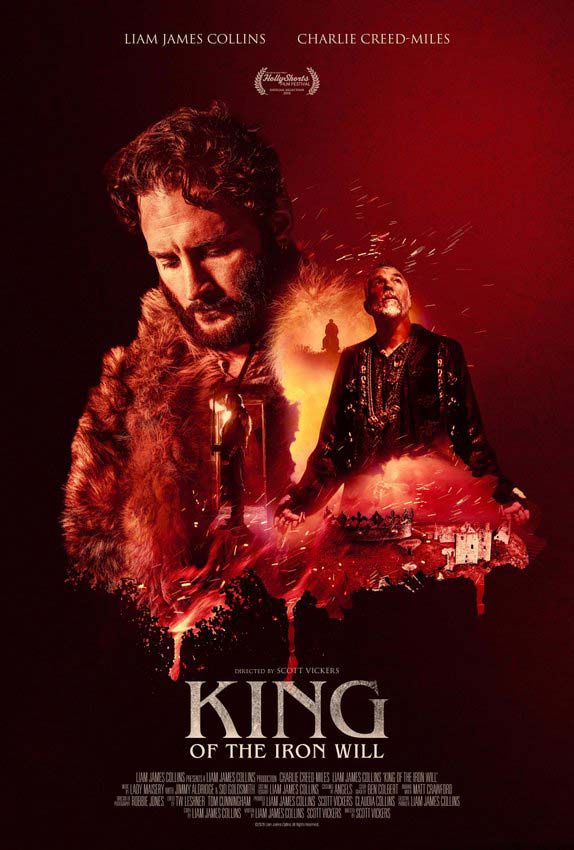
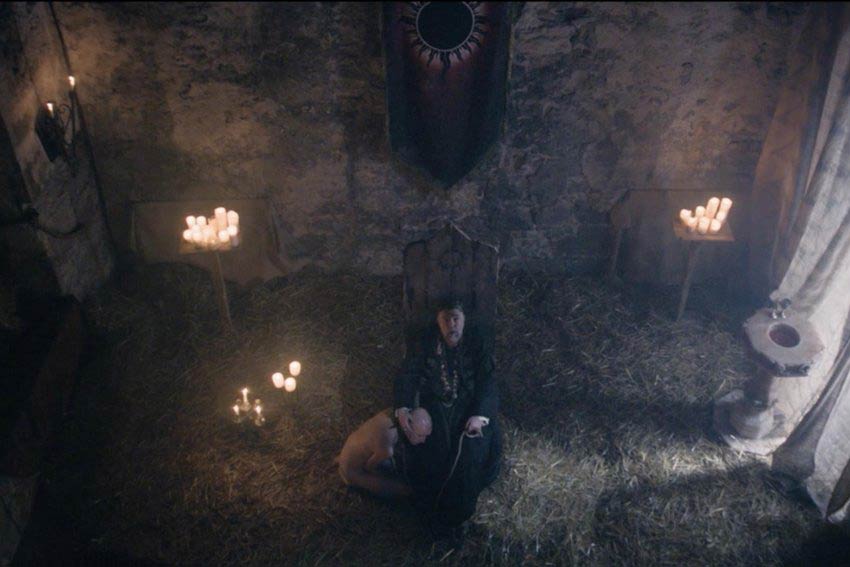
The actual story began with one image in my head. A crown sitting alone on a throne while the kingdom around it crumbles. I started asking, who did the crown belong to? Why is it left behind? And what does it represent?
From there it became a story about revenge, ambition and the poisonous nature of power. I’m have a fascination by the idea of pursuing something because you want to prove somebody wrong. Then finally achieving it and discovering that it hasn’t filled the void you thought it would.
The film ultimately asks a very simple question. When power is placed in your hands, do you risk becoming the thing you fought against. Or are you strong enough to walk away?
Who is “King Of The Iron Will” for? Who do you think would enjoy it the most?
Liam James Collins (LJC): I think King of the Iron Will is for everyone. Or anyone who enjoys deeply human conversational drama presented on an epic scale.
One of my favourite scenes in any film is the conversation between Al Pacino and Robert De Niro in Heat. These are two men who know that one of them has to die. Yet they sit across a table from each other in a completely civil setting and have a conversation. I’ve always been fascinated by what happens in those moments. When the swords are down and two sworn enemies are forced to face each other simply as men.
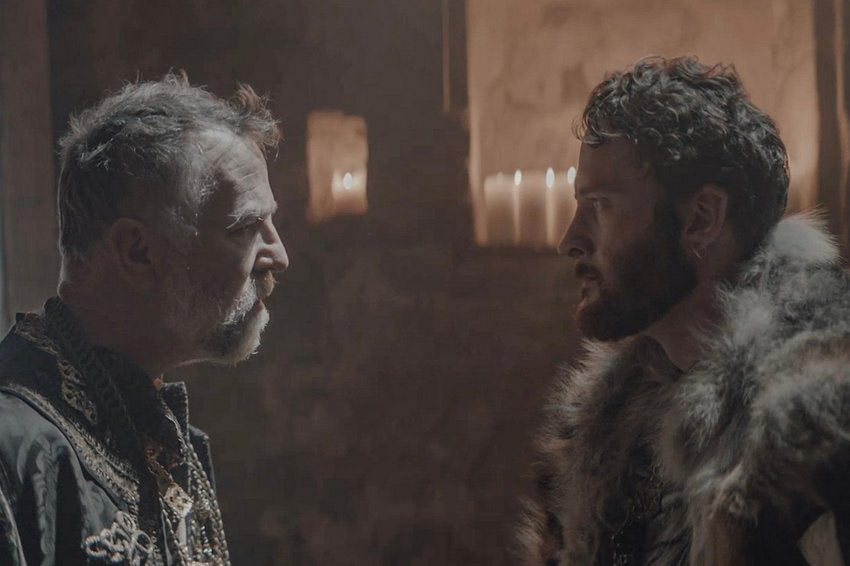
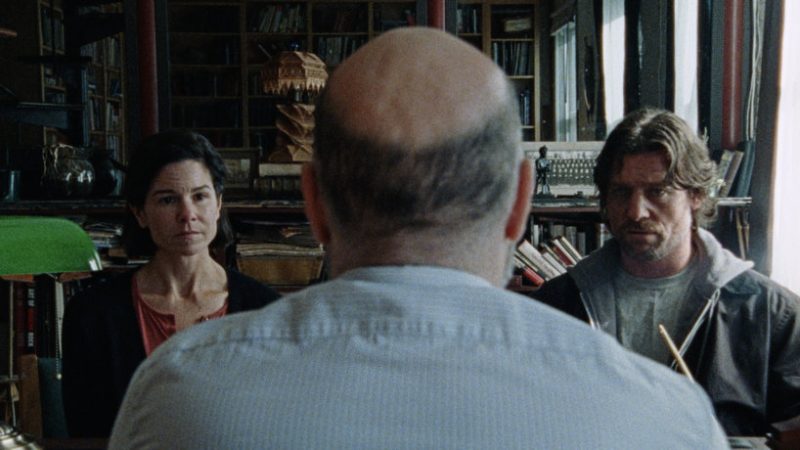
I wanted to take that idea and place it in the most epic setting possible: two kings sitting opposite each other while a war rages around them. For me, giant battles, explosions and spectacle can become white noise. I can watch all of that happening on screen and feel very little. But when the stakes are enormous between two individual people and everything rests on the words being spoken, the silences, the subtext and what each person is trying to conceal, I feel that completely.
So if you love Braveheart, Game of Thrones or House of the Dragon, the swords, castles, horses and scale of historical drama, but you also love intimate, character-driven storytelling where the conflict comes from two people sitting opposite each other, then this film is for you.
I also think there’s something exciting about seeing what can be achieved independently. This was a modestly budgeted short film, completely self-funded by me, and our intention was to make something that looked and felt epic. Someone who interviewed us recently described it as “HBO worthy,” which I loved, because that was exactly the level of ambition we brought to it.
How long did it take to shoot the entire film?
Liam James Collins (LJC): The entire film is a two day shoot, but the process leading up to those two days took well over a year. I spent around six months developing the initial idea, mapping out the characters, the story and the world of the film. Once Scott came on board, that’s when the full production planning began.
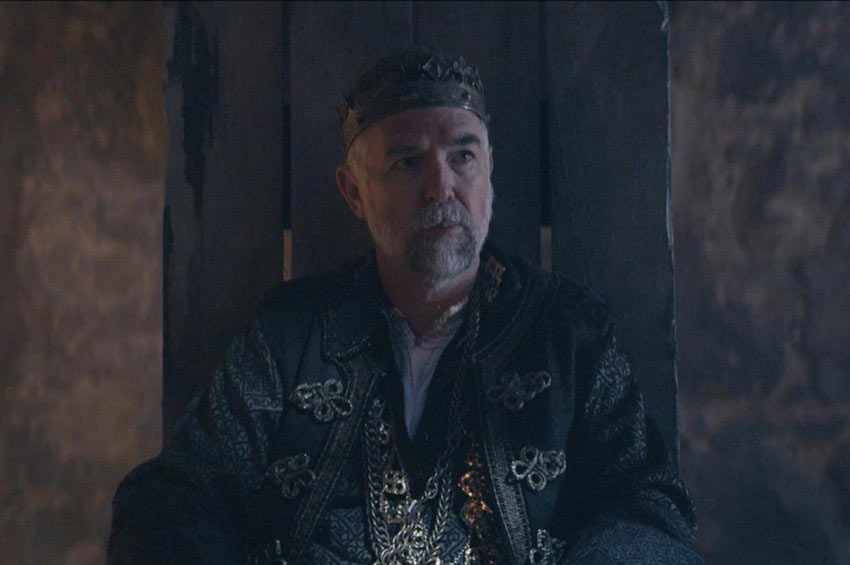
We spent around six months preparing for the first shoot day at Dunnottar Castle in July 2025, where we shot the exterior scenes, including Baron arriving and leaving on horseback. Then we spent another six or seven months preparing for the second shoot day at Dundas Castle in February 2026, where we shot all of the interior scenes with Charlie.
So technically the entire film is just a two day shoot, but those two days were separated by around seven months and backed by an enormous amount of preparation.
That planning was essential because I couldn’t afford an extra day at either castle. We had to get everything we needed within those two shoot days. There was no backup day and no room to run over.
How long was the post-production process?
Liam James Collins (LJC): The post-production process is a three months period. From the end of shooting to having the completely finished film. Scott was instrumental in connecting us with two phenomenal post-production resources. T.W. Leschner handled the offline edit, and he also helped connect us with Media City, who then took care of the remaining post-production, including the online edit and sound.
It wasn’t three months of continuous work. There were gaps because of people’s availability, and Scott and I wanted to be present and involved throughout the process. But, from finishing the shoot to having the final completed film in our hands was around three months, which was incredibly fast considering the level of work that went into it.
The film had a lot of talent working behind the scenes as DPs, sound designers, composers, etc. Why is diversity important both in front of and behind the camera?
Liam James Collins (LJC): Equal opportunity is incredibly important to us, and both Scott and I feel personally connected to that because we come from working-class backgrounds.
I grew up in a very working-class part of South East London. My father was a plumber, my grandfather was a plumber. I didn’t know any actors, I wasn’t connected to the industry and I grew up in an environment where pursuing the arts wasn’t considered something people like us did. Scott comes from a working-class background in the North, so this is something we’ve spoken about extensively.
And the statistics show how serious the problem still is. Research from the Creative Industries Policy and Evidence Centre found that only 8.4% of people working in film, television, radio and related screen industries come from a working-class background. That is an astonishingly small number.
We made a conscious effort to represent working-class talent both in front of and behind the camera. It was part of what drew me to Charlie Creed-Miles, and it also influenced the way we approached the language of the film.
We wrote the piece using Shakespearean language because Shakespeare was never created exclusively for academics or the upper classes. His plays were popular entertainment. They belonged to ordinary people. We wanted to reclaim some of that and demonstrate that period drama, heightened language and ambitious filmmaking do not belong to one class of people.
The financial reality of pursuing a career in the arts means that talented working-class people are being pushed out before they ever get the opportunity to show what they can do. If you need family money behind you simply to survive long enough to establish yourself, then the industry inevitably becomes dominated by the people who can afford to stay in it.
For us, representing working-class people in front of and behind the camera wasn’t an afterthought. It was part of what the film stood for from the beginning.
What are your goals with “King Of The Iron Will”?
Liam James Collins (LJC): I’ve never understood the idea that filmmakers and actors should be coy about their ambitions. If you’ve worked this hard to create something, of course you want it to be recognized.
That doesn’t mean everybody has to like it. Art is subjective. One person can think Titanic is a masterpiece and somebody else can hate it. That’s completely fine. But recognition is different.
Personally, I want people to watch King of the Iron Will and recognize me as an actor with the skill set to lead this kind of material, and to see that I belong in this medieval world. I want Scott to be recognized for the scale and quality of what he achieved as a director, because directing a film like this is an enormous undertaking.
I also want the film itself to be recognized for what it is: an ambitious, standalone piece of cinema that was independently financed by me and created by a small team of predominantly working-class filmmakers over two shoot days and with a limited budget.
Beyond that, I want people to connect with the characters and the world enough that they want to see more of it, whether that eventually becomes a feature film or a television series.
And yes, we have major awards ambitions. I would love to see the film recognized by BAFTA, BIFA or the Academy. I don’t see any reason to pretend otherwise.
If you’re going to write the script, spend the money, find the cast, build the crew, secure the locations, organize the costumes, travel and accommodation, rehearse the performances and put everything you have into making the film, then why wouldn’t you want it to compete at the highest possible level?
We are very ambitious for King of the Iron Will, and I’m completely comfortable saying that.
What’s next for you? What are you working on right now?
Liam James Collins (LJC): Creatively, my complete focus right now is King of the Iron Will. I want to push the film as far as I possibly can through its festival run, press, and hopefully an awards run, and make sure I’ve done everything possible to give the project the life it deserves.
There is also a feature film Scott is the writer and will be directing. Which is a selection and which we’re hoping to shoot within the next 12 months. I have a role in that and I’m also helping to produce, but Scott is very much driving that project forward, which is exciting.
Outside of film, I continue to run The Coaching Masters, my online training academy that qualifies and accredits people as life coaches, mindset coaches and confidence coaches, and helps them build online coaching businesses that can give them more freedom and fulfilment in their lives. That remains a major daily focus for me.
Once I feel I’ve pushed King of the Iron Will to the furthest possible extent, then I’ll decide exactly what I want to create next.
What would you recommend to a new director? Any courses, workshops, books they can read?
Scott Vickers (SV): Make as much as you can. However you can get it – iPhone, friends as actors, a script you wrote – shoot it, edit it, put it out there. There’s no better training than doing it yourself. Put it on YouTube, submit to festivals, show it to people, and watch how they respond. That perspective is everything, because we make stories for the viewer, not for ourselves – if you’re only making it for yourself, why show anyone?
Book-wise: Rebel Without a Crew by Robert Rodriguez — practical, real, from an actual filmmaker doing it. Beyond that, teaching is the best way to learn. I run an academy, Interact Screen Actors Academy, and everything I teach comes from real professional experience in TV and film.
What would you recommend to a new director? Any courses, workshops, books they can read?
Liam James Collins (LJC): This is such a difficult question because there are so many directors I respect for completely different reasons. So I have to answer it on gut instinct, and there is one name that refuses to leave my mind: Quentin Tarantino.
Obviously I love his films, but my admiration for him goes far beyond the finished work. I love listening to him talk about cinema, actors, writing, directing and the filmmaking process. I can watch him discuss movies for hours because his passion for cinema is completely infectious.
There’s a ritual he has on set that Austin Butler has spoken about. Once Tarantino knows he has the take, he’ll tell everybody they’re going again and ask, “You know why?” and the entire cast and crew shout back, “Because we love making movies!” I love that. I love the idea of a director creating an environment where everybody remembers how fortunate they are to be there making a film together.
One of my favourite films is Inglourious Basterds, which I consider a masterpiece. I also love the story that Tarantino saw what Paul Thomas Anderson had achieved with There Will Be Blood and openly admitted that it forced him to raise his own game. There’s something incredibly inspiring about one great filmmaker seeing another filmmaker produce exceptional work and responding by demanding more from himself.
Then you have Reservoir Dogs, made with limited resources and driven forward by sheer belief and ambition, and Pulp Fiction completely rejecting the idea that a film needs one conventional central hero or even a conventional narrative structure.
I also love how openly he wears his influences. He takes inspiration from decades of world cinema, pulls those influences apart and rebuilds them through his own unmistakable voice.
His entire journey fascinates me. From working in a video store and consuming cinema obsessively to building a career where his life now appears completely designed around making, watching and talking about movies. There’s something about that absolute devotion to cinema that I find enormously inspiring.-
What advice would you give directors around the world?
Scott Vickers (SV): Working with actors – creating the conditions for their best performance – must always be the director’s priority. Uphold and support the actor above everything else.
Leave your comments below
Socials
LinkedIn
IMDb
Facebook
X
Instagram
MORE STORIES FOR YOU