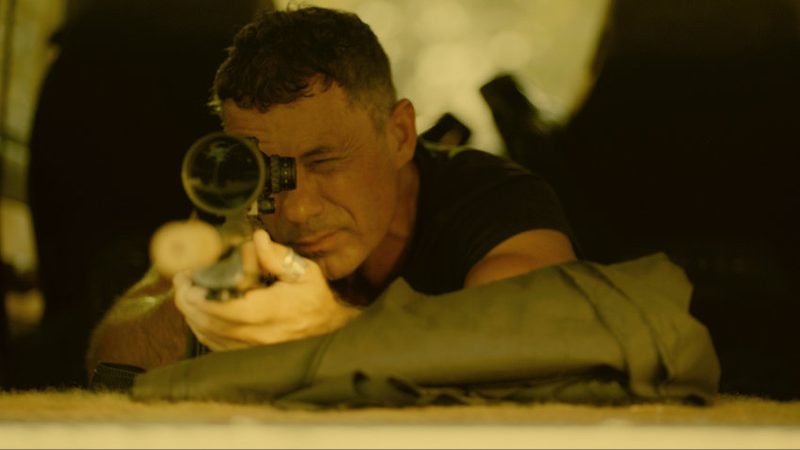
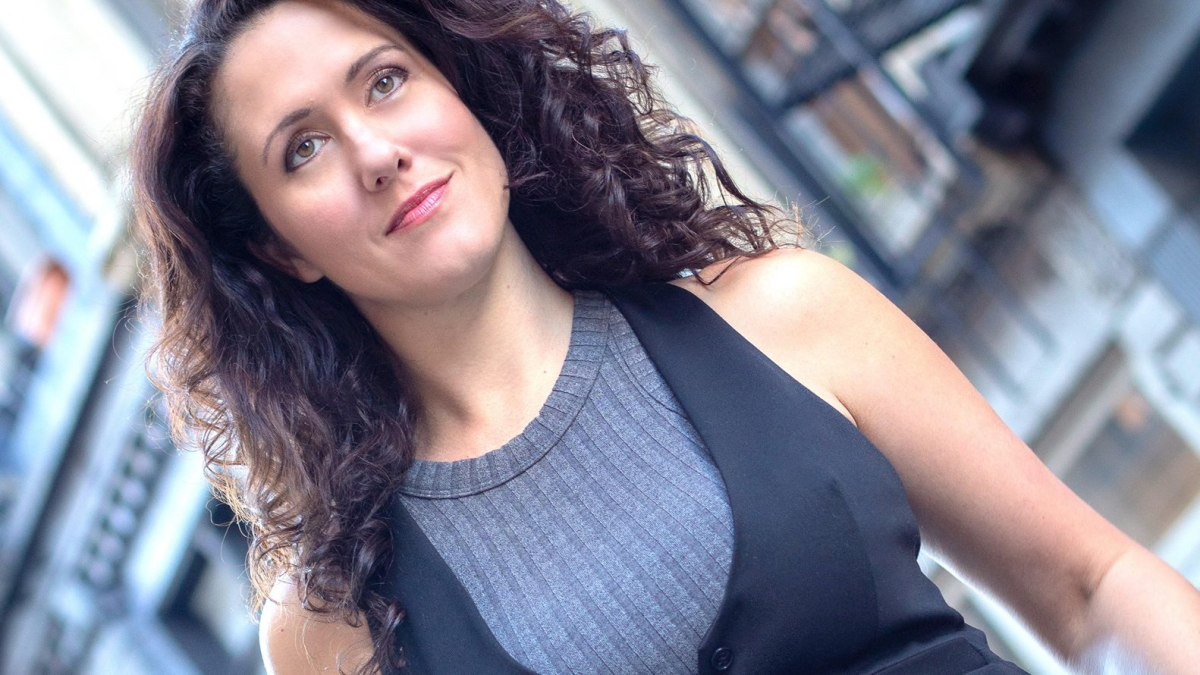
Jennifer Plotzke is an award-winning actress and producer with a career that includes both stage and screen. She appeared in the up and coming film Fizzle. Starring opposite Peter Friedman and Geoffrey Owens, directed by Jeremiah Kipp.
She has completed roles in eight other independent films including The Red Lotus. Mindfull, Uber Oracle, and Uneffable are other films. Currently she has four films on the festival circuit as producer and actress. Jennifer has a Best Actress award for her role in The Red Lotus. A Best Actress nomination for her work in Uneffable and Mindfull has been awarded two Best Ensemble awards.
Please give a concise autobiography of yourself?
Jennifer Plotzke (JP): When I was five years old, my parents took me to see Annie on Broadway. From the moment that curtain went up, I was in love. My father was also a film buff, so he started me early on the classics. My parents did a great job of giving us a cultural education as children. So, I was able to soak up lots of theatres, cinema, and television when I was young. When I was 15, I was cast in a production of Li’l Abner and I haven’t stopped acting since. I did theatre for many years throughout high school and it was my main area of study in college. Since then I have moved more towards film and TV. I now work primarily in independent film. Whenever I can, I still love to go back to my theatrical roots.
The Blacklist, NBC
Did you study what you do?
Jennifer Plotzke (JP): I have been studying this seriously since high school. I was fortunate to attend a school that had a strong performing arts program. They had a 1,000 seat fully equipped theatre facility. So, I received excellent acting training and experience there early on and then continued on through college. I lived in Chicago at the time and chose to go to Illinois State University to further my acting studies. I graduated with a Bachelor of Arts in Acting. I also continued to study beyond college in Film and Television Workshops. Such as Act One Studios in Chicago and Anthony Robert Grasso Studios in NYC. I also did a summer program at the Atlantic Theatre Company after moving to New York.
What is your filmmaking process?
Jennifer Plotzke (JP): In terms of acting, I rely most heavily on Affective Memory. If you’re creating a character that has an emotional experience you’ve never had. You have to be able to pull from something real in order to make it honest. But if you’ve never had that experience, how do you truthfully recreate it? It’s about finding an experience in your life that parallels the experience of your character. Then translating your actual emotions into the fictional situation. I find this most effective in terms of giving myself something real to play. As opposed to trying to imagine what something may or may not feel like in the moment.
Tell us about the work you have produced?
Jennifer Plotzke (JP): I have produced around thirteen indie short films and two television pilots. Many of have enjoyed tours on the festival circuit and many of which are just starting that journey now. I began producing films because I was having a difficult time being cast. I wanted to create opportunities both for me to act and to build a solid film reel.
Blue Bloods, CBS
I think producing your own work teaches you so much. Learning everything that goes into production, whether its film, TV, or theatre makes you a more well-rounded actor and gives you a great appreciation for the work that everyone puts into a project. It also gives you a greater understanding of the entire scope of the project, how you fit in, and the importance of your role in the final product.
Do you take courses to improve your craft?
Jennifer Plotzke (JP): Absolutely. I think actors should always be flexing those muscles. Even if you’re solid on your process, your type, and your work, there are always ways to improve and new discoveries to be made. I think continuing your studies is essential to finding new levels in your work. Even when you’re broke or you don’t have time for a formal class, getting together with friends on a weekly basis and rehearsing a scene, putting yourself on camera, reading a script, or filming a scene can still keep the juices flowing.
How do you combine acting, producing, and writing?
Jennifer Plotzke (JP): If you’re producing and acting in something you’ve written, I think it’s imperative that you budget time very carefully for all three of those things.
Producing is difficult and can be time-consuming and there are a lot of bases to cover. I think it’s important to build your team with people you can trust so you can delegate properly and not have to oversee every aspect of the production. If you become too consumed by the producing, your acting potentially suffers. You end up not giving yourself the appropriate amount of time to effectively prepare your role.
FBI: Most Wanted, CBS
And if it’s also your screenplay, the writing and the acting go hand in hand. You need to budget that time to develop, nourish, and protect that work. I have learned this the hard way on several productions, where I became so buried with production tasks that my acting ultimately paid the price. I look at those productions and now and while they all worked out well and the final product is something I’m proud of, I secretly know the levels to which my acting could’ve gone had I allowed myself more time to prepare.
How did you get into the film business?
Jennifer Plotzke (JP): I started out doing 72-hour film challenges, where you were assigned a team and a theme and had 72 hours to write, shoot, and edit the entire film, from start to finish. It was a crash course in indie filmmaking and served as an invaluable education in the process of making a film. From there I moved on to begin producing films with a slightly greater budget for time.
How do you turn an idea into a screenplay?
Jennifer Plotzke (JP): I always have a journal on hand to write down thoughts, things I see, conversations I hear. I write them down and close the book. Then when I revisit the notes, I can look over all the ideas that I’ve jotted down and can see patterns and ideas form between multiple ideas. This can create the concept for a screenplay and it can also be the basis for character work and development in acting.
What writing tips or ideas can you give young writers?
Jennifer Plotzke (JP): Write every day. Even if it’s minimal. Even if it sucks. Even if it’s not related to your project. I think doing it every day and keeping those muscles warm and the creative juices flowing is the key to creating something bigger. It keeps you in the habit of doing and creating, whether it’s a screenplay, a character, a sketch, or a book.
Jennifer Plotzke Comedy Reel
What do you want to change about the film business?
Jennifer Plotzke (JP): I would love for there to be greater, more accessible financial resources to assist indie filmmakers and also more opportunities for filmmakers to showcase their work. I absolutely love the indie film festival circuit and in attending festivals around the country, I have met some of the most hard-working, wonderful people in this industry and have seen some absolutely stellar films.
But once your film has had it’s run, it’s tough to figure out the next steps if you’re unable to score a distribution deal. Since the advent of the streaming trend in entertainment, there have started to be more platforms for independent films and short films to be seen, but I wish it was to a greater extent and a bit more mainstream. There are some incredibly talented but unknown filmmakers out there and I would love to see more of them getting the publicity they deserve.
What do you want to be remembered for?
Jennifer Plotzke (JP): Being someone that people love working with.
What do you want from an actor during production?
Jennifer Plotzke (JP): As an actor and a producer, I want actors to be reliable and prepared. Lack of these things can slow down a production immeasurably and in the business of film, time is money. The more time you waste, the more money it costs. And most of the time, indie film budgets are already stretched to the max. I need actors to show up on time and prepared so that in the time we have, we can work and create something that everyone can be proud of.
Jennifer Plotzke Reel
How do you work with a producer on a production?
Jennifer Plotzke (JP): I love a producer that’s hands-on and involved and that shares in the collective passion of the project.
Who is your favorite director?
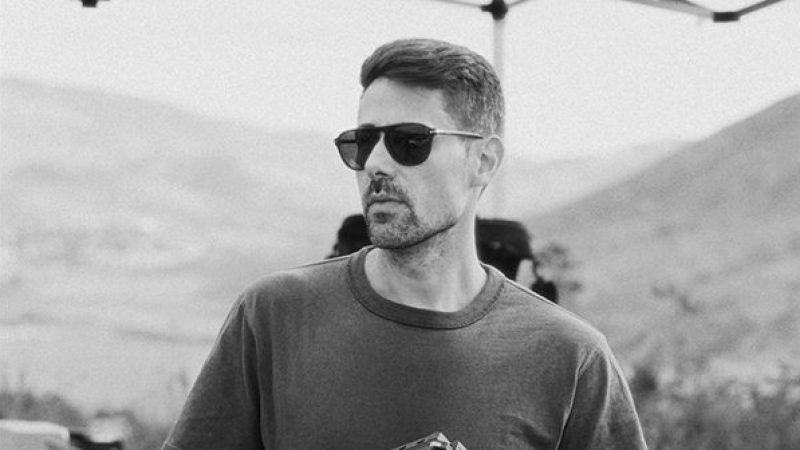
Jennifer Plotzke (JP): There are many directors that I haven’t met whose work I admire and one day would love to work with. But I’ll answer this with someone I have already worked with and love and was the director on my most recent project, Jeremiah Kipp.
Why?
Jennifer Plotzke (JP): He’s a visionary. He’s an actor’s director. He is wildly talented and his imagination knows no bounds. I’m a huge fan of his work and have been fortunate to work with him multiple times. And the greatest thing is that he is an extraordinary human. He’s grounded, he’s generous, he’s all heart. I think that’s what I look for most in this industry. People like that. That is wonderful to be around and do this for the love of the art and the love of collaboration and the collaborators.
Briefly write about your career?
Jennifer Plotzke (JP): In the past three years, I have worked on over 20 indie films in a wide variety of roles, many of which have screened at film festivals both internationally and domestically.
My favorites includeThe Red Lotus, and My Dinner With Schwartzey, both of which are currently on the festival circuit, Awkwardly, an award-winning web series also on the festival circuit and Lost + Found, an adaptation of Paradise Lost in which I got to play Satan. I just finished a production of Shakespeare’sA Midsummer Night’s Dream with Classics on the Rocks Theatre Company in NYC playing Titania, the Fairy Queen.
That’s been a bucket list role for me for many, many years and I had an amazing time with this cast and company. My other favorite stage roles include Belinda in Noises Off, Kate in Taming of the Shrew, The Messenger in Medea, and Donna in The Dreamer Examines His Pillow.
I think looking back at everything I’ve done thus far, I can see that based on the roles that I’ve played, that I’ve longed to play or that really speak to me, it paints a very clear picture of my type. I didn’t realize that in the beginning. I struggled a lot at first because I wasn’t sure how I fit in, especially because I was tall. But, as I’ve grown and now that I look back, I think it’s apparent that people sort of subconsciously know exactly who they are. So, I think if you’re an actor struggling with how you fit in or what your type is, it’s important to look at the roles that you find really compelling and ask yourself why they speak to you. The answer is in there.
Let’s have your comments below or on Facebook, Instagram or Twitter
Socials
Website
IMDb
Facebook
Twitter
Instagram
Vimeo
MORE STORIES FOR YOU
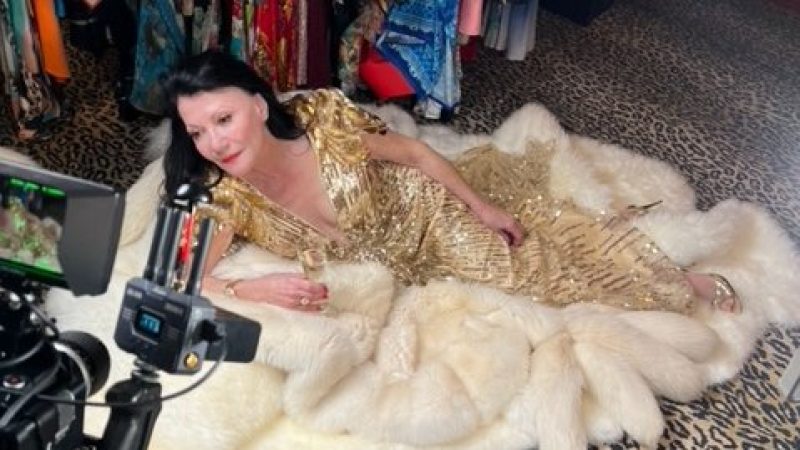
Iconic Actress “Irina Maleeva” Brings “Sunny’s Closet” to Indiewood
International Actress at Film Festival with “Sunny’s Closet” — Before Taking It To Rome